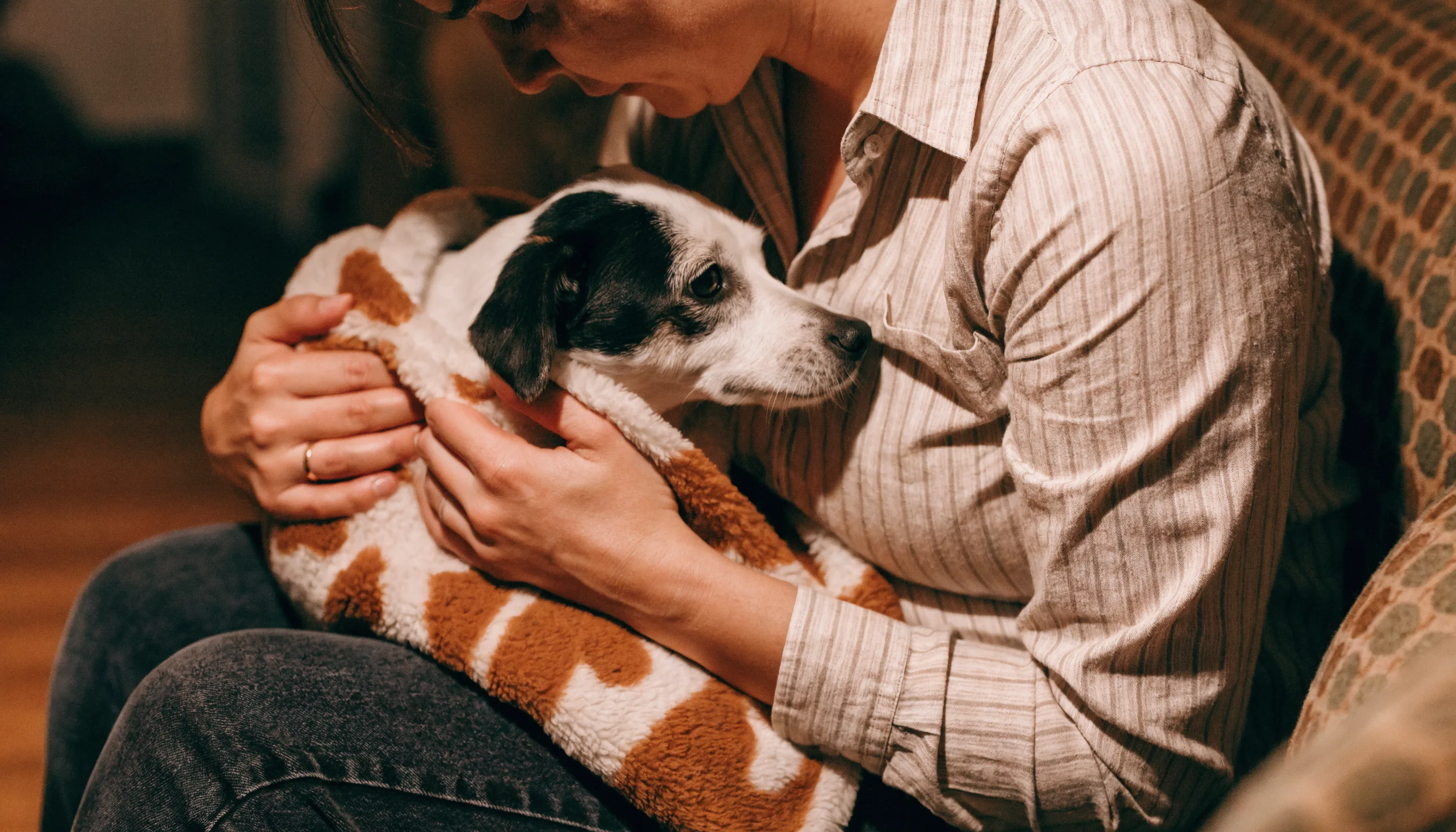
Why is my dog shaking or trembling? Causes and when to see a vet
Trembling has a long list of causes, most of them mild: dogs shiver when cold, excited, frightened or, like many small breeds, simply because they run warm and lose heat fast. But shaking can also mean pain, nausea, low blood sugar, or poisoning — and it needs to be told apart from a seizure. The context around the trembling is what points to the cause.
The common, mild causes
Most trembling is harmless. Dogs shiver when they are cold, and small, thin or short-coated breeds like the Chihuahua feel it far sooner than a thick-coated dog. They also tremble with excitement and with fear or stress — fireworks, thunderstorms, the vet waiting room. A frightened dog usually shows it elsewhere too: tucked tail, pinned ears, trying to hide. Some older dogs develop a harmless tremor in the back legs when standing. If your dog is warm, calm and otherwise normal, a passing shiver is rarely a concern.
When trembling means something more
Shaking can also signal a problem. Pain makes dogs tremble, and it is often the only sign — a dog with a sore belly or back may simply shiver and go quiet. Nausea can cause trembling before a dog vomits. In toy breeds and young puppies, trembling with weakness can be low blood sugar, which needs prompt help. Most importantly, several poisons cause tremors — including chocolate, the sweetener xylitol, mouldy food, some plants and slug pellets — so trembling in a dog that may have eaten something is treated as an emergency. Our list of foods toxic to dogs shows the common household culprits.
Is it a shiver or a seizure?
These can look similar for a moment, then diverge. A shiver or tremble is fine and fast, the dog stays aware, can be distracted by its name, and keeps its balance. A seizure is different: the dog often falls over, the limbs go stiff or paddle rhythmically, it does not respond to you, and there may be drooling, or loss of bladder control, followed by minutes of disorientation. If what you are seeing looks like a seizure, film a few seconds if you safely can and call your vet — the video is genuinely useful. Do not put your hands near the mouth.
See a vet now if you notice any of these
Contact a vet, urgently, if your dog: is trembling and might have eaten something toxic; is shaking and also weak, wobbly, collapsed or has pale gums; is a toy breed or puppy trembling with weakness (possible low blood sugar); is trembling with repeated vomiting or a painful, hunched posture; has a tremor that will not stop, or that is spreading through the body; or is having what looks like a seizure. A dog that is simply cold, excited or briefly frightened and then completely normal does not need the vet — warmth or removing the trigger is enough.
Common questions
Why is my dog shaking but acting normal?
Usually it's something mild — the dog is cold, excited or a little anxious, and small, short-coated breeds shiver especially easily. If your dog is warm, calm, eating and behaving normally between shivers, a passing tremble is rarely a concern. Watch for weakness, vomiting, pain or any chance it ate something toxic, which would change the picture.
Can shaking in dogs be a sign of poisoning?
Yes. Several poisons cause tremors, including chocolate, the sweetener xylitol, mouldy food, slug pellets and some plants. If your dog is trembling and there's any chance it ate something it shouldn't, treat it as an emergency and call a vet or an animal poisons line straight away — don't wait to see if it passes.
How do I tell a tremble from a seizure in my dog?
A tremble is fine and fast, the dog stays aware and balanced and can be distracted by its name. A seizure usually knocks the dog off its feet, with stiff or rhythmically paddling limbs, no response to you, and often drooling or loss of bladder control, then minutes of disorientation afterwards. If it looks like a seizure, film a few seconds if safe and call your vet.
My small dog shivers a lot — is that normal?
Small, thin and short-coated breeds like Chihuahuas do genuinely shiver more, because they lose heat quickly and often tremble with excitement or nerves too. That's usually normal. But sudden trembling with weakness in a toy breed or puppy can be low blood sugar, which needs prompt attention, so look at how the dog is in itself, not just the shivering.
Should I be worried if my dog is shaking and won't eat?
Trembling together with going off food, hiding, a hunched posture or vomiting suggests the dog feels unwell or is in pain rather than just cold or excited. That combination is worth a same-day vet call, and sooner if the dog is weak, collapsed, has pale gums or may have eaten something toxic.
More in Dogs
Why is my dog peeing in the house? Causes and how to stop it
An adult dog that starts having accidents isn't being defiant — it's giving you a symptom. The medical checklist, the marking-vs-emptying distinction, and the retraining plan that works.

Autumn dangers for dogs: acorns, conkers and mushrooms
Autumn puts three scavenging hazards on the ground — acorns, conkers and wild mushrooms — plus rat bait and fermenting fruit. What's toxic, what the warning signs are, and when to call the vet.

Winter pet dangers: antifreeze, road salt and chocolate season
Antifreeze is the winter emergency — sweet, deadly and quick. Plus gritted-salt paws, the festive-food gauntlet and cats sheltering in warm car engines. What to watch and when it's urgent.

The pet danger calendar: what to watch, month by month
Most pet hazards are seasonal and many are regional. Here's the year mapped out — when heatstroke, grass seeds, processionary caterpillars, antifreeze and the rest actually peak, and which ones your area even has.

Snake bites in dogs: first aid, symptoms and prevention
A calm, fast response is what actually saves a bitten dog. What to do in the first minutes, the myths that cost time, and which snakes matter across Europe.

Why is my dog vomiting? Causes and when to see a vet
The common reasons dogs are sick, what you can safely do at home for a one-off, and the warning signs that mean call the vet now rather than wait.