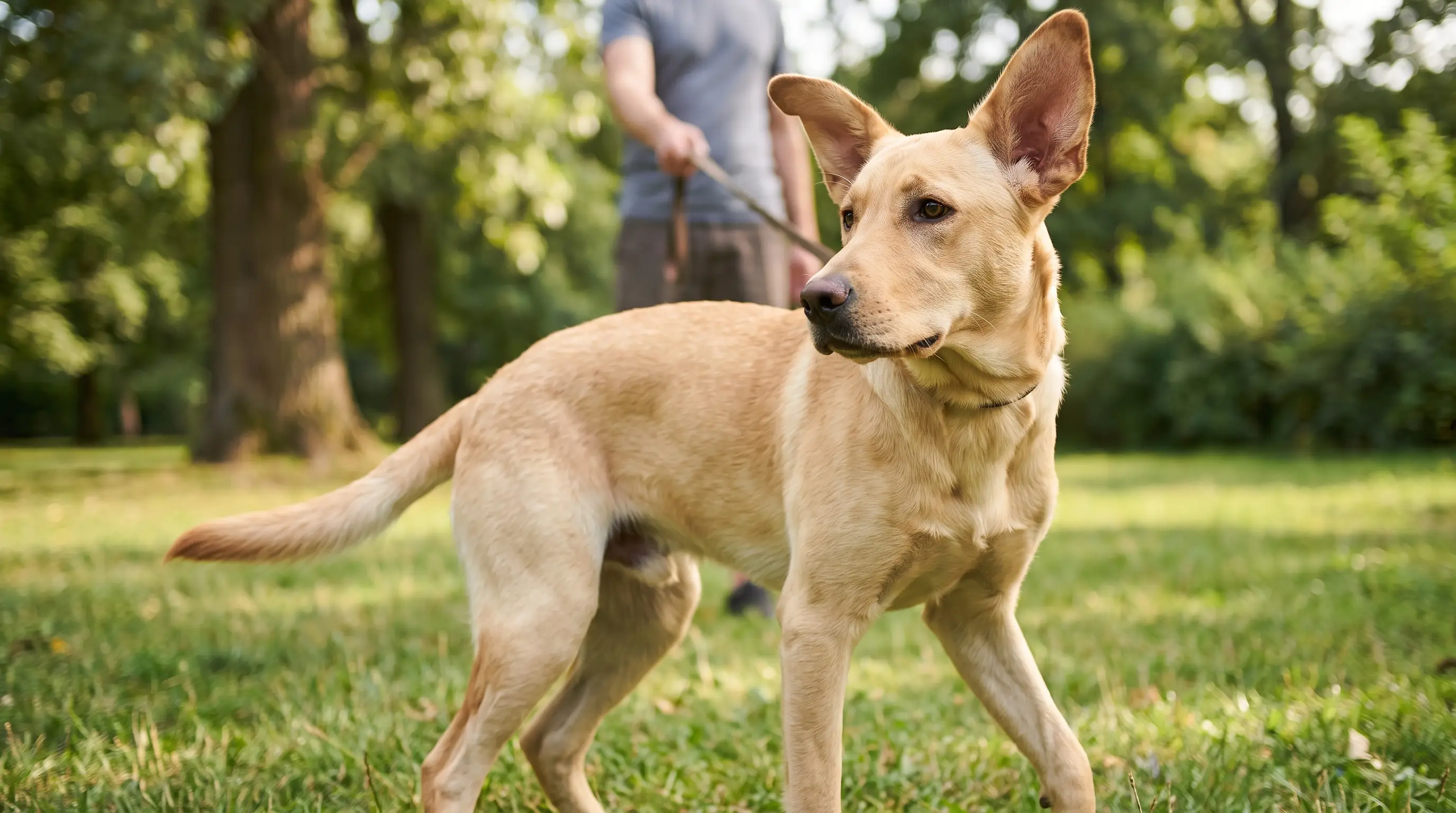
The adolescent dog: surviving the teenage phase
Somewhere around six months, the biddable puppy you spent months training seems to forget all of it at once — the recall stops working, the rules get tested, and a dog that came every time is suddenly, selectively deaf. This is canine adolescence, and it is not your training falling apart or your dog turning on you. It is a real developmental stage, driven by a brain that is rewiring itself, and it is also, quietly, the phase in which more dogs are given up than any other. The single most useful thing to know is that it passes.
Yes, dogs have a teenage phase
Dogs go through adolescence just as people do, roughly from six months to somewhere between eighteen months and two years, later in the large and giant breeds than in the small ones. The signs are unmistakable to anyone living through them: the dog that learned to sit and come and settle now hesitates, argues or simply ignores you, pushes at boundaries it had accepted, and behaves as if half its training has evaporated overnight.
It is not your imagination, and there is research behind it. A 2020 study of dogs around puberty found they genuinely became harder to train during this window — and, tellingly, that they were most likely to ignore commands from their own primary caregiver, the person they are most bonded to, exactly as human teenagers push hardest against their parents. Your adolescent dog is not broken and has not decided it dislikes you. It is being a teenager at you.
Why it happens — it's the brain, not defiance
Adolescence is neurological, not a character flaw. The adolescent brain is busy reorganising and pruning its connections, the parts that govern impulse control and calm decision-making are still maturing, and a wash of sex hormones sits on top of all of it. The result is a dog that is more impulsive, more easily distracted and more reactive than the puppy was or the adult will be — not because it is choosing to defy you, but because the machinery for self-control is mid-renovation.
There is often a second fear period in here too, somewhere around six to fourteen months, when a confident young dog suddenly spooks at things it walked past happily last week — a bin, a statue, a man in a hat. That is normal and temporary. Meet it with calm and patience rather than either forcing the dog towards the scary thing or making a fuss, and it fades as the brain settles.
The hard truth: this is when dogs get given up
Here is the part that matters most, and that too few new owners are warned about: adolescence is the peak age at which dogs are handed to shelters. The gangly, boundary-testing, selectively deaf teenage months are exactly when many people conclude they have failed, or that the dog is untrainable, or that they took on the wrong animal — and give up right at the point of maximum difficulty, weeks or months before it would have resolved on its own.
Knowing this changes how you read the phase. The wobble is not evidence that anything has gone wrong; it is the normal, expected low point of a curve that climbs back up. The dog surrendered at fourteen months and the settled, easy adult it would have become at two are the same dog. If you can hold the line through the teenage months, the animal on the other side is the one you trained for.
How to get through it
The strategy is consistency, not escalation. Keep training rather than stopping because "it isn't working" — short, rewarding sessions that remind the dog what pays, even when it is being dim. Assume the recall has regressed and protect it: go back to a long line and easy wins rather than letting the dog rehearse ignoring you off-lead, using the approach in our guides to recall and loose-lead walking. Keep the exercise and the mental work up, because a bored adolescent finds its own entertainment, and reward the behaviour you want rather than punishing the behaviour you don't — punishment during a fear period can leave lasting damage.
Manage the environment so the dog cannot practise the habits you are trying to lose, and treat neutering as a health-and-timing conversation with your vet rather than a behavioural quick fix, since it does not switch off adolescence. Above all, do not make permanent decisions in these months. This is not the time to conclude anything about the dog you will have for the next decade.
It ends
Adolescence resolves. Most dogs settle into adult steadiness somewhere between eighteen months and three years, the larger breeds at the later end, and the training you thought had vanished turns out to have been there the whole time, waiting for the brain to catch up. The recall comes back, the boundary-testing fades, and the impulsive teenager becomes the dog you were promised.
So treat the teenage phase as weather, not climate. Keep the routines steady, keep your sense of humour, and take the long view — the same one that runs from the first month of puppy training all the way to senior care. If you are still choosing a dog, matching temperament to your life makes these months easier; our list of the best dogs for first-time owners is a sensible place to start.
Common questions
At what age do dogs go through adolescence?
Canine adolescence runs roughly from six months to between eighteen months and two years, arriving and ending later in large and giant breeds than in small ones. It is the phase when a trained puppy starts testing boundaries, ignoring commands and generally behaving like a teenager. It is a normal developmental stage driven by a maturing brain and hormones, not a sign that anything has gone wrong.
Why has my dog started ignoring me all of a sudden?
If your dog is around six months to two years old, this is almost certainly adolescence. Research shows dogs become genuinely harder to train around puberty and are most likely to ignore their own primary caregiver, much as human teenagers push against their parents. The self-control machinery in the brain is still maturing, so the dog is more impulsive and distractible — not defiant. Keep training consistently and it passes.
Is it normal for an adolescent dog to become scared of things?
Yes. Many dogs go through a second fear period somewhere between six and fourteen months, suddenly spooking at everyday objects they were fine with before. It is temporary and normal. Handle it with calm and patience — don't force the dog towards what frightens it and don't make a fuss over the fear — and it fades as the adolescent brain settles.
Should I stop training my dog during the teenage phase?
No — this is exactly when to keep going. Training seems not to 'work' during adolescence because the dog is more impulsive and distractible, but stopping lets bad habits take hold. Keep sessions short and rewarding, assume the recall has slipped and protect it with a long line, reward the behaviour you want rather than punishing what you don't, and stay consistent. The training reasserts itself as the dog matures.
When do dogs calm down after adolescence?
Most dogs settle into adult steadiness between about eighteen months and three years, with large and giant breeds maturing at the later end. The impulsiveness, boundary-testing and selective deafness of the teenage phase fade as the brain finishes maturing, and the training you did earlier reasserts itself. The key is to get through the difficult months rather than making permanent decisions during them.
Why do so many dogs end up in shelters as adolescents?
Because adolescence is the hardest phase and many owners mistake it for failure or a permanent personality. The boundary-testing, poor recall and general teenage difficulty peak at the very age dogs are most often surrendered — frequently just weeks before the behaviour would have settled on its own. The adolescent dog and the easy adult it becomes are the same dog, so holding on through the phase is usually the answer.
See also
More in Dogs

Senior dog care: what actually changes
An honest guide to a dog's later years: when old age starts, what to watch for, and how to keep the good days coming.

Bringing a puppy home: the first 48 hours
A calm, hour-by-hour plan for a puppy's first two days at home — from puppy-proofing to the first night in the crate.
Is my old dog in pain? The signs they hide
Older dogs mask arthritis by instinct, so the pain shows up as small quiet changes. Here is what to watch for, and how to help.

When is a dog an adult? Age milestones by size
Small dogs grow up fast and age slowly; giant breeds are seniors at 6. The real age milestones for every size, and why size flips the whole timeline.

Your puppy's first year: the full timeline
From 8 weeks to 12 months, stage by stage — vaccinations, the socialization window, teething, the teenage phase, neutering and the switch to adult food.

The oldest dog ever and how long dogs really live
Bluey reached 29 years. Bobi's 31-year claim fell apart. Here's the real math on dog lifespan, and how to buy your dog more time.