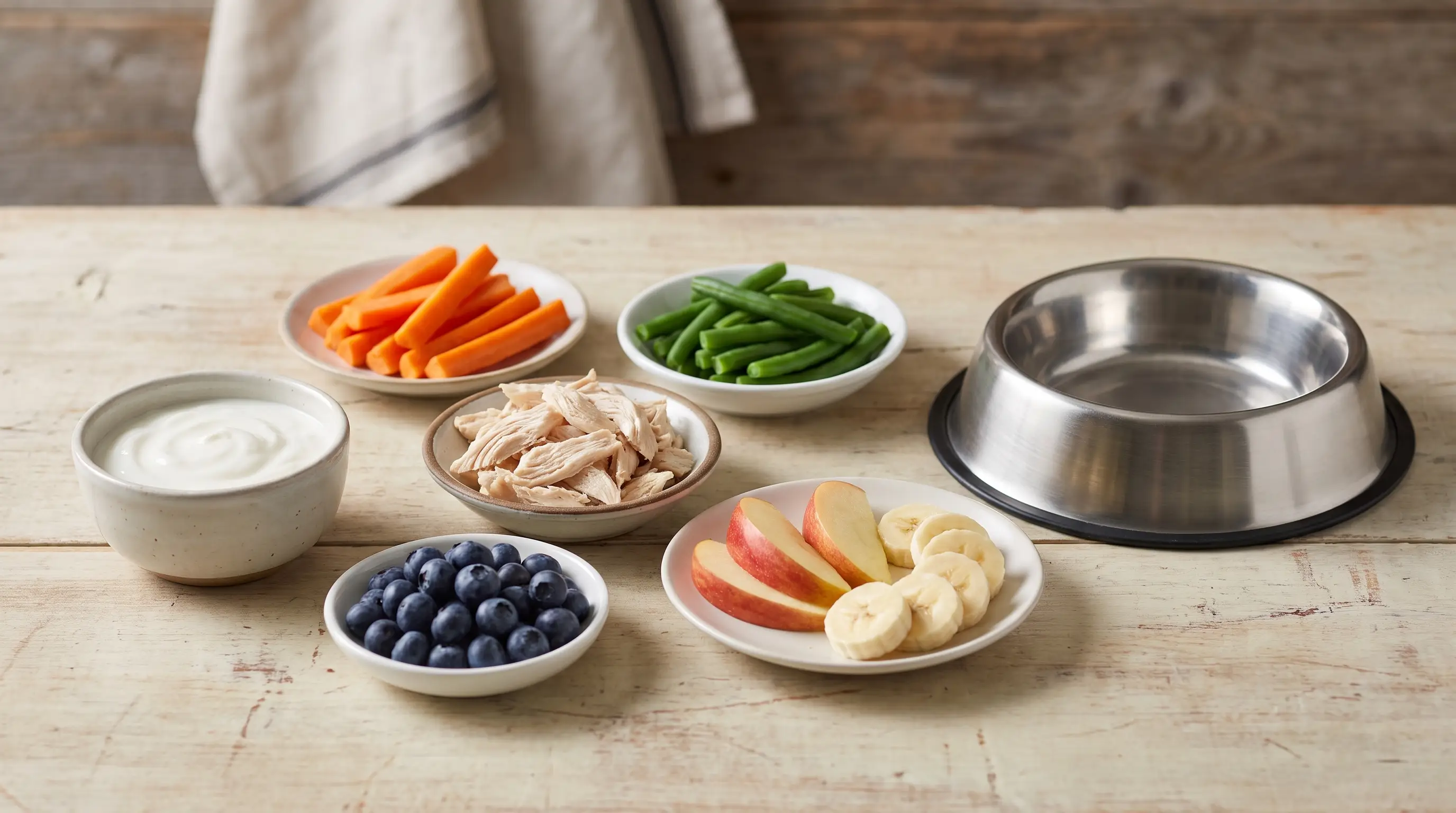
Human foods dogs can eat safely (and how much)
Yes, dogs can safely eat a good number of human foods, as long as they are plain, prepared right, and kept to small amounts. Plain cooked chicken, carrot, green beans, pumpkin, apple, blueberries and a spoon of plain yogurt all make fine treats. The rule that keeps it safe is portion: extras should stay under about 10 percent of your dog's daily calories, and never stand in for a complete dog food.
Human foods dogs can eat
Plenty of everyday foods from your kitchen are safe for dogs in small amounts: plain cooked chicken or turkey, raw or cooked carrot, green beans, plain pumpkin puree, cooked sweet potato, apple slices, blueberries, watermelon, a little banana, plain cooked egg, a spoon of plain yogurt, and xylitol-free peanut butter. The word doing the heavy lifting is treat. Vets use a simple ceiling: everything outside a complete, balanced dog food should stay under about 10 percent of a dog's daily calories, and that 10 percent counts training rewards, table scraps and every extra bite. A 10 kg dog eating roughly 400 to 500 calories a day has only about 40 to 50 of those to spend on extras, which is a couple of baby carrots and a few blueberries, not a chicken breast. Feed these foods as toppers and rewards, and trim the main meal to match so the day's calories still add up.
Plain cooked chicken, turkey and egg
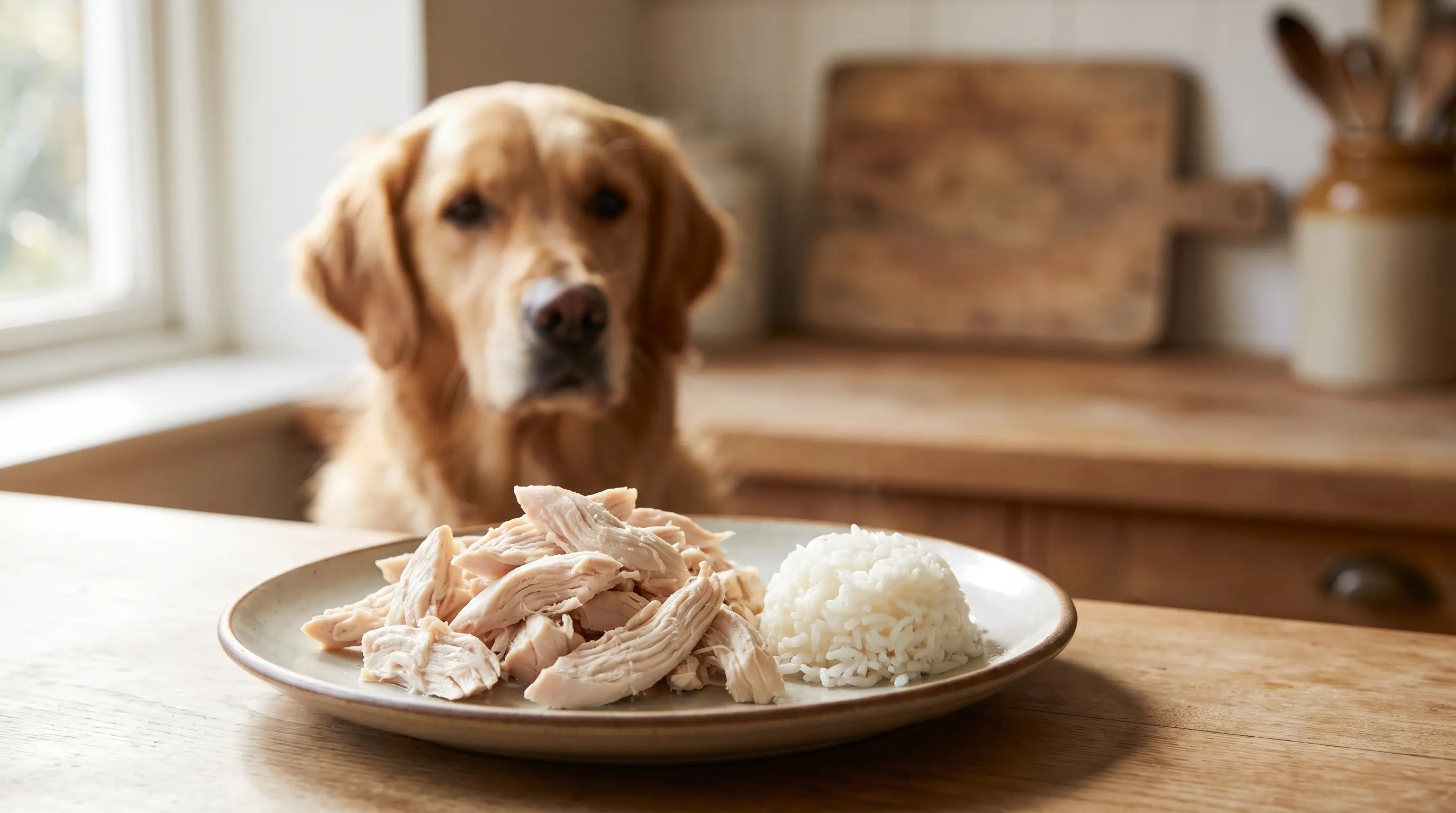
Plain cooked chicken, turkey and egg are among the safest human proteins for dogs. Cook them through with no skin, no bones, and nothing added: no salt, butter, oil, onion or garlic powder. Boiled or baked chicken breast is gentle enough that vets often recommend it, alongside plain rice, for a dog recovering from an upset stomach. Skip cooked bones entirely, since they splinter and can damage the gut. Eggs should be cooked, never raw: scrambled in a dry pan or hard-boiled gives you protein, vitamin A and B vitamins without the salmonella risk raw egg carries. One small egg is plenty for a medium dog, and less for a small one. Whatever you add, take those calories out of the main meal rather than piling them on top.
Carrots, green beans, pumpkin and sweet potato
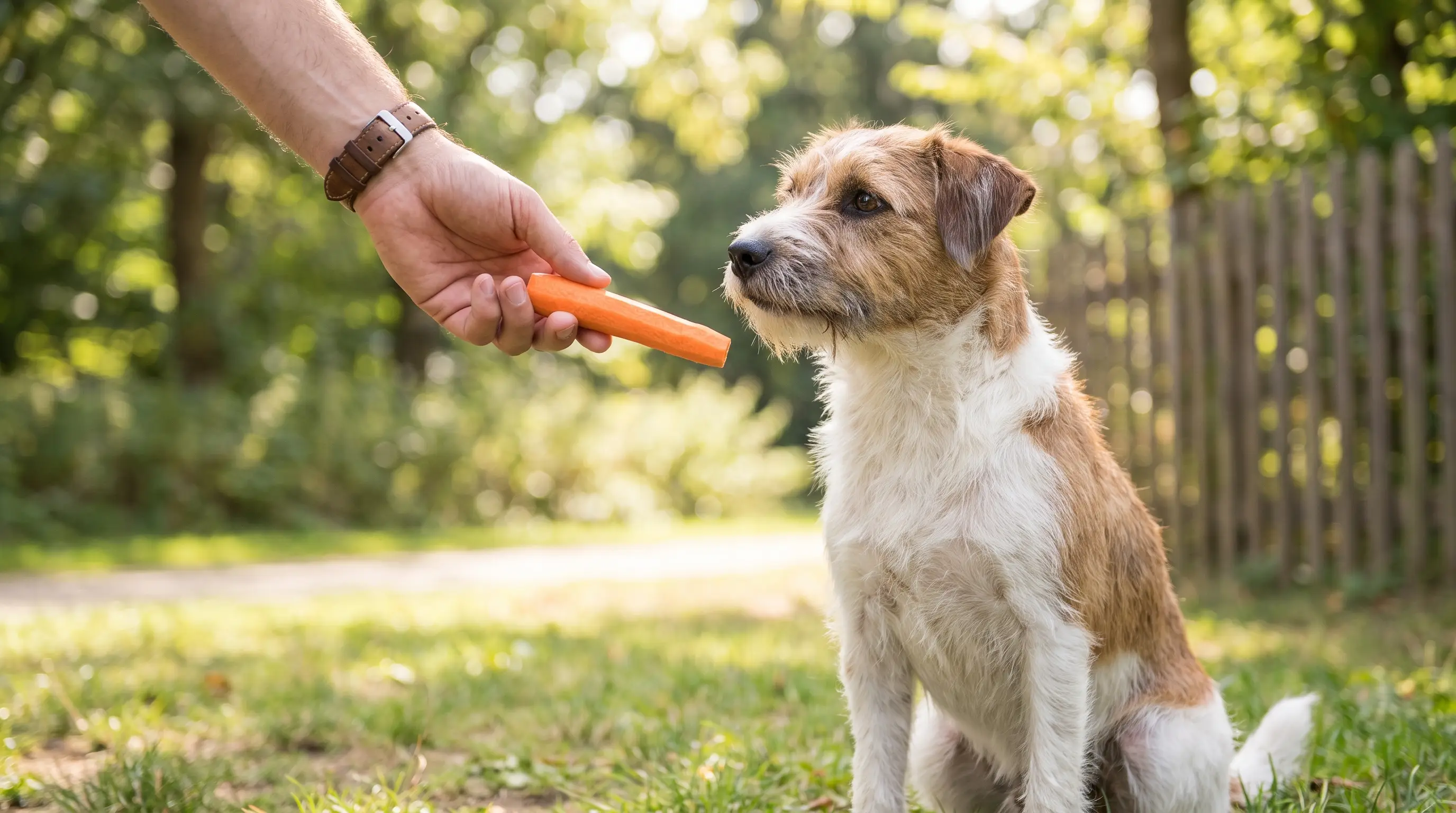
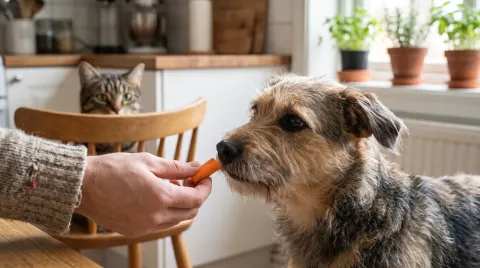
Carrots, green beans, plain pumpkin and cooked sweet potato are the vegetables most vets are happy to see in a dog's bowl. Raw carrot is the standout training treat: crunchy, cheap, high in fibre and beta-carotene, and low enough in calories that you can hand over several without wrecking the 10 percent budget. Green beans, plain and unsalted, are just as light. Plain pumpkin puree earns its reputation for mild tummy trouble, where a tablespoon or two of fibre can help firm up loose stools, but reach for the plain kind, not spiced pie filling, and treat it as first aid for mild cases only, not a substitute for a vet visit. Cooked, plain sweet potato is fine in small pieces, though it is starchier and more calorific than carrot or beans. Cut everything to a size your dog can chew safely, and introduce one new vegetable at a time.
Apple, blueberries, watermelon and banana
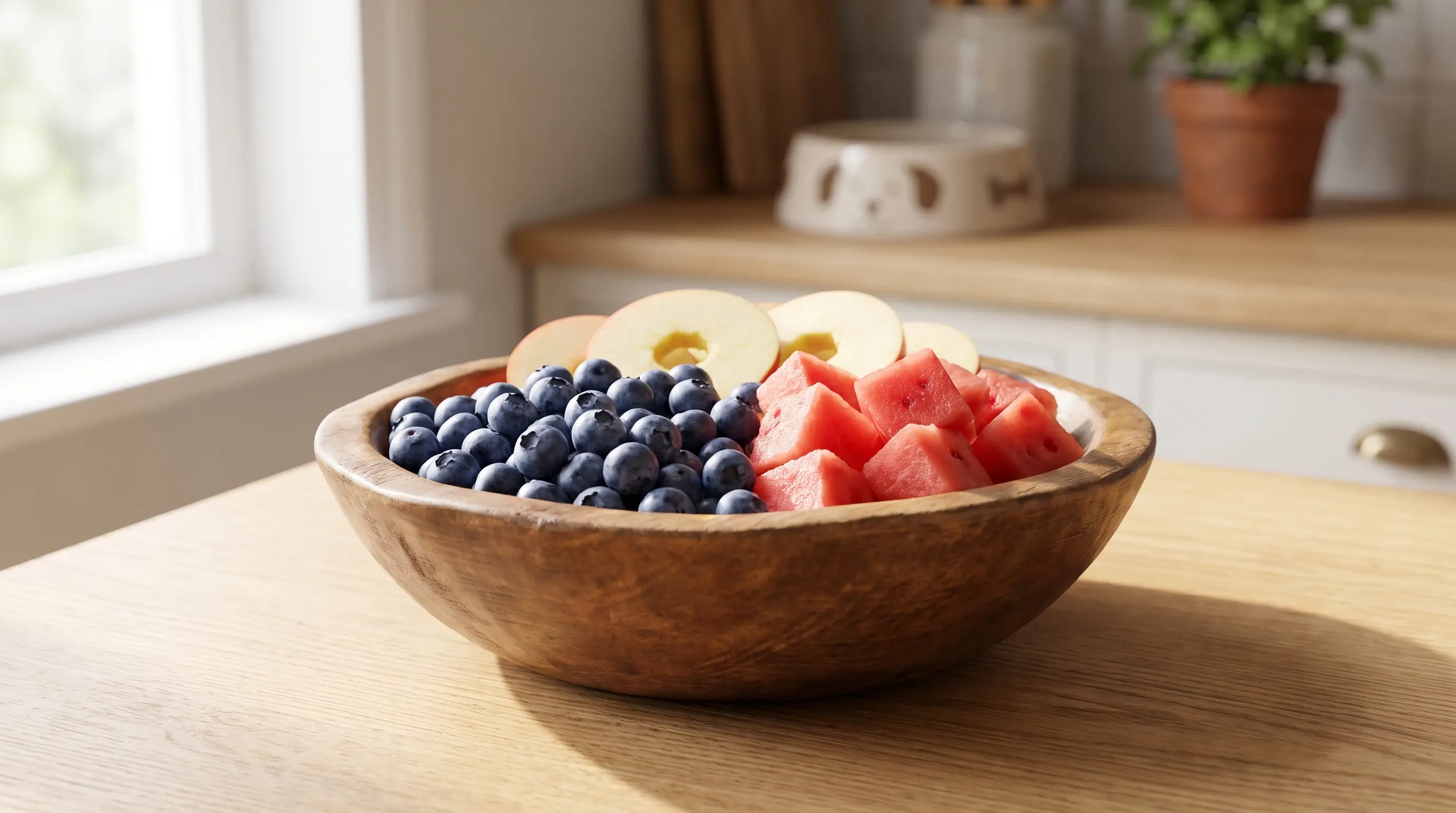
Apple, blueberries, watermelon and banana are all safe for dogs when you prep them properly. Apple slices are fine, but cut out the core and seeds first, since apple seeds contain small amounts of cyanide compounds and the core is a choking hazard. Blueberries are close to a perfect dog snack, small, low in calories and rich in antioxidants, and they double as training rewards. Watermelon makes a good hot-weather treat with the rind and seeds removed. Banana is the one to ration hardest: safe, but sugary, so a couple of coins for a medium dog rather than half a fruit. Fruit sugar climbs against that daily calorie ceiling quickly, so keep fruit to a garnish rather than a handful.
Yogurt, cheese, peanut butter, rice and oats
Plain yogurt, a little cheese, xylitol-free peanut butter, and plain cooked rice or oats round out the safe list, each with a catch. Dairy is the big one: some dogs digest lactose poorly, so start with a teaspoon of plain unsweetened yogurt or a pea-sized piece of plain cheese and watch for gas or loose stools. Peanut butter is a genuine favourite, and it is also the food where reading the label matters most. Many sugar-free spreads contain xylitol, also sold as birch sugar, which is severely toxic to dogs even in small amounts. Check the ingredients every single time and pick a plain, unsalted, xylitol-free peanut butter, and see our list of foods dogs must never eat for the full danger list. Plain cooked white rice and plain oats are bland, easy carbs that suit a sensitive stomach, served with nothing added.
The rules that keep it safe
The rules that turn a safe food into a safe treat are simple, and they matter more than the list itself. Keep everything unseasoned: nothing salted, buttered, fried, or cooked with onion or garlic, all of which are either hard on dogs or outright toxic. Introduce one new food at a time, in a small amount, so if your dog reacts you know exactly what caused it. Hold the whole treat total, training rewards included, under about 10 percent of daily calories, and trim the main meal to match. And keep the big picture in view: safe means an occasional extra, not a stand-in for complete dog food, which is built to hit nutrients that a chicken-and-carrot habit never will. A food-motivated breed like the Beagle will happily try to convince you otherwise. When in doubt about a new food, or if your dog has a health condition, ask your vet first.
Common questions
What human food can dogs eat every day?
Small amounts of plain, dog-safe foods can be given daily, such as raw carrot, green beans, a few blueberries, or plain cooked chicken. Keep the daily total of all treats and extras under about 10 percent of your dog's calories, and count them as part of the day's food rather than on top of it.
What is the best human food for dogs?
There is no single best food, but plain cooked chicken and raw carrot are among the most useful. Chicken is lean protein that is easy on the stomach, and carrot is a low-calorie, high-fibre treat cheap enough to use for training.
Can dogs eat scrambled eggs?
Yes, dogs can eat scrambled eggs as long as they are cooked plain, with no butter, oil, salt, milk, onion or cheese. Cooked egg is a good source of protein and vitamins; avoid raw egg because of the salmonella risk.
What can I feed my dog instead of dog food?
In a pinch, plain cooked chicken with plain white rice is a common short-term option that most dogs tolerate well. It is not nutritionally balanced for the long term, so it should not replace a complete dog food for more than a day or two without vet advice.
What vegetables can dogs eat?
Carrots, green beans, plain pumpkin and cooked plain sweet potato are all safe for dogs. Serve them plain, unseasoned and cut into suitable pieces, and skip onions, garlic, leeks and chives, which are toxic.
Is peanut butter safe for dogs?
Peanut butter is safe for dogs only if it is free of xylitol, also labelled birch sugar, which is highly toxic to them. Choose a plain, unsalted, xylitol-free peanut butter and give it in small amounts, since it is high in fat and calories.
See also
More in Dogs
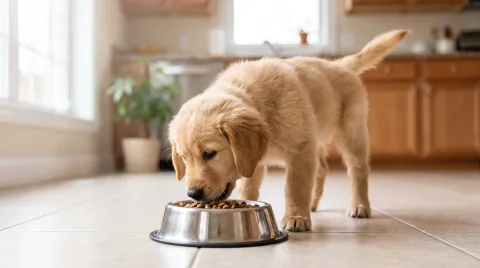
How much to feed a puppy, by age and size
The bag's chart is a starting point, not an answer. How much a puppy really needs, how meals drop from four a day to two, and the large-breed rule that matters more than the amount.
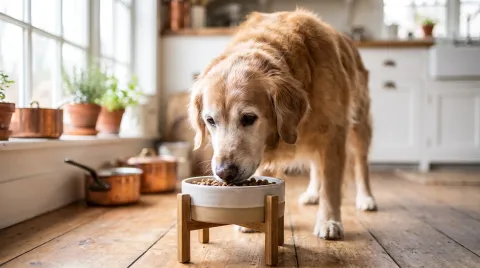
Feeding a senior dog: what actually changes after 7
Most older dogs need fewer calories, not a special 'senior diet' — and they should not have their protein cut. What changes, what doesn't, and when a change in appetite is a vet visit.
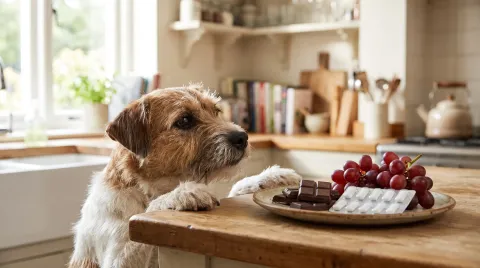
Foods dogs must never eat: the toxic list
The vet-checkable list of foods that poison dogs, ranked by real danger, plus exactly what to do in the first ten minutes.
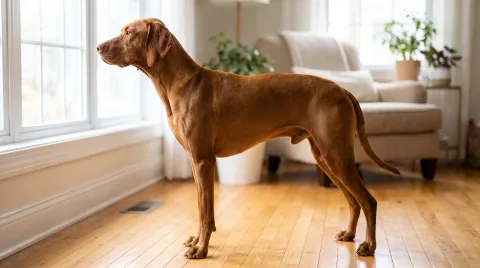
How much to feed a dog: portions and the lean years
Feed to your dog's ideal weight, not its current weight. The food-pack number is a start, then adjust by ribs, waist and tuck.
How to read a pet food label
The one line that matters most, why the first ingredient lies, and how to spot marketing words that mean nothing.
Treats without the weight gain: the 10% rule
The vet rule that stops treats making your cat or dog fat, and how to run the numbers in about a minute.