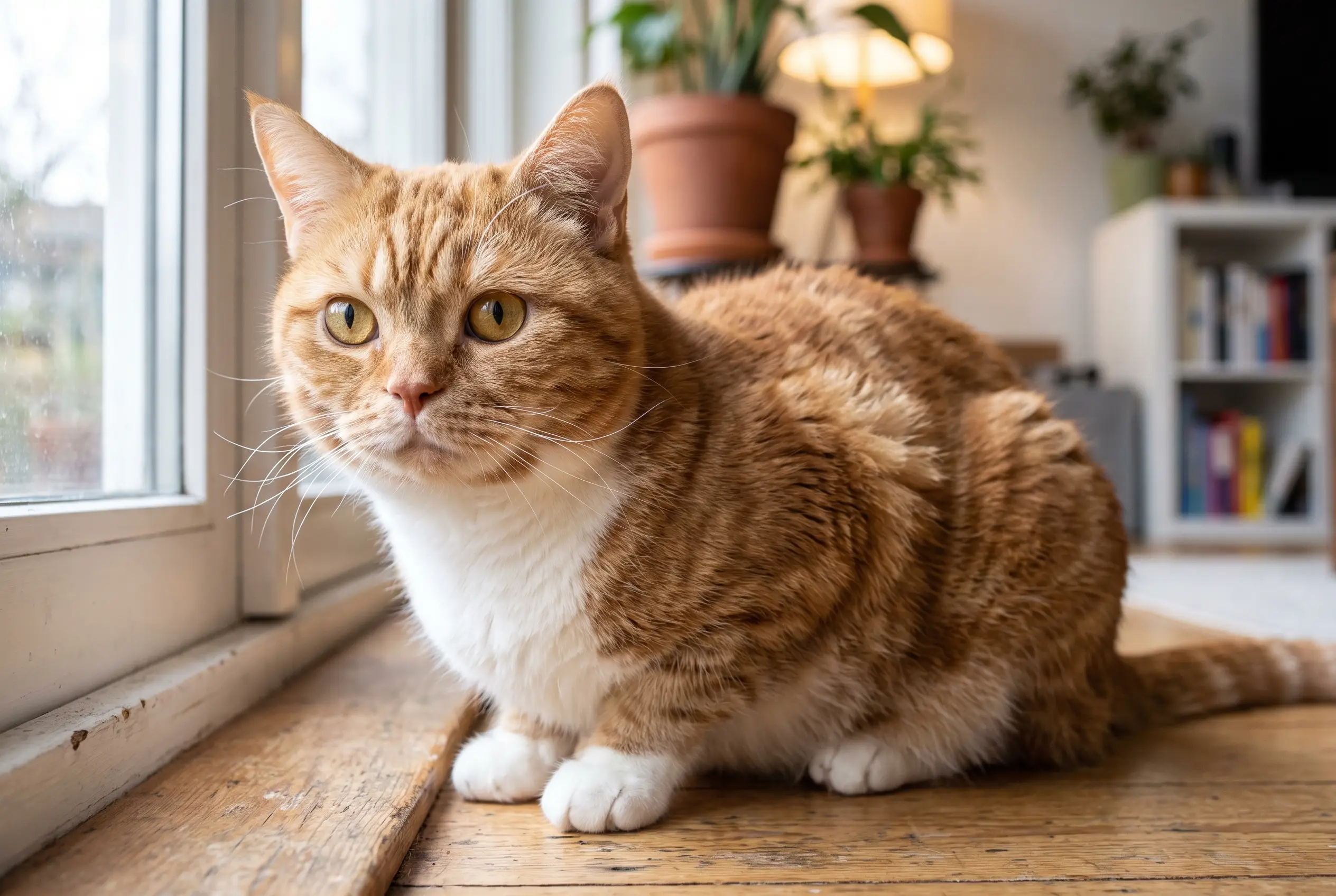
American Wirehair
An American Shorthair underneath, wearing a coat that has only ever turned up once — one barn litter, in 1966.
Vital stats
| Size | Medium to large · round head, powerful American Shorthair build |
| Weight | 3.5–7 kg · breed literature; the CFA standard sets no weight |
| Life expectancy | 12–18 years · breed literature, not survey data |
| Energy | Moderate — playful in bursts, calm underneath |
| Shedding | Low to moderate — the coat is fragile more than heavy |
| Coat | Short to medium; every hair crimped or hooked at the tip, even the whiskers |
| Group | Shorthair |
| Origin | United States |
Breed traits
Friendliness
Care
Mind
The American Wirehair by the numbers
The American Wirehair facts owners search for most — price, lifespan, weight, shedding and colours, in one place.
Less common, so expect a waitlist and some travel to a reputable breeder — which pushes the price up. Ongoing costs stay modest — it eats little and routine vet care sits at the lower end.
We don't quote a single figure: the real price swings with breeder, region, bloodline and health testing — and a rescue costs a fraction of a breeder's litter. Adopting is almost always the cheapest route.
Temperament
This is an American Shorthair's temperament wearing an odd coat. It settles into a household instead of working it: content to be in a room with people without needing to be handled, and the CFA standard itself describes it as even-tempered and inclined to spread affection around the family rather than pick a favorite. It watches before it joins in — a new visitor, a rearranged sofa, the vacuum cleaner running are all assessed from a chair first, investigated second. It isn't a lap cat by default, but it stays close, and once it decides you're worth the trouble, the purr is the giveaway: louder and more frequent than almost any other breed's. Good with children and with other pets that don't crowd it; less patient with being chased or picked up without warning.
Habits & quirks
Every hair has a kink
Guard hairs, awn hairs and down hairs are all crimped, hooked or bent under the CFA standard, including the whiskers and the fur inside the ears. Texture varies a lot cat to cat, from a tight, springy crimp to something sparser and coarser, and littermates from the same parents don't always match.
About half a litter comes out straight
The Wr gene is dominant but not universal. Pairing a wirehaired cat with a straight-coated American Shorthair produces close to a 50/50 split, and the straight-coated kittens are used in breeding programs and sold as pets like any other.
The purr carries
Breed clubs and owners describe it the same way: an American Wirehair purrs louder and more readily than most cats, and it's usually the first thing a new owner notices.
Watches before it joins
New people, a delivery at the door, furniture moved to a different wall — this cat tends to observe from a chair rather than investigate right away. Not shy, just unhurried, and it comes around once it's had a minute to look.
Care
| Grooming — mostly hands off | The crimp is fragile. Brushing pulls it straight and can leave the coat looking flat for weeks, so most owners do little beyond an occasional wipe with a damp hand; a comb, if used at all, should be wide-toothed and used rarely. Some individuals have a coat sparse enough that the skin underneath is sensitive to cold and sun, which is one more reason this is an indoor cat. |
| Health screening | No disease has been tied to the wirehair coat mutation itself. What the breed does carry is its American Shorthair ancestry, including hypertrophic cardiomyopathy — ask for a cardiologist's echo on the parents — and hip dysplasia has been reported in some lines. Because the breeding population is so small, a serious breeder can usually name every cat behind a kitten's pedigree. |
| Weight | Built like an American Shorthair, and just as prone to putting on weight quietly in a warm house with a full bowl. Measured meals rather than free feeding, a monthly rib check by hand, and a short daily play session keep it in the 3.5–7 kg range it's meant to carry. |
| Enrichment | Moderate needs, not demanding ones. A scratching post, a window to watch and a couple of short play sessions a day are enough — this isn't a breed that redecorates the house looking for something to do. |
Life expectancy
This breed has a typical life expectancy of 12–18 years · breed literature, not survey data.
Similar breeds
Breeds with a similar build and background — worth a look if this one isn't quite the fit.
Common questions
Is the American Wirehair a rex cat?
No, and the coats aren't built the same way. A rex coat — Cornish, Devon, German Rex, LaPerm, Selkirk — comes from a mutation that makes the hair grow in soft waves or loose curls, and several of those breeds also lose most of their guard hairs, which is what gives a rex coat its plush feel. The American Wirehair's mutation, a dominant gene called Wr, bends each hair — guard, awn, down, plus the whiskers — into a crimp or hook rather than a wave, so the texture reads as springy and wiry, closer to a terrier's coat than to a curl. Geneticists have confirmed it's unrelated to the Cornish or Devon Rex mutations, and it isn't the gene behind the Selkirk's curl either.
How rare is the American Wirehair, really?
Very. It's routinely reported as the rarest breed in CFA's own registration numbers, with kitten registrations in the double digits most years. Almost none turn up in shelters or rescues, because almost none exist to turn up there. Wanting one usually means a waitlist with one of a small number of breeders in the United States, not a quick match through a rehoming site.
Is it basically an American Shorthair?
Underneath the coat, yes. The body, the build and most of the temperament come from the American Shorthair, which is also the only breed the standard allows as an outcross — a wirehaired cat is typically paired with a straight-coated American Shorthair to keep the coat quality sound and the small gene pool healthy. The difference that matters is on the surface: a single dominant coat mutation sitting on top of an otherwise ordinary American Shorthair.
Does the American Wirehair shed a lot?
Yes — the American Wirehair is a heavy shedder, dropping hair year-round or in big seasonal moults. Brush it several times a week and expect regular vacuuming; it isn't the coat for you if loose fur is a dealbreaker.
Are American Wirehair cats hypoallergenic?
No cat breed is truly hypoallergenic, and the American Wirehair isn't one of the easier ones. The trigger is Fel d 1, a protein in a cat's saliva and skin that ends up on the coat during grooming and then spreads on loose hair and dander — and this breed sheds enough to move plenty of it around. If someone at home is allergic to cats, this is a hard breed to live with; spend real time around one first.
Are American Wirehair cats good with children?
Usually yes. The American Wirehair is a sociable cat that tends to tolerate the noise and handling of family life better than most, which is why it comes up so often for homes with kids. It still needs somewhere high and quiet to retreat to, and children need teaching that a cat walking away is allowed to.
How much grooming does a American Wirehair need?
Very little. The American Wirehair handles its own coat and a comb once a week or so is plenty — mostly to catch loose hair before the cat swallows it. Claws, teeth and ears still want the usual checks, which is the part people skip on an easy-coated cat.