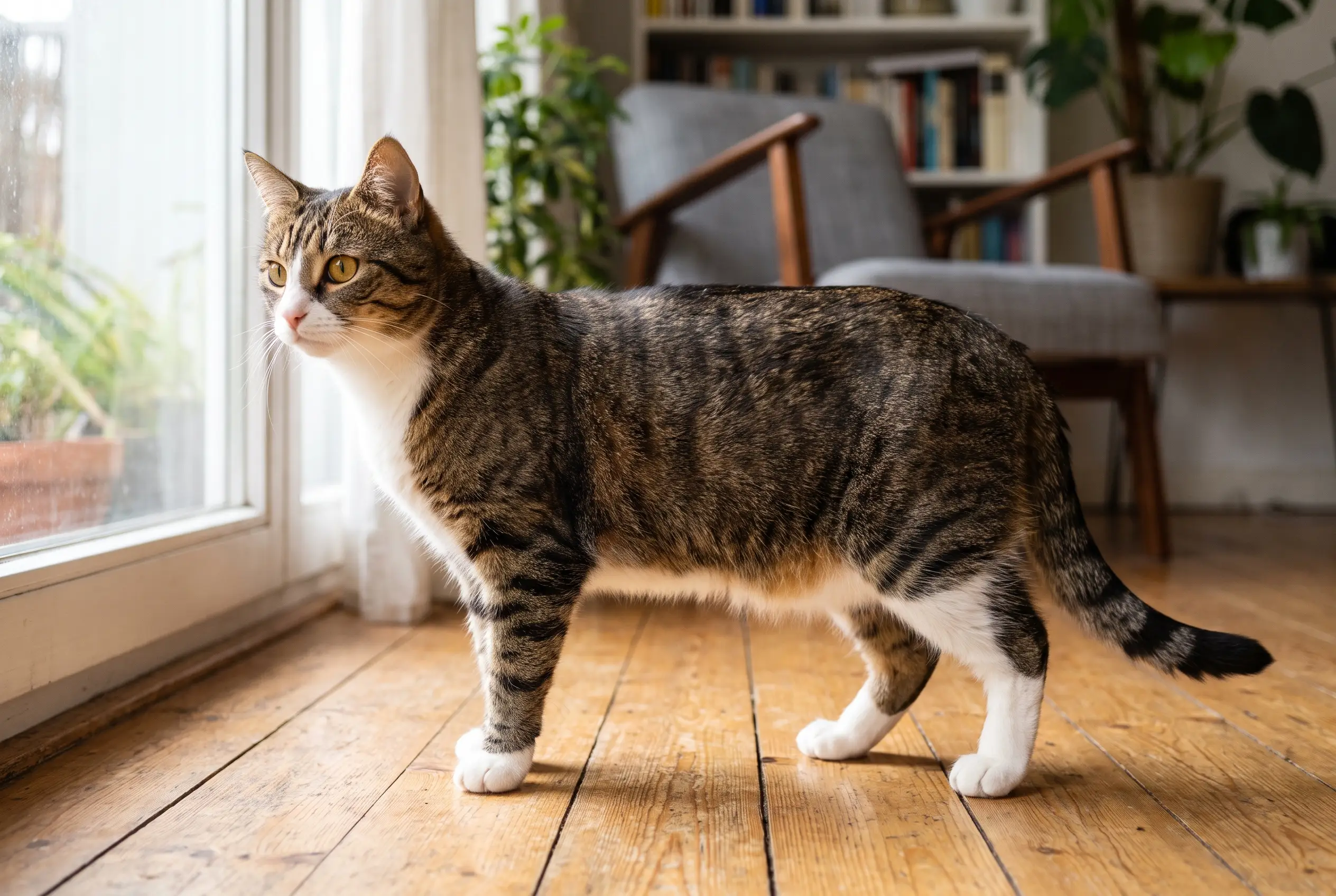
European Shorthair
A standard written to describe the cat Europe already had, not to invent a new one.
Vital stats
| Size | Medium to large · robust, muscular, not cobby |
| Weight | 3.5–7 kg · males heavier — breed literature, not FIFe standard |
| Life expectancy | 15–20 years — breed literature, not FIFe standard |
| Energy | Moderate — a working cat's instincts on a house cat's schedule |
| Shedding | Moderate, heavier at the spring and autumn coat change |
| Coat | Short, dense, springy and glossy; no undercoat to mat |
| Group | Shorthair |
| Origin | Sweden |
Breed traits
Friendliness
Care
Mind
The European Shorthair by the numbers
The European Shorthair facts owners search for most — price, lifespan, weight, shedding and colours, in one place.
Less common, so expect a waitlist and some travel to a reputable breeder — which pushes the price up. Ongoing costs stay modest — it eats little and routine vet care sits at the lower end.
We don't quote a single figure: the real price swings with breeder, region, bloodline and health testing — and a rescue costs a fraction of a breeder's litter. Adopting is almost always the cheapest route.
Temperament
European Shorthairs are steady rather than showy: calm around the house, patient with children and other pets, and independent enough to handle a working day alone without fuss. They keep real hunting competence — a legacy of centuries spent keeping grain stores and kitchens clear of rodents — and do better with an indoor outlet for it than without one. Friendliness comes with a filter: many are noticeably reserved with new people until they've had time to size a visitor up, then settle into ordinary house-cat sociability once they have. Nothing about the breed is engineered or exaggerated, which is the entire premise it was built on.
Habits & quirks
Still working the rodent shift
Centuries as a working cat left the hunting drive intact. Indoor cats need a real substitute — wand toys, thrown objects, puzzle feeders — or that instinct finds its own targets.
Sizes up strangers before committing
New people get a wary once-over rather than an instant greeting. Give it time and space rather than forcing contact, and it comes around on its own schedule.
Wears almost any coat FIFe allows
Solid, tabby in three patterns, tortie, smoke, van, bicolour — the standard's colour table covers nearly everything except colourpoint, which would signal a cross to another breed.
Grows a proper set of jowls once it's intact
An unneutered male often develops heavy cheek jowls, the same testosterone-driven trait seen in most domestic tomcats. The FIFe standard actually asks for cheeks that are full but not hanging — the jowly look is a side effect of staying entire, not something bred for.
Care
| Grooming | A weekly comb keeps the short coat glossy — it's dense but not thick enough to trap much loose hair, and there's no undercoat to mat. Step it up briefly during the spring and autumn coat change. |
| Health | There's no signature inherited disease tied to this breed. A naturally bred cat drawn from a wide, unselected gene pool doesn't carry the concentrated risk that repeated close breeding builds into some pedigree cats, and there's no breed-specific DNA panel to ask for because there's no known mutation behind one. That's not licence to skip the basics: an annual physical, a vet's ear for a heart murmur, and routine senior bloodwork are worth doing on any cat, this one included. |
| Weight | Robust and muscular reads as solid rather than heavy, but a full bowl left out all day will put weight on this cat exactly as it would any other. Measure meals and keep two short play sessions in the daily routine. |
| Socialisation | Reserve around new people is normal, not a fault to correct. Handle kittens often and let an adult approach visitors on its own terms rather than forcing contact, and the wariness stays mild instead of hardening into permanent shyness. |
Life expectancy
This breed has a typical life expectancy of 15–20 years — breed literature, not FIFe standard.
Similar breeds
Breeds with a similar build and background — worth a look if this one isn't quite the fit.
Common questions
Is a European Shorthair just a moggy with a pedigree?
Genetically, it's close. The breed was built from the same ordinary domestic cats that still live, unregistered, all over Sweden and the rest of the continent, and the FIFe standard explicitly wants a cat ‘not different, from the point of view of anatomy,’ from that ordinary housecat. What a pedigree European Shorthair has that your neighbour's tabby doesn't is paperwork that means something: a traceable lineage, breeding kept to the FIFe standard and away from other breeds, and a documented health and temperament history. It isn't a better cat than the unregistered version of itself — it's a documented one.
How do you tell a European Shorthair from a British or American Shorthair?
By what a photo often hides. The European's face is rounded but clearly longer than it is wide, on a body the FIFe standard calls robust and muscular but explicitly ‘not cobby’ — legs stay in proportion rather than short and thick. The British Shorthair has close to the opposite build: a genuinely cobby, compact body under a rounder head, the legacy of Persian outcrosses bred in after both World Wars, under a coat that stands off the body like plush. The American Shorthair sits between the two in build — square and muscular, broad-headed — but its coat has a harder, denser texture than the European's springy, glossy one. The clearest split is on paper: CFA and TICA recognise the British and American Shorthairs; the European Shorthair is a FIFe breed (and WCF, as the Celtic Shorthair) only, and doesn't compete under its own name at North American shows at all.
Why did a cat recognised since 1949 need its own standard so much later?
Because for decades FIFe judged it against the British Shorthair standard, and the British Shorthair had by then been rebuilt with Persian outcrosses into a cobbier, rounder-headed cat — nothing like the athletic housecat Scandinavian breeders actually had. They pushed for a standard that described their own cat instead, and got one in the early 1980s. It's still a genuinely uncommon pedigree today; most cats of the type it describes are living unregistered lives rather than being bred to a show standard, even in Sweden.
Does the European Shorthair shed a lot?
Moderately. The European Shorthair sheds a fair amount, steadily through the year with heavier seasonal patches. A weekly brush keeps most of the loose hair off your floors and clothes.
Are European Shorthair cats hypoallergenic?
No cat breed is truly hypoallergenic, and the European Shorthair isn't one of the easier ones. The trigger is Fel d 1, a protein in a cat's saliva and skin that ends up on the coat during grooming and then spreads on loose hair and dander — and this breed sheds enough to move plenty of it around. If someone at home is allergic to cats, this is a hard breed to live with; spend real time around one first.
Are European Shorthair cats good with children?
Often, in the right home. The European Shorthair is reasonably sociable and can settle well with children who already know how to handle a cat gently. Give it high perches and a room the kids don't own, and introductions go far better.
How much grooming does a European Shorthair need?
Very little. The European Shorthair handles its own coat and a comb once a week or so is plenty — mostly to catch loose hair before the cat swallows it. Claws, teeth and ears still want the usual checks, which is the part people skip on an easy-coated cat.
Stories featuring this breed
All stories →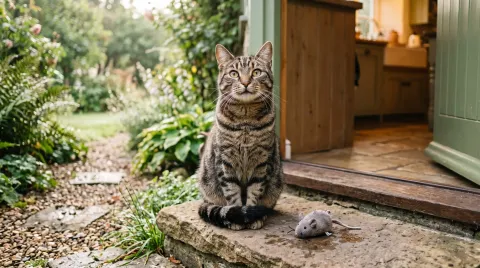
Why cats bring you dead animals
The mouse on the doormat is not a gift in any human sense, and the two leading theories disagree about what it is. What the delivery means, how to respond, and the honest arithmetic of what outdoor cats do to gardens.
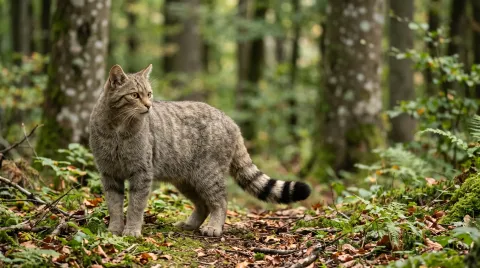
European wildcat: the cat Europe cannot count
Felis silvestris was only assessed as a species in its own right in 2022, and its official population trend is one word: unknown.
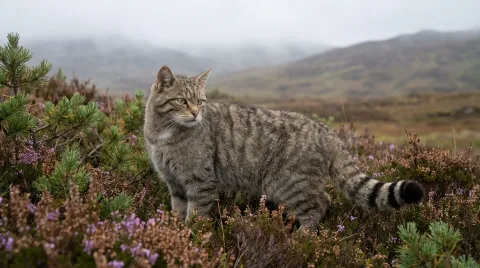
Scottish wildcat: not extinct, not a subspecies
The most-quoted fact about the Scottish wildcat misstates its own source. What the 2019 IUCN review really said, and where the cats stand in 2026.