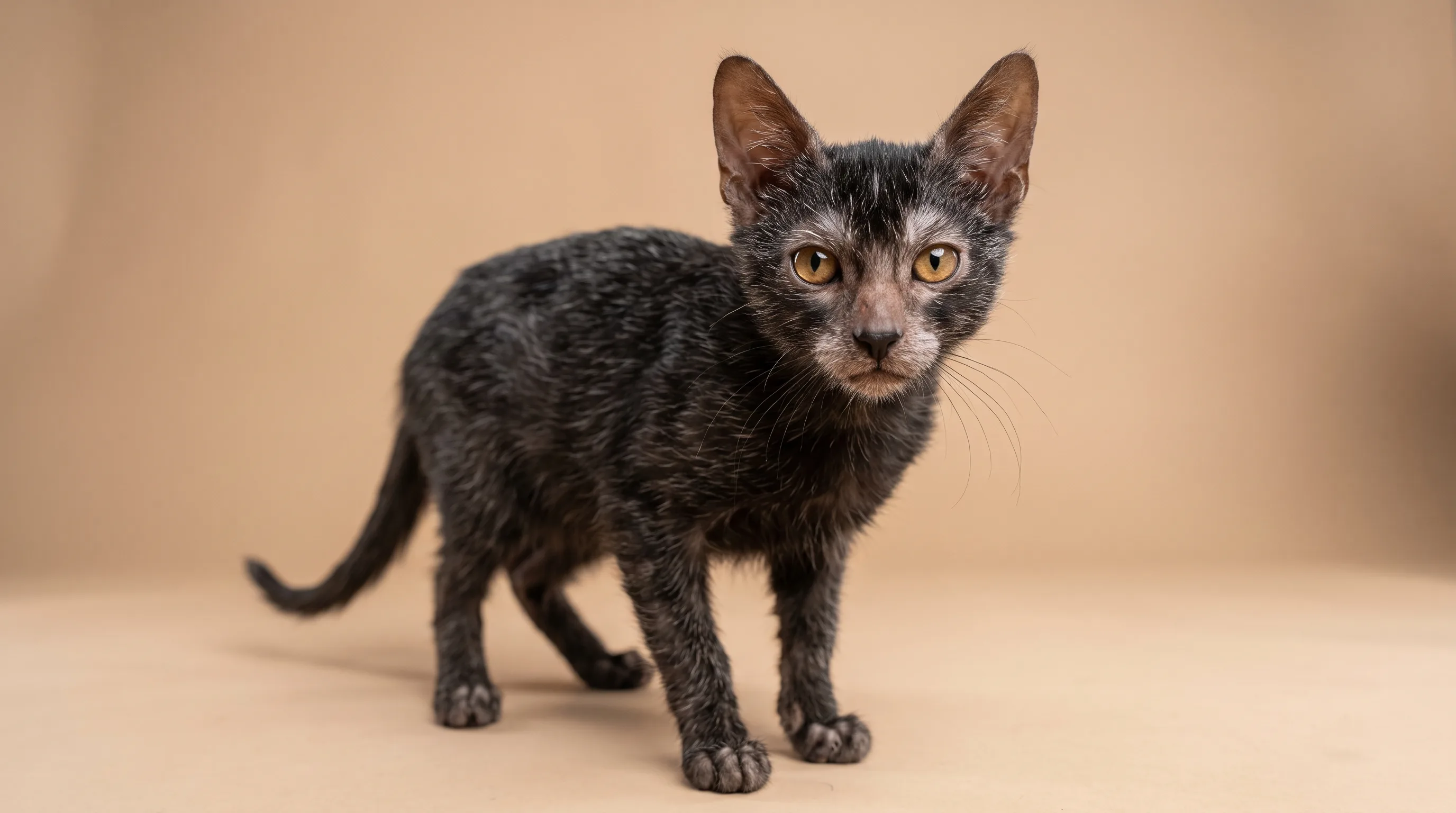
Lykoi
The "werewolf cat" — a natural mutation that gives a sweet, dog-like cat a patchy, roan, half-wild coat.
Vital stats
| Size | Small to medium · lean, athletic |
| Weight | 2.5–4.5 kg |
| Life expectancy | 12–15 years |
| Energy | High — busy, playful, hunts and explores |
| Shedding | Variable — periodic partial moult, can go patchy-bald |
| Coat | Sparse roan (colour mixed with white); hairless face and legs |
| Group | Shorthair |
| Origin | United States |
Breed traits
Friendliness
Care
Mind
The Lykoi by the numbers
The Lykoi facts owners search for most — price, lifespan, weight, shedding and colours, in one place.
Less common, so expect a waitlist and some travel to a reputable breeder — which pushes the price up. Ongoing costs stay modest — it eats little and routine vet care sits at the lower end.
We don't quote a single figure: the real price swings with breeder, region, bloodline and health testing — and a rescue costs a fraction of a breeder's litter. Adopting is almost always the cheapest route.
Temperament
The wolfish look hides an unusually warm, sociable cat. Lykoi bond closely with their people, get on with other cats and with dogs, and are often described as dog-like: they follow you around, greet visitors, and would rather explore and play than sit still. They keep a strong hunting drive and a busy, curious streak, so they want toys, climbing and games. Many are a little reserved with strangers at first and then thoroughly friendly once they've decided you're theirs. This is an affectionate, involved cat — not a quiet, decorative one.
Habits & quirks
Acts like a dog
Follows its person around, greets people at the door, and plays fetch and chase with real enthusiasm. Owners consistently describe a cat that behaves more like a small hound than a typical aloof feline.
Moults in patches
Lykoi shed their sparse coat periodically and can go temporarily bald, especially on the face, then regrow. It looks alarming the first time and is completely normal — not a skin disease or a sign of stress.
Hunts everything
A strong prey drive comes with the package. Toys, wand games and anything that scuttles will be stalked and pounced, which is a good outlet to lean on for exercise.
Runs warm and greasy
The thin, part-hairless coat means the skin does more work, produces more oil, and loses heat faster — so a Lykoi seeks out warm laps and radiators and needs regular bathing.
Care
| Skin and bathing | The exposed, oily skin is the main job. Lykoi need regular bathing to stop oil and grime building up in skin folds and around the ears and nails, much like a Sphynx. Get kittens used to a gentle wash early and it becomes routine. |
| Sun and temperature | Bare skin sunburns and burns raise skin-cancer risk, so keep a Lykoi out of strong direct sun. The sparse coat also insulates poorly: they feel the cold, appreciate warm spots and jumpers in winter, and are indoor cats. |
| Skin health checks | The breed is prone to blackheads, cysts and other skin problems, and the coat-producing gene keeps the skin in a low-grade irritated state. Watch for crusting, sores or itching beyond the normal moult, and see a vet early — skin is where this breed's health questions live. |
| Play and company | High energy plus high sociability means daily interactive play and, ideally, another pet for company. A bored, under-exercised Lykoi is a destructive one; a well-occupied one is calm and affectionate. |
Life expectancy
This breed has a typical life expectancy of 12–15 years.
Similar breeds
Breeds with a similar build and background — worth a look if this one isn't quite the fit.
Common questions
Is the Lykoi hairless like a Sphynx?
No, and that's the key difference. A Lykoi has a real, if sparse and patchy, coat — the roan mix of coloured and white hairs — with hairless areas on the face and legs, whereas a Sphynx is essentially bald. They share practical care, though: both have exposed, oily skin that needs regular bathing and protection from sun and cold.
Why is my Lykoi going bald in patches?
Because that's the breed working as designed. Lykoi periodically moult their thin coat and can lose hair in patches, particularly on the face, before it grows back. It's normal and not painful. What isn't normal is crusting, redness, sores or constant itching — those warrant a vet visit, since the breed is genuinely prone to skin problems.
Are Lykoi cats friendly?
Very. Despite the wolfish looks they are one of the more sociable, dog-like cat breeds: they bond hard with their people, get on with other cats and dogs, follow you around and play readily. They can be a touch cautious with strangers at first, then warm up quickly. They're happiest as involved family cats, not left alone all day.
Does the Lykoi shed a lot?
Moderately. The Lykoi sheds a fair amount, steadily through the year with heavier seasonal patches. A weekly brush keeps most of the loose hair off your floors and clothes.
Are Lykoi cats hypoallergenic?
No cat breed is truly hypoallergenic, and the Lykoi isn't one of the easier ones. The trigger is Fel d 1, a protein in a cat's saliva and skin that ends up on the coat during grooming and then spreads on loose hair and dander — and this breed sheds enough to move plenty of it around. If someone at home is allergic to cats, this is a hard breed to live with; spend real time around one first.
Are Lykoi cats good with children?
Usually yes. The Lykoi is a sociable cat that tends to tolerate the noise and handling of family life better than most, which is why it comes up so often for homes with kids. It still needs somewhere high and quiet to retreat to, and children need teaching that a cat walking away is allowed to.
How much grooming does a Lykoi need?
A weekly comb is usually enough for the Lykoi, with a second pass during a seasonal moult. That keeps loose hair off your furniture and cuts down on hairballs, since everything the cat doesn't shed onto the sofa it swallows while washing.