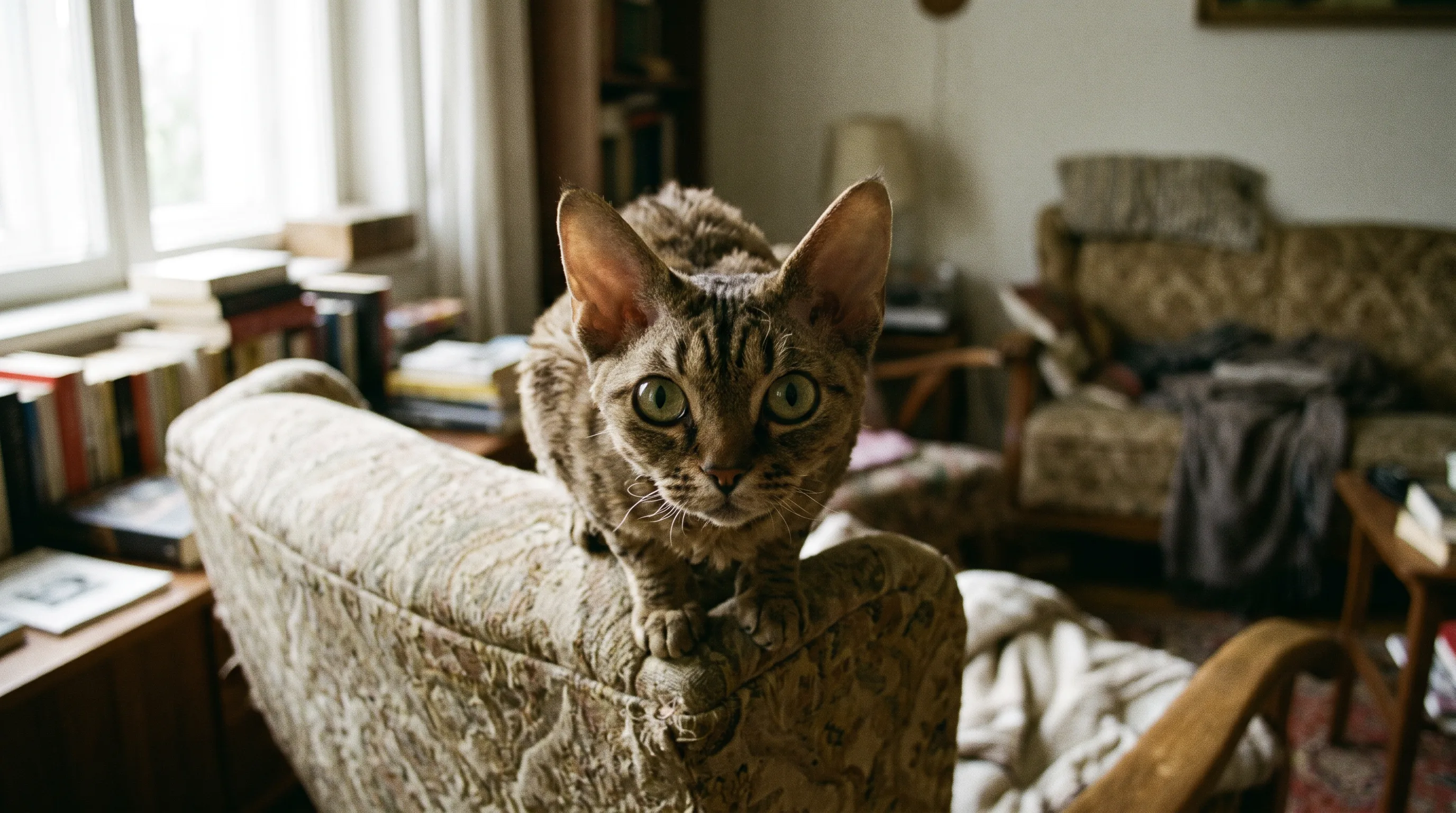
Devon Rex
Enormous ears, a pixie face, and a cat that treats your shoulders as its address.
On these lists: Hypoallergenic cats
Vital stats
| Size | Small · light-boned, whippy, muscular |
| Weight | 2.5–4.5 kg · males heavier |
| Life expectancy | 9–15 years |
| Energy | Very high — climbs and leaps constantly |
| Shedding | Very low, but the coat is fragile and patchy |
| Coat | Short, fine, loosely wavy; thin in places |
| Group | Shorthair |
| Origin | England |
Breed traits
Friendliness
Care
Mind
The Devon Rex by the numbers
The Devon Rex facts owners search for most — price, lifespan, weight, shedding and colours, in one place.
Less common, so expect a waitlist and some travel to a reputable breeder — which pushes the price up. Ongoing costs stay modest — it eats little and routine vet care sits at the lower end.
We don't quote a single figure: the real price swings with breeder, region, bloodline and health testing — and a rescue costs a fraction of a breeder's litter. Adopting is almost always the cheapest route.
Temperament
Devon Rex owners describe a monkey rather than a cat. They ride on shoulders, get into cupboards, steal food off plates with real technique, and treat the top of every door as a walkway. They're insistently affectionate: a Devon wants to be under the covers with you, on your chest, or draped round your neck, and it will complain if shut out of a room. They're smart enough for tricks, leash walks and puzzle feeders, and clever enough to be a genuine nuisance if bored. They get on well with children, dogs and other cats, largely because they don't take anything seriously. What they can't do is spend the day alone.
Habits & quirks
Lives on shoulders
Climbing a person and settling across the shoulders is the breed's signature. Many Devons will stay there while you cook, work and move around the house.
Steals food
Not opportunism — technique. Devons work plates, bags and closed containers with their paws, and a fair number learn which cupboard the food lives in.
Wags its whole body
The greeting is closer to a dog's: trotting over, tail up, head-butting, chirping, then climbing. Very few Devons hide from anyone.
Seeks heat constantly
Thin coat, low body fat, high metabolism. Under the duvet, on the laptop, pressed against a radiator or a person — always the warmest available option.
Health
The Devon Rex has two health issues that matter more than the rest, and both are worth naming to a breeder directly. Devon Rex myopathy, a congenital muscle-weakness syndrome from a recessive gene the breed shares with the Sphynx, causes progressive weakness and a bobbing head and usually proves fatal before the cat is two. There's a DNA test for it, so ask for the result by name. The other is hypertrophic cardiomyopathy, a heart condition screened by ultrasound scan. Kneecap luxation and a vitamin-K-dependent bleeding disorder have also been described in the breed. On top of the inherited side, remember this is a thin-coated cat that feels the cold and can sunburn on bare patches, so the everyday care is about warmth as much as anything.
Nutrition
| Grooming — hands only | The coat is too fragile for a brush; brushing snaps hairs and leaves bald patches. A weekly stroke with a hand or a soft damp cloth is enough. Ears are the actual job: Devons produce a lot of ear wax and most need a gentle clean every week or two. |
| Health screening | Two matter most. Devon Rex myopathy (congenital myasthenic syndrome) comes from a recessive COLQ variant shared with the Sphynx, causes progressive weakness and head-bobbing, and usually kills before two years — there is a DNA test, so ask for it by name. Hypertrophic cardiomyopathy is screened by scan. Patellar luxation and a vitamin-K-dependent bleeding disorder have also been described in the breed. |
| Warmth | Keep the house comfortable and provide covered beds. A Devon that has gone quiet and is sitting hunched is usually cold rather than ill, but check. Sunburn on thin-coated areas is the other side of it. |
| Skin and baths | The same low coat volume that makes them warm to hold means skin oil sits on the surface. Some Devons need a gentle bath every few weeks, especially around the nail beds, chin and the base of the tail. |
Cats are obligate carnivores, so a Devon needs a complete food built on animal protein. This is a small cat with a fast metabolism and very little insulating coat, so it runs its engine warm and often has a real appetite for its size, but that's no licence to free-feed, because a Devon will happily talk you into extra and it's an accomplished food thief besides. Feed measured meals, keep treats inside the day's total, and check the ribs by hand. Lean towards wet food or a wet-and-dry mix for the moisture, since cats are weak drinkers, and keep water where the cat likes to perch. If yours steals from plates and worktops, storing food out of reach is part of feeding it properly.
Kitten guide
A Devon Rex kitten is a small, warm, relentless companion that wants to be on you, and the early weeks set up a lifetime of that. Feed a complete kitten food little and often while it grows, and keep it warm, because a thin-coated kitten chills easily, so covered beds and a comfortable room matter more than they would for a fluffier breed. Leave the coat alone from the start: it's too fragile for a brush, and a weekly stroke with a hand or a soft damp cloth is all it needs. Get it used to having its big ears checked and gently cleaned early, because Devons make a lot of ear wax and this becomes a regular job. Socialising is the easy part, since this breed hides from nobody, so handle it often and let it meet the household, and buy only from a breeder who has DNA-tested the parents for the myopathy.
Training
Devons are among the cleverest and most trainable cats, closer to a small dog in how much they want to join in. Litter training is rarely an issue; a clean tray in a quiet spot handles it. The real work is channelling a busy, athletic cat that treats the top of every door as a walkway. Give it tall scratching posts and climbing routes, teach it tricks and lead walks and set it puzzle feeders, because a bored Devon uses its cleverness against you: opening cupboards, working plates and stealing food with genuine technique. Latch the cupboards it learns to open rather than fighting it. And accept the shoulders: this is a cat that rides on people, and letting it settle across your neck while you move around the house is less a training problem than the whole point of the breed.
Life expectancy
Devon Rexes live 9–15 years. That range is wider than most, and the low end is largely the myopathy, the inherited muscle disease that can take a kitten before it's two. Buying from a breeder who DNA-tests the parents is the single biggest thing you can do to land at the top of it rather than the bottom. After that it's heart screening, a lean weight, warmth for a cat that feels the cold, and the ordinary safety of an indoor or supervised life. A well-bred, well-kept Devon is a long-lived cat; the number mostly reflects how carefully it was bred.
Similar breeds
Breeds with a similar build and background — worth a look if this one isn't quite the fit.
Common questions
Is the Devon Rex hypoallergenic?
No. It sheds little, which helps some people, but it makes Fel d 1 in saliva and skin like any cat, and with less coat there's arguably more direct contact with the skin. If allergies are the reason you want one, spend several hours with an adult cat before committing.
Why do some Devons have bald patches?
Thin or bare areas on the belly, chest, throat and behind the ears are normal for the breed, and the coat can change through the year and with hormones. What isn't normal is sudden loss with scabs, redness or itching — that's a vet visit, not a breed trait.
Are they good with children?
Unusually good. They're sociable, resilient and interested in everything, and they'd rather join a game than leave the room. They're also small and light-boned, so young children need to be shown how to hold one — and the cat still needs a high shelf it can escape to.
Does the Devon Rex shed a lot?
Not much. The Devon Rex is a low-shedding breed, so loose hair around the home stays minimal. It still needs regular grooming, but you won't be fighting drifts of fur.
How much grooming does a Devon Rex need?
Very little. The Devon Rex handles its own coat and a comb once a week or so is plenty — mostly to catch loose hair before the cat swallows it. Claws, teeth and ears still want the usual checks, which is the part people skip on an easy-coated cat.
Stories featuring this breed
All stories →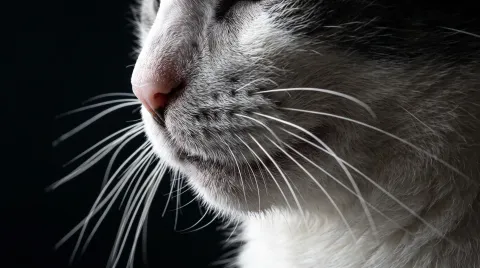
Whiskers: the instrument panel on your cat's face
Air-current radar, gap gauge, mood indicator and night-hunting sight — whiskers do jobs eyes can't. How the instruments work, what whisker positions tell you, and the honest verdict on whisker fatigue.
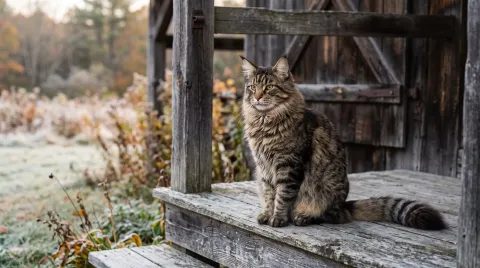
Where cat breeds come from, and why there are so few
Cats have a fraction of the breeds dogs do, and most of them are younger than the microwave. The story is landraces with paperwork versus cats made on purpose.