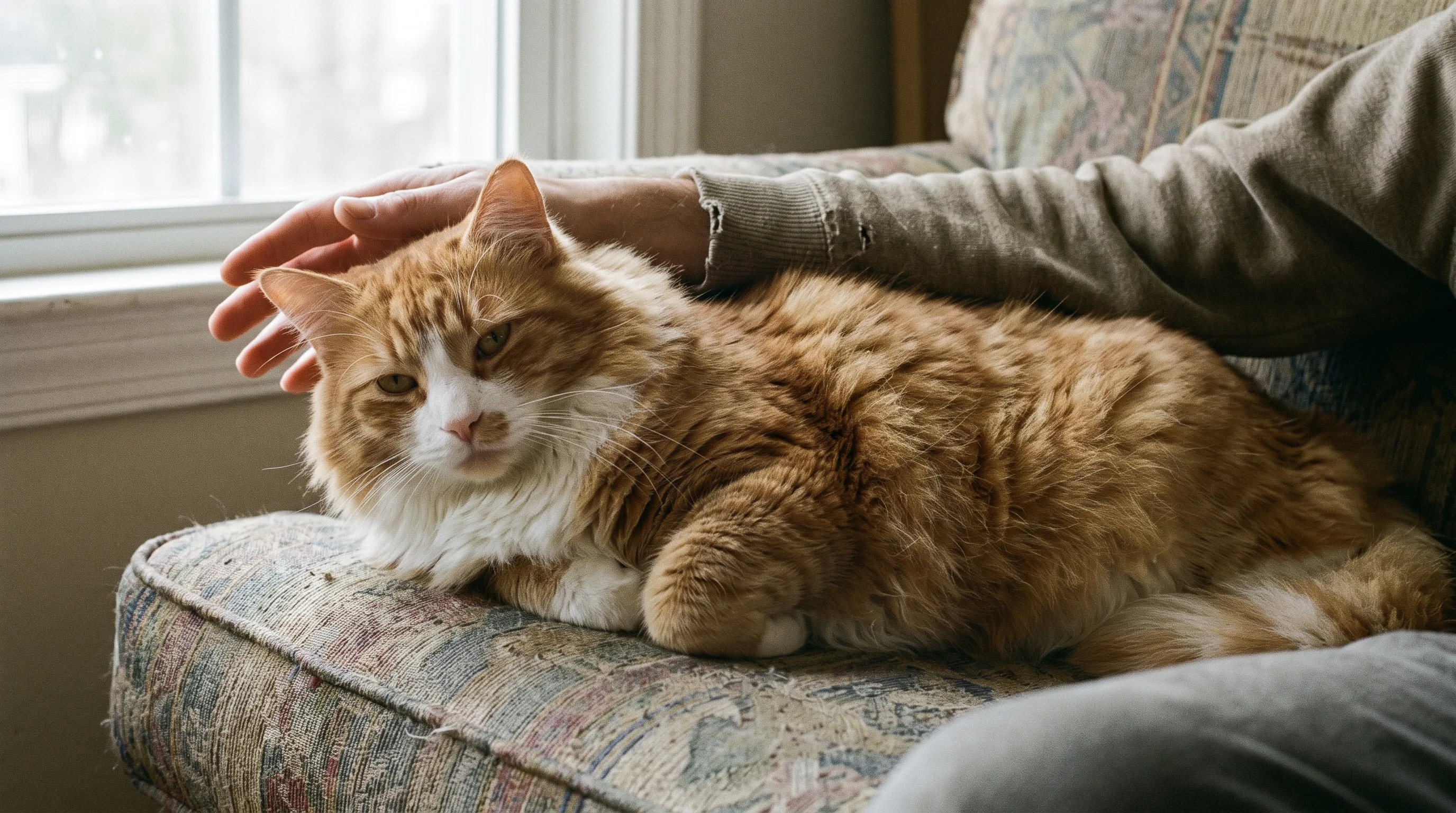
Ragamuffin
Very large, very soft, and entirely happy to be picked up.
On these lists: Cats for seniors
Vital stats
| Size | Large · broad-chested, heavy, slow to mature |
| Weight | 4.5–7 kg females · up to 9 kg males |
| Life expectancy | 13–16 years |
| Energy | Low to moderate — gentle play, then a lap |
| Shedding | Moderate, heavier in spring |
| Coat | Medium to medium-long, silky, dense; any colour |
| Group | Longhair |
| Origin | United States |
Breed traits
Friendliness
Care
Mind
The Ragamuffin by the numbers
The Ragamuffin facts owners search for most — price, lifespan, weight, shedding and colours, in one place.
Less common, so expect a waitlist and some travel to a reputable breeder — which pushes the price up. Ongoing costs stay modest — it eats little and routine vet care sits at the lower end.
We don't quote a single figure: the real price swings with breeder, region, bloodline and health testing — and a rescue costs a fraction of a breeder's litter. Adopting is almost always the cheapest route.
Temperament
Ragamuffins were bred for a personality rather than a look, and it shows. They go floppy when lifted, follow their people from room to room, meet visitors at the door, and are among the very few cats that will genuinely tolerate being carried around the house. They're slow-moving and unbothered — a Ragamuffin will let a child dress it in a hat and then go back to sleep, which is charming and is also why they need protecting from households that would take advantage. They don't cope well alone: this is a cat bred to be with people, and a Ragamuffin left empty-handed all day gets subdued and clingy in turn.
Habits & quirks
Goes limp
The Ragdoll trait carried across: most Ragamuffins relax completely when picked up, and a fair number will hang over a forearm for as long as you'll hold them.
Grows for years
Full size takes four to five years. A one-year-old Ragamuffin is a large kitten, not a finished cat, and the coat fills in on the same slow schedule.
Meets you at the door
Almost no wariness of strangers. This is a cat that greets the plumber, which is delightful and a good reason to keep it indoors.
Plays gently
The play style is soft — batting rather than pouncing, and claws usually stay in. It makes them easy with children and useless as mousers.
Care
| Grooming | Twice a week with a comb, more in spring. The coat is silky rather than woolly and mats less than the length suggests, but the ruff, the armpits and the trousers still need real attention, and a big cat is harder to reach all over than a small one. |
| Weight | The main risk. Large frame, low energy, food-motivated, thick coat hiding the outline — every factor points the same way. Feed measured meals, weigh the cat every couple of months, and keep two short play sessions in the routine even though it won't ask. |
| Health screening | The Persian outcrosses mean polycystic kidney disease is in the breed's history: ask for a negative PKD1 DNA test on both parents. Also ask for a cardiologist's echo for hypertrophic cardiomyopathy, and about the HCM mutation carried in Ragdoll lines, which some Ragamuffin pedigrees still touch. |
| Indoor life | A trusting, slow, valuable cat with no fear of strangers is a poor candidate for outdoor access. Keep a Ragamuffin in, and put the effort into vertical space, window seats and play instead. |
Life expectancy
This breed has a typical life expectancy of 13–16 years.
Similar breeds
Breeds with a similar build and background — worth a look if this one isn't quite the fit.
Common questions
What's the difference between a Ragamuffin and a Ragdoll?
Colour and registry politics, mostly. The Ragdoll is restricted to pointed patterns with blue eyes; the Ragamuffin comes in any colour, pattern and eye colour, and is generally a little heavier through the chest. The split in 1994 was about who controlled the breeding programme rather than about the cats, and the temperament is very similar.
Do they really go limp when you pick them up?
Most do, to a degree. It's a relaxation response rather than anything mechanical, and it varies between individuals. What matters practically is that it removes the cat's usual way of saying no, so handling a Ragamuffin gently and putting it down before it wants to leave is on you, not on the cat.
Are they good for a first-time owner?
Very, with one condition: somebody has to be around. They're calm, tolerant, easy to handle and undemanding about exercise. But they're bred to want company, and a Ragamuffin alone from morning to evening every weekday is a wasted cat — two, or a household with someone in, is the honest requirement.
Does the Ragamuffin shed a lot?
Moderately. The Ragamuffin sheds a fair amount, steadily through the year with heavier seasonal patches. A weekly brush keeps most of the loose hair off your floors and clothes.
Are Ragamuffin cats hypoallergenic?
No cat breed is truly hypoallergenic, and the Ragamuffin isn't one of the easier ones. The trigger is Fel d 1, a protein in a cat's saliva and skin that ends up on the coat during grooming and then spreads on loose hair and dander — and this breed sheds enough to move plenty of it around. If someone at home is allergic to cats, this is a hard breed to live with; spend real time around one first.
Are Ragamuffin cats good with children?
Usually yes. The Ragamuffin is a sociable cat that tends to tolerate the noise and handling of family life better than most, which is why it comes up so often for homes with kids. It still needs somewhere high and quiet to retreat to, and children need teaching that a cat walking away is allowed to.
How much grooming does a Ragamuffin need?
A weekly comb is usually enough for the Ragamuffin, with a second pass during a seasonal moult. That keeps loose hair off your furniture and cuts down on hairballs, since everything the cat doesn't shed onto the sofa it swallows while washing.