Turkish Van
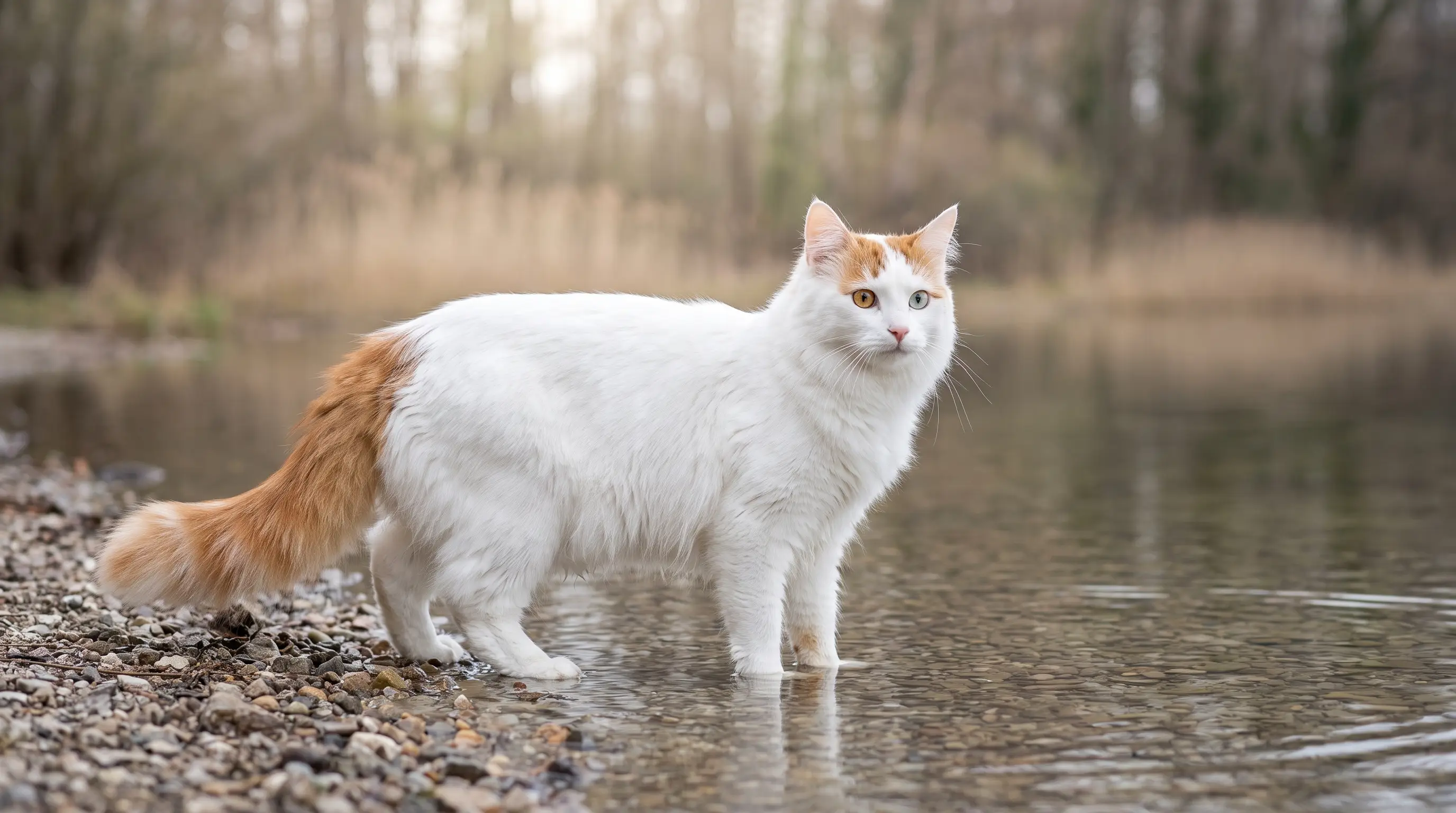
The swimming cat — a big, athletic white cat from Lake Van that heads for water instead of away from it.
Vital stats
| Size | Large · long, muscular body |
| Weight | 4–9 kg · males heavier |
| Life expectancy | 12–17 years |
| Energy | High — athletic and playful |
| Shedding | Low to moderate, seasonal |
| Coat | Semi-long, single, water-resistant |
| Group | Longhair |
| Origin | Turkey |
Breed traits
Friendliness
Care
Mind
The Turkish Van by the numbers
The Turkish Van facts owners search for most — price, lifespan, weight, shedding and colours, in one place.
Less common, so expect a waitlist and some travel to a reputable breeder — which pushes the price up. Ongoing costs stay modest — it eats little and routine vet care sits at the lower end.
We don't quote a single figure: the real price swings with breeder, region, bloodline and health testing — and a rescue costs a fraction of a breeder's litter. Adopting is almost always the cheapest route.
Temperament
The Turkish Van is a big, high-energy cat that acts less like a cushion ornament and more like a four-legged athlete. It bonds hard to its people and wants to be where you are, but on its own terms — most Vans dislike being picked up and held, preferring to sit beside you than on you. Expect a strong jumper and climber that finds the highest shelf in the room, keeps its kitten energy for years, and needs real play and space to stay out of trouble. Smart and food-motivated, they take well to clicker tricks, fetch and even harness walks.
Habits & quirks
Water play
Many will paw at running taps, join you at the sink, or wade into shallow water — a rare trait the breed is known for.
The Van pattern
Classically chalk-white with color restricted to the head and tail, most often auburn; the body stays white.
Odd eyes
Eyes may be amber, blue, or one of each — a striking odd-eyed pair is common in the breed.
Big jumper
An athletic climber that heads for the top of the bookcase; give it height or it will find its own.
Care
| Grooming | The single coat has no undercoat, so it rarely mats — a weekly brush, more during the seasonal shed, keeps it in good order. |
| Health | Generally a hardy, long-lived breed; buy from a breeder who screens their breeding cats and can show you health records. |
| Play & space | High energy and a love of heights: tall cat trees, sturdy shelves and daily active play keep the mischief and the weight down. |
| Water safety | The water habit is charming but supervise around full baths, ponds and pools — liking water is not the same as being safe in it. |
Life expectancy
This breed has a typical life expectancy of 12–17 years.
Similar breeds
Breeds with a similar build and background — worth a look if this one isn't quite the fit.
Common questions
Do Turkish Vans really like water?
Many do — the breed is nicknamed 'the swimming cat' and a lot of Vans will paw at taps, play in a sink or wade into shallow water. It is not universal, though; some individuals ignore water entirely, so treat it as a fun quirk rather than a guarantee.
Are the Turkish Van and Turkish Angora the same breed?
No. They are two distinct Turkish breeds. The Turkish Van is a larger, sturdier cat with the auburn head-and-tail 'Van' pattern, while the Turkish Angora is a finer-boned cat that is most often pure white. They are often confused but bred and judged separately.
Is a Turkish Van a good pet?
For an active household, yes — they are affectionate, playful and clever. But they are demanding, athletic and not a quiet lap cat, so they suit people who want an involved, energetic companion with room to climb, not a calm cat that naps all day.
What is a Turkish Vankedisi?
The all-white Van. In Turkey the Vankedisi is a distinct thing — a pure white cat from the Lake Van region, often with odd eyes, one amber and one blue — but most registries outside Turkey treat it as the white variety of the Turkish Van rather than a breed of its own. The catch is the same one that applies to any blue-eyed white cat: the dominant white gene carries a high risk of congenital deafness, and a cat deaf on the blue-eyed side needs to live indoors. Ask a breeder for BAER test results.
Does the Turkish Van shed a lot?
Moderately. The Turkish Van sheds a fair amount, steadily through the year with heavier seasonal patches. A weekly brush keeps most of the loose hair off your floors and clothes.
Are Turkish Van cats hypoallergenic?
No cat breed is truly hypoallergenic, and the Turkish Van isn't one of the easier ones. The trigger is Fel d 1, a protein in a cat's saliva and skin that ends up on the coat during grooming and then spreads on loose hair and dander — and this breed sheds enough to move plenty of it around. If someone at home is allergic to cats, this is a hard breed to live with; spend real time around one first.
Are Turkish Van cats good with children?
Often, in the right home. The Turkish Van is reasonably sociable and can settle well with children who already know how to handle a cat gently. Give it high perches and a room the kids don't own, and introductions go far better.
How much grooming does a Turkish Van need?
A weekly comb is usually enough for the Turkish Van, with a second pass during a seasonal moult. That keeps loose hair off your furniture and cuts down on hairballs, since everything the cat doesn't shed onto the sofa it swallows while washing.
Stories featuring this breed
All stories →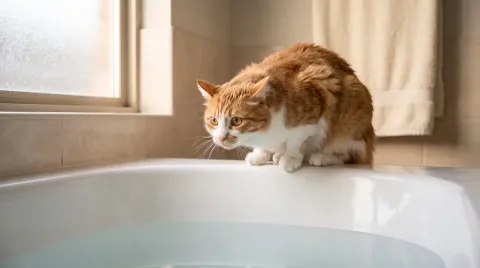
Why do cats hate water? Most do — here's why
It's evolution, a coat that waterlogs and a need for control — not fear of getting clean. Why most cats dodge a bath, the breeds that swim, and why the same cat loves a dripping tap.
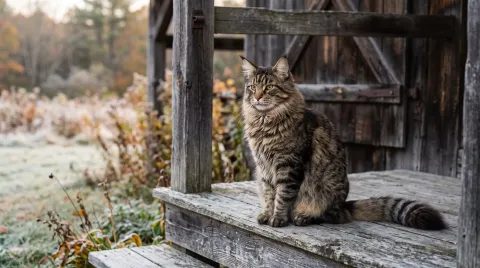
Where cat breeds come from, and why there are so few
Cats have a fraction of the breeds dogs do, and most of them are younger than the microwave. The story is landraces with paperwork versus cats made on purpose.
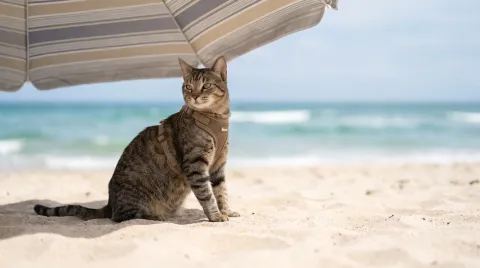
Can you take your cat to the beach? An honest guide
Most cats should skip the beach, and a few can go safely. The honest, vet-checkable guide to heat, sun, saltwater, harnesses and who stays home.