The village dog: the real default, and why your breed is the odd one out
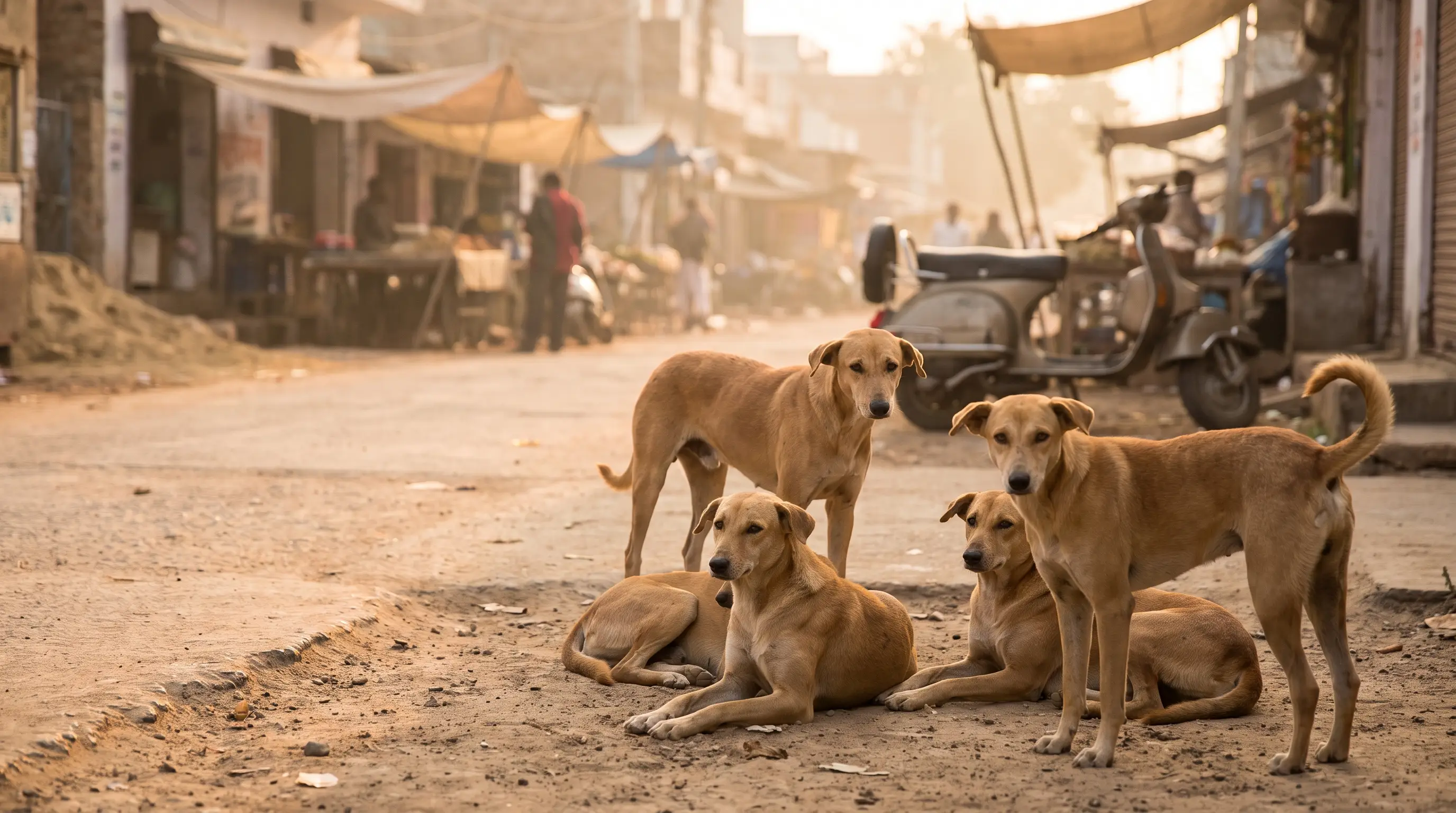
Picture the typical dog and you probably think of a breed with a name. That picture is wrong for most of the planet. The ordinary dog, the one you meet by the millions across Asia, Africa and Latin America, has no pedigree and no owner in the rich-world sense. It is a free-ranging village dog: medium build, short coat, curled tail, quietly living off human waste at the edge of a settlement. Breeds are the exception, and a very young one at that.
The default dog is a scavenger, not a pet
The dog you meet most often on Earth is not a labrador or a poodle. It is a loose-coated, ownerless or half-owned animal that hangs around markets, rubbish tips and back lanes, breeding as it likes. Researchers call these free-ranging dogs, and they are the numerical norm. The confined family pet, spayed and walked on a lead, is a rich-world minority form of an animal that mostly still lives the way it has for thousands of years.
This matters for how we tell the story of where dogs come from. The usual account runs from wolf to breed, as if the finished product were the Labrador Retriever asleep on the sofa. The honest account puts the village dog in the middle and treats the named, catalogued breed as a late addition. If you want the deep-time backstory of how the wolf became the dog at all, we cover that separately in how the wolf became the dog. This piece is about what happened next, and about the animal that most of that history actually produced.
How many dogs, and how many run free
Nobody knows the exact number, and anyone who gives you one is guessing. The best-sourced framing comes from Gompper's edited volume Free-Ranging Dogs and Wildlife Conservation (Oxford University Press, 2013) and from Hughes and Macdonald's review the same year: a global dog population of somewhere between roughly 700 million and 1 billion, of which perhaps 75 to 85 per cent are free-ranging rather than confined pets. Treat those as a range, not a headline figure. They are extrapolations from patchy regional counts, and the widely repeated "200 million strays" line has no traceable source, so we do not use it.
The ratio flips depending on where you stand. Lord, Feinstein, Smith and Coppinger, writing in Applied Animal Behaviour Science in 2013, put the confined-pet share at only about 17 to 24 per cent in developed countries. So the pet is not the default dog that occasionally goes feral. It is the other way round: the free-ranging dog is the default, and the confined pet is the version that appears where people have the money and the fences to keep it. When you scan a purebred through our dog breed library, you are looking at the unusual end of the species.
A landrace, not a breed
A village dog is a landrace, and a landrace is a different thing from a breed. A landrace settles into a consistent type through its local environment, with little or no deliberate selection by people. It is shaped mostly by geography, climate and what there is to eat. A breed, by contrast, is made: humans pick which animals mate, cull for defined traits, and write the result into a standard. One is isolated by place, the other by human control.
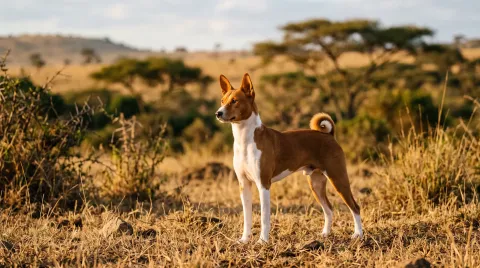
That is why free-ranging dogs from Vietnam to Mexico to sub-Saharan Africa look so alike without anyone planning it. The same scavenging niche keeps producing the same solution: a dog of about 12 to 18 kilograms, short-coated, with a wedge face and an upturned tail. A few recognised breeds are really landraces that got a name and a stud book late in the day. The Canaan Dog was drawn from the free-living pariah dogs of the Levant, the Dingo and the New Guinea Singing Dog are feral landraces that never needed a human breeder at all, and the Basenji traces back to Central African village dogs. For the fuller argument about when the named breed was actually invented, see the Victorian invention of the dog breed.
What the DNA of village dogs shows
Village dogs are not just mongrel offcuts of Western breeds that wandered off. Genetics settled that. Boyko and colleagues, publishing in PNAS in 2009, sampled 318 village dogs across Egypt, Uganda and Namibia and found genuinely indigenous populations, structured by region, not a mush of escaped pedigree stock. These are old, local dogs in their own right.
A larger study points, tentatively, at where the whole lineage may have begun. Shannon and colleagues, with Boyko as senior author, analysed 549 village dogs from 38 countries alongside more than 4,600 purebreds in PNAS in 2015. The oldest, most diverse signal fell in Central Asia, near present-day Nepal and Mongolia, which they read as a possible domestication origin. Read that as one leading hypothesis, not a verdict. A 2016 rebuttal in the same journal disputes the inference, and the question of where dogs were first domesticated is still open. What both studies agree on is that free-ranging village dogs, not any show breed, carry the deepest and broadest genetic diversity in the species. If you want the breeds that genuinely are old by DNA rather than by legend, we sort that in which dog breeds are actually ancient.
The trouble with the word 'pariah'
You will still see these dogs called pariah dogs. The word comes from the Tamil paraiyar, meaning outcast, and British colonists in India applied it to the free-ranging dogs they found in and around villages. It carried the contempt of the people using it, and it stuck. Modern scientific writing tends to avoid it, preferring primitive, aboriginal or, most usefully, landrace.
The label matters because it shaped how these dogs were valued, or not valued. A dog without a pedigree read as a dog without worth, which is exactly backwards if you care about the species as a whole. The village dog is the reservoir; the breed is the withdrawal from it. Some of the sighthounds now prized for their looks began as regional working landraces of exactly this kind, among them the Saluki of the Middle East, the Azawakh of the Sahel and the Afghan Hound of the mountains, dogs that were a type long before they were a breed. The hairless Xoloitzcuintli of Mexico has a similar story. It is also worth remembering how many breed names get the geography wrong, a habit we catalogue in breeds named after the wrong country.
Coppinger's stable dog
Raymond and Lorna Coppinger made the sharpest version of this argument, and it is worth taking seriously. In What Is a Dog? (University of Chicago Press, 2016) they argue that the roughly one billion self-sufficient village dogs, so uniform in size and shape across continents that never traded with each other, are the evolutionarily stable dog. They occupy a fixed niche, scavenging around human settlements, and that niche keeps selecting for the same animal generation after generation with no breeder involved.
On this reading the village dog is not a degraded pet but the real, self-maintaining form of the species. The Coppingers also argued that dogs largely domesticated themselves, moving into the scavenging niche as humans settled, rather than being captured and tamed by design. The roughly 350 named breeds, by that logic, are a recent and artificial minority: a spray of shapes we bred for our own reasons over the past couple of centuries, sitting on top of a dog that was doing fine without us. The cat story rhymes here, with far fewer breeds and a similar free-living majority, which we take up in where cat breeds come from.
Breeds are the recent add-on
Put the timeline in order and the point lands. Dogs have lived alongside people for many thousands of years, most of them as free-ranging village animals shaped by place. The pedigree breed, with its closed stud book and written standard, is barely a century and a half old in its modern form. It is a Victorian idea, and it changed the dog into something it had never been: an animal bred to a picture rather than to a way of life.
None of this is an argument against loving a particular breed. It is an argument for accuracy. When you meet a street dog abroad you are not looking at a failed pet or a stray that lost its way. You are looking at the ordinary dog, the version the species keeps making on its own. The named breeds in our breed catalogue are the interesting deviations from that norm, some ancient in their bones and some invented last week, some famous as national symbols and some already gone, as we trace in the dog breeds that vanished. Even the way we sort the survivors into working, herding and toy groups is a human decision, one we unpick in how the breed groups were drawn. The village dog is the constant they all vary from. For the rest of our writing on where dogs and cats came from, start at the BreedQuest stories index.
Common questions
How many dogs are there in the world?
No one has an exact count. The best-sourced estimates put the global dog population somewhere between roughly 700 million and 1 billion, drawing on Gompper's 2013 volume and Hughes and Macdonald's 2013 review. Treat that as a range extrapolated from patchy regional data, not a firm figure.
What percentage of dogs are free-ranging?
Probably around 75 to 85 per cent worldwide, meaning owned-but-unconfined or fully unowned dogs, per the same 2013 sources. In developed countries the ratio flips: Lord and colleagues (2013) estimate only about 17 to 24 per cent of dogs live as confined pets there.
What is a pariah dog?
It is an older term for a free-ranging village dog, from the Tamil paraiyar, meaning outcast, applied by British colonists in India. Scientists now generally prefer primitive, aboriginal or landrace, since pariah carries the contempt of the people who coined it.
Is a village dog a breed?
No. A village dog is a landrace, a type that settles through its local environment with little deliberate human selection. Breeds are made by intentional selection for defined traits and recorded in a stud book, which village dogs are not.
What is the difference between a landrace and a breed?
A landrace reaches a consistent type through geography, climate and diet, with little planned selection. A breed is produced deliberately, by choosing which animals mate to fix defined traits and writing the result into a standard. One is isolated by place, the other by human control.
Did dogs domesticate themselves?
Possibly. Raymond and Lorna Coppinger argued that dogs largely domesticated themselves by moving into the scavenging niche around early human settlements, rather than being captured and tamed by design. It is a well-supported hypothesis about the free-ranging dog, though the details of domestication remain debated.
See also
More in Dogs
Which dog breeds are actually ancient?
Genetics keeps naming the same handful of breeds as “ancient” — but that word means isolated from the Victorian breed factory, not unchanged since antiquity.

National dog breeds: how a dog becomes a country's symbol
A nation doesn't just adopt a breed. Somewhere there's paperwork, a patron country, and an official standard. Here's the machinery, and the cases that actually hold up.
The dog breeds that vanished — and the one a 2023 genome brought back into focus
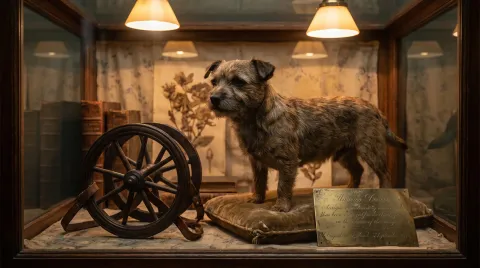
A woolly dog from the Pacific Northwest, a spit-turning kitchen worker, and the working landrace behind every retriever: what killed them, and what modern DNA can and cannot recover.
Seven groups, ten groups, three answers: how dog breeds get sorted
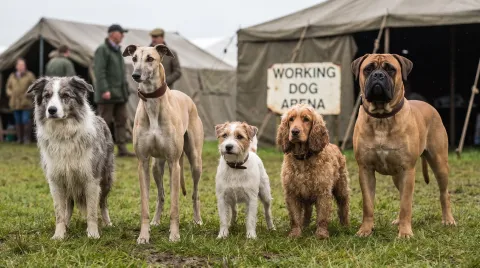
Kennel clubs sort several hundred breeds into a handful of groups. Here is how those lines were drawn, why the AKC's seven don't match the FCI's ten, and why the Standard Schnauzer belongs to three groups at once.
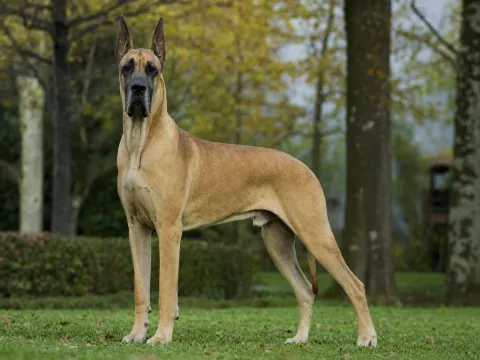
Dog breeds named after the wrong country
The Great Dane is German. The Australian Shepherd is American. Breed names are charming, and they are terrible geography.
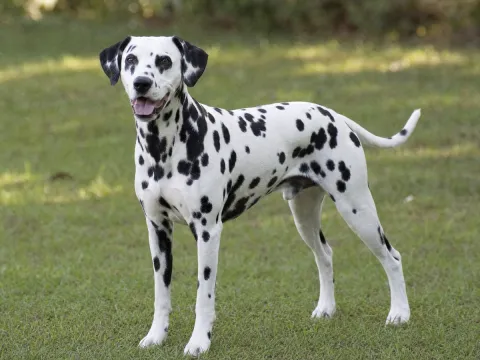
Who invented dog breeds, and when
Most 'ancient' breeds are younger than the bicycle. The breed as we know it was invented by Victorians with a stud book, in about 1873.