The dog breeds that vanished — and the one a 2023 genome brought back into focus
Most extinct dog breeds did not die out from neglect. They were bred out, worked out, or legislated out, and their genes usually went somewhere rather than nowhere. The clearest recent proof came in December 2023, when a team led by Audrey T. Lin and Logan Kistler at the Smithsonian sequenced the genome of a woolly dog that had been gone for more than a century, and showed the story we had been telling about its disappearance was wrong.
The Salish wool dog, read from a single pelt
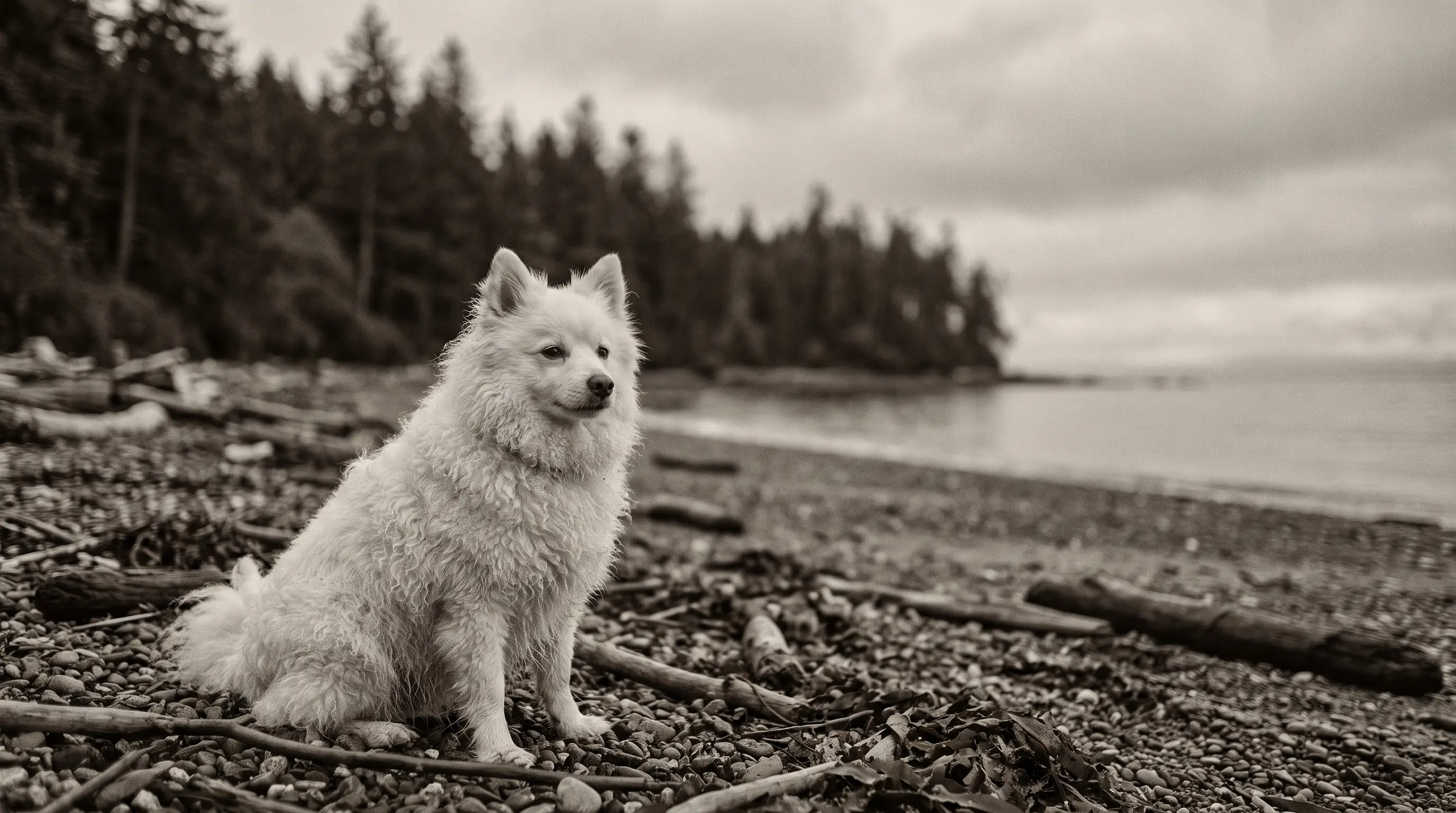
The Salish wool dog is the best-documented case of a lost breed being pulled back into focus by DNA. Coast Salish peoples of the Pacific Northwest kept a small, white, fleece-coated dog whose hair was sheared and spun into blankets, a practice with no real parallel elsewhere in the dog world. In build it read like a compact northern spitz, closer to a Samoyed or a Siberian Husky than to any working retriever. By the late 19th century the dogs were gone, and for a long time the assumed cause was casual: cheap trade blankets arrived, so the breeding simply lapsed and the dogs mixed away.
The 2023 study in Science, by Audrey T. Lin, Logan Kistler and colleagues, tested that assumption against evidence. They sequenced the genome from the pelt of "Mutton", a woolly dog collected in 1859 and held at the Smithsonian, the only known fleece of its kind. Mutton's woolly-dog ancestry traced back roughly 4,800 years, and despite one European great-grandparent, most of the genome was distinct, pre-colonial Indigenous dog with limited colonial mixing. The team also flagged candidate gene variants tied to the spinnable coat itself.
The part that reframes the story is the conclusion. Working alongside Coast Salish Elders, Knowledge Keepers and weavers, the researchers argued that colonial policies, not crossbreeding, drove the breed's collapse. Cheap blankets did not out-compete the dogs so much as the surrounding assault on the culture that kept them removed the conditions for keeping them at all. It is a rare instance where genomics and Indigenous knowledge point at the same, more uncomfortable answer, and a reminder that a dog can carry as much cultural weight as any of the breeds nations have turned into national emblems.
The turnspit dog, engineered obsolete
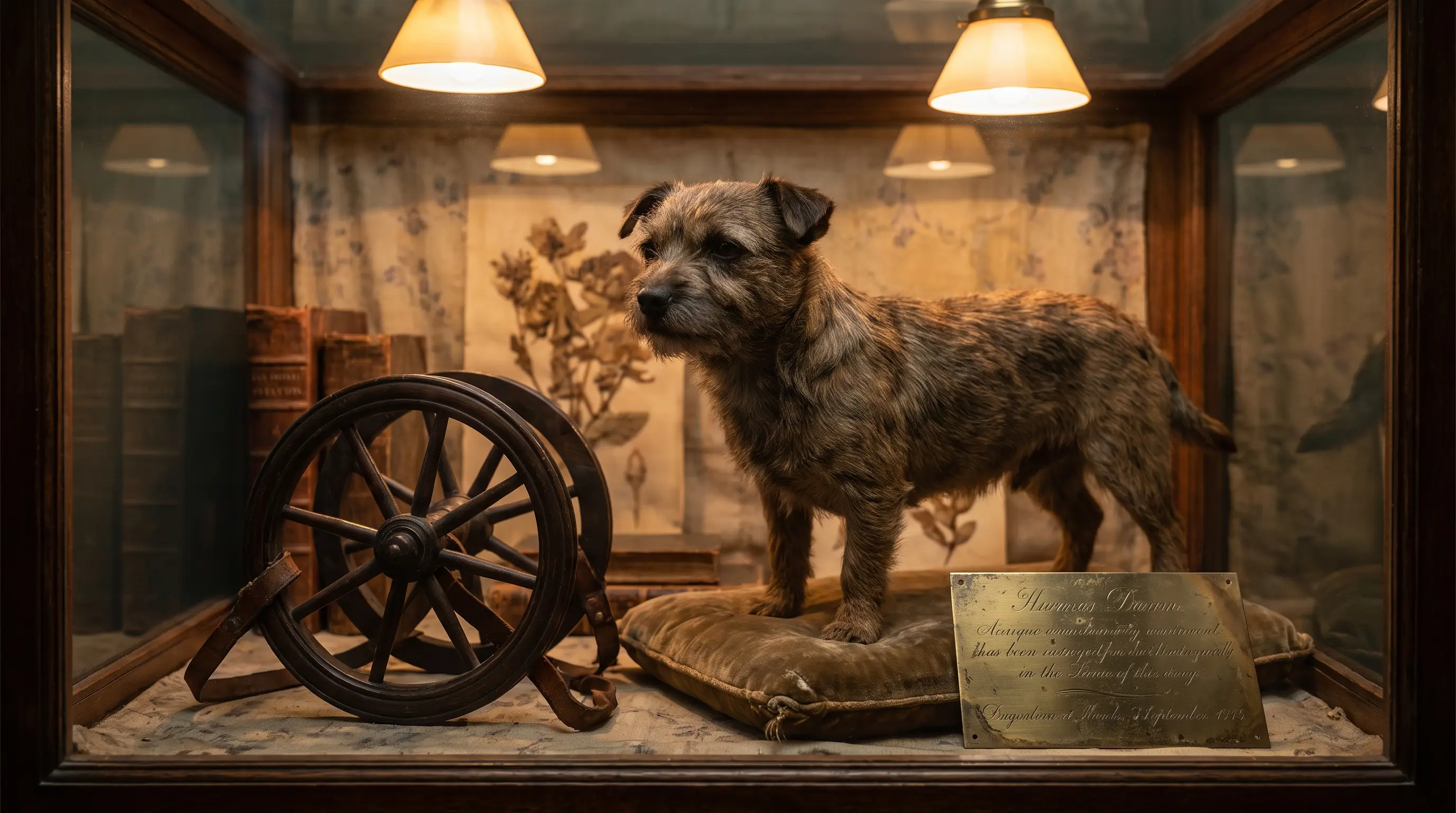
The turnspit dog went extinct because the job it was built for disappeared. From the 16th century, British kitchens bred a short-legged, long-bodied dog, sometimes catalogued as Canis vertigus or the "vernepator cur", to run inside a wall-mounted wheel and turn a roasting spit for hours. It was a purpose-built animal, shaped for a single task, closer to a piece of kitchen equipment than a companion.
Mechanical spit-turners made that task pointless. From the 1850s the dogs faded, and by around 1900 they were gone. Because nobody registered or showed them, nothing was preserved, no line to revive, barely a decent specimen to study. That is the quiet lesson of the turnspit: a working landrace with no fanciers behind it can vanish completely, leaving only a name and a few grim descriptions. It is worth setting that against the breeds we did keep for sentiment or sport, and against the free-breeding village dogs that never needed a fancier to survive at all. Surviving landraces like the Basenji and the Dingo persist for the opposite reason: their niche never closed.
The St John's water dog, ancestor of every retriever
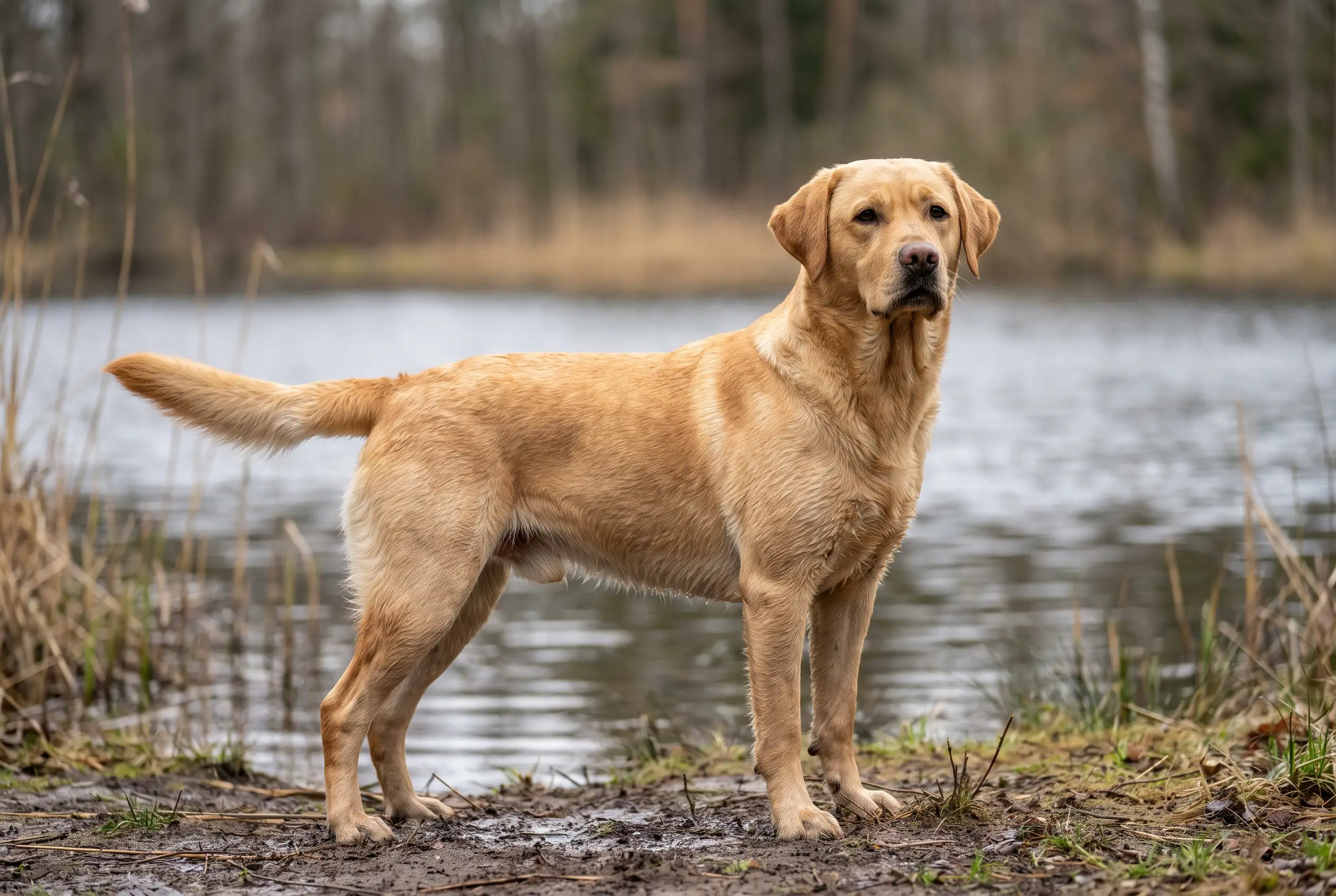
The single most consequential extinct dog is one almost nobody has heard of: the St John's water dog. This was a working landrace from Newfoundland, sometimes called the lesser Newfoundland, and it is the direct ancestor of the modern retrievers. The Labrador Retriever, the Golden, the Flat-Coated, the Curly-Coated and the Chesapeake Bay all descend from it, as does, more distantly, the giant Newfoundland it shared an island with.
So the type is not really lost, it is dispersed. The genes that made a sturdy, water-loving, biddable fishing dog were poured into the retrievers, a whole corner of the gundog group, and then diverged. The landrace itself, though, died as a distinct thing: the last two known individuals were males photographed in the 1980s, both too old and both the wrong sex to continue a line. If you want to see what happens when a working population is absorbed into pedigree breeds rather than kept as itself, this is the textbook case, and it sits right next to the Victorian invention of the modern breed that reshaped so much of dogdom around the same period.
The terrier and the spaniel that were absorbed, not lost
Two 19th-century British dogs show absorption as a distinct fate from extinction. The English White Terrier was a mid-1800s attempt at a prick-eared, all-white show terrier. It failed in the ring, never caught on, and rather than surviving as a rarity it was folded into the development of the Fox Terrier and other terriers before it ceased to be bred at all. It exists now only as ingredients in dogs that outlived it.
The Tweed Water Spaniel is the more famous ghost. A brown working water dog from around Berwick-upon-Tweed, it went extinct in the 19th century, but not before it became a founding contributor to the retriever lines and, most notably, the Golden Retriever. Both dogs make the same point as the St John's water dog on a smaller scale: a breed can end while its DNA carries on inside something more fashionable. Extinction of a name is not always extinction of a lineage, which is why claims that a breed is "truly ancient" deserve the kind of scrutiny we gave in which breeds are actually old.
Talbot and Molossus: legends, not records
Not every famous lost dog is a documented breed, and it matters to keep the two apart. The Talbot was a medieval English hunting hound, shown in heraldry as white, deep-chested, short-legged and long-eared, and traditionally cast as an ancestor of the beagle and foxhound. That ancestry is lore, handed down through hunting writing, not something established by genetics. The Talbot is real as an image and a name; its family tree is a story we inherited rather than a result we proved.
The Molossus is shakier still, and routinely mislocated. It was a genuine ancient dog type in Greek and Roman writing, a broad mastiff-like animal, and a plausible ancestor to later mastiffs. But it is best described as a historical type reconstructed from art and text, not a breed with a standard, and its home was Molossia in Epirus, north-western Greece, not Italy as it is often wrongly given. Treat both the Talbot and the Molossus as semi-legendary: worth knowing, not worth citing as if we had their pedigrees. That kind of geographic muddle is common enough that we gave it its own piece on breeds named after the wrong country.
Can any of them come back?
Not as the animals they were, no. A sequenced genome, like Mutton's, tells you what a dog was, but reading a genome is not the same as rebuilding a living population from it, and the Salish wool dog's woolly coat, temperament and role were bound up with a culture, not just a set of genes. The honest answer is that DNA can recover the record, not the dog.
What people do instead is reconstruct a look. Breeders occasionally build a new dog that resembles a lost one by selecting from surviving relatives, but the result is a fresh creation wearing an old name, closer in spirit to the rare breeds being nursed along today than to genuine resurrection. If you want the deeper backstory of where any of these dogs came from in the first place, that runs all the way to the domestication of the wolf, and forward into every profile in our dog breeds catalogue, or the parallel and much shorter story of where cat breeds come from. Extinction, for dogs, mostly means a working niche closed or a culture was broken. The genes usually survive it; the dog does not.
Common questions
What dog breeds are extinct?
Well-documented extinct breeds and landraces include the Salish wool dog of the Pacific Northwest, the British turnspit dog, the St John's water dog of Newfoundland, the English White Terrier and the Tweed Water Spaniel. Older types like the Talbot and the Molossus are known from art and text rather than firm records, so they are better called semi-legendary.
Why did the turnspit dog go extinct?
Its one job disappeared. The turnspit was bred to run in a wheel and turn a roasting spit, and mechanical spit-turners made it redundant from the 1850s. Because it was never registered or shown, nothing was preserved, and it was gone by around 1900.
What breed did the Labrador come from?
The Labrador descends from the St John's water dog, an extinct working landrace from Newfoundland. That same landrace is the shared ancestor of the Golden, Flat-Coated, Curly-Coated and Chesapeake Bay retrievers.
What was the Salish wool dog?
A small, white, fleece-coated dog kept by Coast Salish peoples of the Pacific Northwest, whose hair was sheared and spun into blankets. A 2023 genome study of an 1859 pelt showed its woolly-dog ancestry ran back roughly 4,800 years and remained largely distinct, pre-colonial Indigenous dog.
Why did the Salish woolly dog disappear?
The 2023 Science study by Lin, Kistler and colleagues, working with Coast Salish Elders and weavers, concluded that colonial policies rather than simple crossbreeding drove the breed's collapse in the 19th century. Cheap trade blankets alone did not end it; the disruption of the culture that maintained the dogs did.
Can extinct dog breeds be brought back?
Not as the original animals. A sequenced genome records what a dog was but cannot rebuild a living population or the culture and role it belonged to. Breeders can recreate a similar look from surviving relatives, but that produces a new dog wearing an old name, not a true resurrection.
See also
More in Dogs
Which dog breeds are actually ancient?
Genetics keeps naming the same handful of breeds as “ancient” — but that word means isolated from the Victorian breed factory, not unchanged since antiquity.
National dog breeds: how a dog becomes a country's symbol
A nation doesn't just adopt a breed. Somewhere there's paperwork, a patron country, and an official standard. Here's the machinery, and the cases that actually hold up.
The village dog: the real default, and why your breed is the odd one out
Most dogs on Earth are free-ranging scavengers, not purebred pets. The breed is the recent human invention sitting on top of a much older, stabler kind of dog.
Seven groups, ten groups, three answers: how dog breeds get sorted
Kennel clubs sort several hundred breeds into a handful of groups. Here is how those lines were drawn, why the AKC's seven don't match the FCI's ten, and why the Standard Schnauzer belongs to three groups at once.
Dog breeds named after the wrong country
The Great Dane is German. The Australian Shepherd is American. Breed names are charming, and they are terrible geography.
Who invented dog breeds, and when
Most 'ancient' breeds are younger than the bicycle. The breed as we know it was invented by Victorians with a stud book, in about 1873.