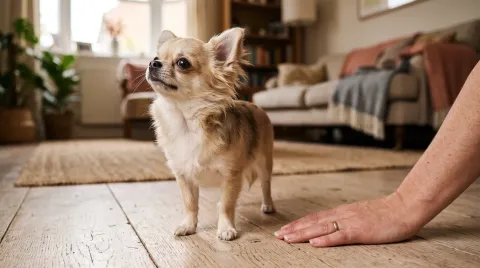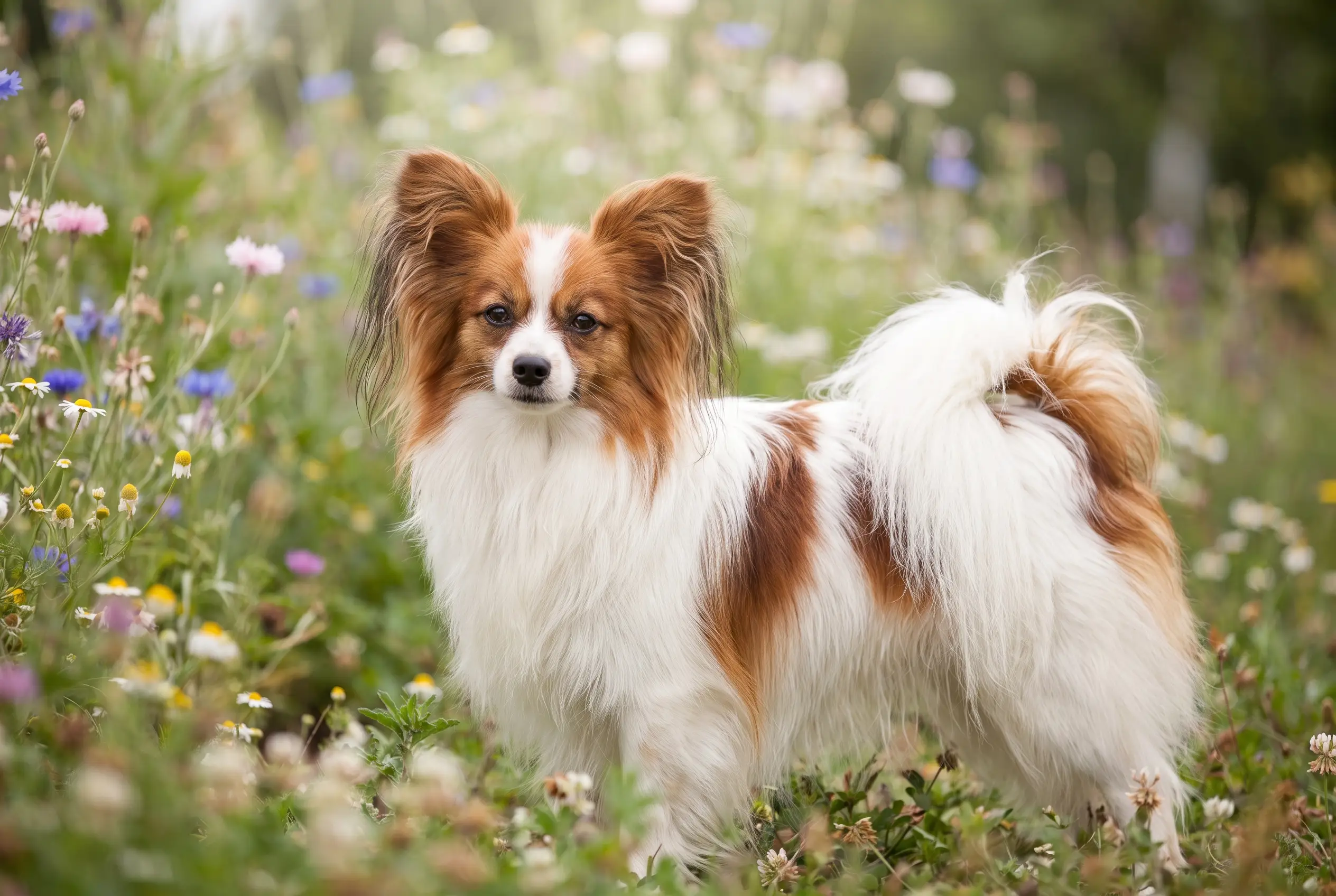
Papillon
Butterfly ears, hummingbird energy, border-collie brain — in under five kilos.
On these lists: Dogs for first-time owners · Small dogs
Vital stats
| Size | Toy · 20–28 cm |
| Weight | 2.5–4.5 kg |
| Life expectancy | 14–16 years |
| Energy | Moderate–high — 30–45 min/day plus play |
| Shedding | Light–moderate |
| Coat | Long silky single coat · white with patches |
| Group | Toy · FCI №77 / AKC |
| Origin | France / Belgium |
| FCI group | 9 — Companion and Toy Dogs · FCI 77 |
Breed traits
Friendliness
Care
Mind
The Papillon by the numbers
The Papillon facts owners search for most — price, lifespan, weight, shedding and colours, in one place.
Widely bred, so you can usually find a litter from a registered breeder without a long wait. Ongoing costs stay modest — it eats little and routine vet care sits at the lower end.
We don't quote a single figure: the real price swings with breeder, region, bloodline and health testing — and a rescue costs a fraction of a breeder's litter. Adopting is almost always the cheapest route.
Temperament
A courtiers' companion by trade, the Papillon never received the memo about lapdog idleness — it learns tricks in minutes, dominates small-dog agility, and patrols the house on constant happy business. Expect a shadow that offers behaviours for attention and treats every sofa as a launch pad.
Habits & quirks
Trick collector
Teach it one trick and it will lobby for the next — this dog genuinely enjoys homework.
Parkour paws
Sofa to armrest to windowsill — it maps every high route through the house.
Doorbell herald
Small dog, big announcements — it takes hall-monitor duty very seriously.
Velcro orbit
It doesn't just follow you; it circulates around you like a small, bright moon.
Health
The Papillon is a healthy, long-lived toy breed, and its care comes down to the small-dog essentials done well. Brush the teeth daily — crowded little mouths make dental disease the most common problem — and ask breeders about the knees, since patellar luxation is the one to watch in small dogs. Keep the weight lean to spare those knees, and don't let it leap from human-height furniture: it's confident and athletic, but the fine bones don't forgive a bad landing.
Nutrition
| Training | Feed the brain daily — tricks, games and sports. A bored Papillon invents its own entertainment, loudly. |
| Exercise | Thirty to forty-five minutes of walks plus lively play; it has far more engine than its size suggests. |
| Grooming | Surprisingly easy — the silky single coat has no undercoat and needs only a weekly brush. |
| Health | Guard the small-dog essentials: daily dental care, sound knees, and no leaps from human-height furniture. |
A Papillon is small but genuinely athletic, so measure the meals to match what it burns and keep it lean — extra weight is a lot on a 3 kg frame and harder on the knees. This is a trick dog that works for food, so count training treats into the day's total rather than adding them on top. Feed set meals, and favour dental-friendly chewing, since small-breed teeth crowd and need daily care.
Puppy guide
A Papillon puppy is bright, quick and busy, and the best thing you can do early is treat that brain like it matters — start simple tricks and games from the first weeks, because a bored Papillon invents its own noisy entertainment. Socialise it widely, teach a quiet cue before the watchdog habit sets in, and protect the fragile frame by managing stairs and big leaps. Grooming is easy; the mind is the real job.
Training
Papillons are among the cleverest of all the toy breeds — eighth in Stanley Coren's ranking of working intelligence — and they learn tricks in minutes and take happily to agility. Give that brain daily work with tricks, games and sport, or it will find its own, loudly. Keep sessions short, upbeat and reward-based, and teach a reliable quiet cue early, since an alert little dog announces every visitor by default.
Known health issues
No breed is problem-free. These are the conditions most worth knowing about for this breed — with what a good breeder screens for and what an owner watches. General guidance, not a substitute for your vet.
Slipping kneecap
A kneecap that slips out of place, common in small breeds and usually manageable. Good breeders screen: Vet-checked knees on the parents. Watch for: An occasional skip or hop on a back leg.
Inherited eye disease
Progressive retinal atrophy and cataracts run in several breeds and can dim or take sight over time. Good breeders screen: Eye-tested parents and, where available, a DNA test for PRA. Watch for: Night-time bumping, cloudy eyes, or hesitation in dim light.
Life expectancy
Papillons live 14–16 years. The Papillon is one of the longest-lived dogs there is, and steady care keeps it there: daily dental care, a lean weight that spares the knees, and everyday caution about leaps the fine bones can't absorb. Keep the mind busy and the yearly vet check booked, brush the easy single coat weekly, and a well-kept Papillon stays a bright, active companion well into old age.
Popular Papillon mixes
Papipoo
A small, very clever, often low-shedding cross that's lively and quick to learn; give it training and games as well as brushing.
Chion
A tiny, bright, devoted cross with a big personality that bonds hard to one person. Socialise early and mind the fragile frame and teeth.
Paperanian
A small, lively, clever cross with a fluffy coat and plenty to say. It needs regular brushing, early training and a reliable quiet cue.
Similar breeds
Breeds with a similar build and background — worth a look if this one isn't quite the fit.
Breeds that look like this
Common questions
Are Papillons yappy?
They're alert and quick to announce visitors, so yes, unmanaged they can be vocal. Early training to a quiet cue and plenty of mental work keep the bulletins brief.
What is a Phalène?
The drop-eared variety of the very same breed — phalène is French for moth, as papillon is for butterfly. Both ear types can appear in one litter.
Are Papillons good for first-time owners?
Yes — they're biddable, small enough to manage, and forgiving of beginner mistakes. Just don't under-estimate them: they need training and activity, not a handbag.
Does the Papillon shed a lot?
Moderately. The Papillon sheds a fair amount, steadily through the year with heavier seasonal patches. A weekly brush keeps most of the loose hair off your floors and clothes.
Is the Papillon hypoallergenic?
Not really. No dog is truly hypoallergenic, and the Papillon's shedding coat releases plenty of the dander that sets off allergies. If someone at home is allergic, this isn't the easiest breed to live with — spend time around one first.
Is the Papillon good with children?
Generally yes. The Papillon is a friendly, people-loving breed that usually does well with children when raised and socialised well. As with any dog, teach children to be gentle and supervise around toddlers.
Is the Papillon easy to train?
Yes. The Papillon is one of the more trainable breeds — quick to learn and keen to work with you, which makes reward-based training straightforward. Start early, keep it positive, and it picks things up fast.