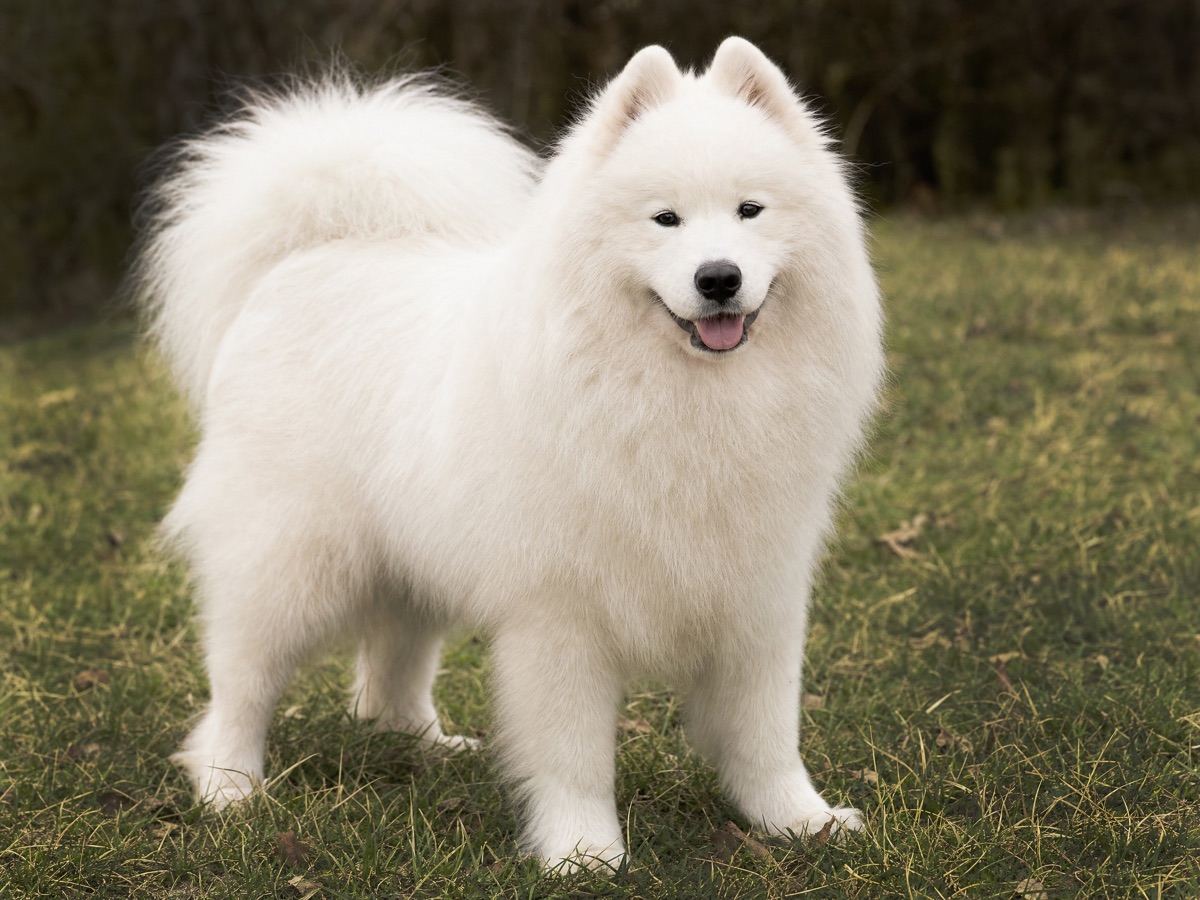
Samoyed
The smiling snow cloud — a fluffy, friendly, tirelessly cheerful spitz.
On these lists: Dogs for cold climates
Vital stats
| Size | Medium · 48–60 cm |
| Weight | 16–30 kg |
| Life expectancy | 12–14 years |
| Energy | High — 60+ min/day |
| Shedding | Very heavy, with seasonal blows |
| Coat | Profuse white double coat, weather-proof |
| Group | Working · FCI №212 / AKC |
| Origin | Siberia, Russia |
| FCI group | 5 — Spitz and primitive types · FCI 212 |
Breed traits
Friendliness
Care
Mind
The Samoyed by the numbers
The Samoyed facts owners search for most — price, lifespan, weight, shedding and colours, in one place.
Less common, so expect a waitlist and some travel to a reputable breeder — which pushes the price up. Plan for steady ongoing costs — mid-range food, routine vet care and insurance. Its coat also needs a professional groom every few weeks — a real line in the budget.
We don't quote a single figure: the real price swings with breeder, region, bloodline and health testing — and a rescue costs a fraction of a breeder's litter. Adopting is almost always the cheapest route.
Temperament
The Samoyede people herded reindeer with these dogs by day and slept against them for warmth by night — which built a breed that treats human company as a biological need. Expect boundless cheer, a gentle mouth with children, real working stamina, and loud, inventive protest if left alone too long.
Habits & quirks
The Sammy smile
The upturned mouth is genuine breed engineering — it stops drool freezing in Arctic cold.
Talks back
Woos, howls and chirps opinions at you; conversation is a two-way affair.
Velcro in fur
Follows you room to room — a closed door is a personal insult.
Snow joy
First snowfall triggers zoomies, digging and refusal to come indoors.
Health
The Samoyed is a hardy, generally healthy breed, and most of the day-to-day 'health' work is really coat and climate: that thick double coat needs frequent brushing and, because it was built for the Arctic, real care in the heat. Buy from a breeder who screens hips, keep the dog lean and well-exercised, never shave the coat, and give it the company it craves — an isolated Samoyed is a stressed one.
Nutrition
| Grooming | Brush thoroughly two or three times a week, daily during blows — mats form fast in the dense undercoat. |
| Company | This breed genuinely suffers alone; long solo days produce barking and creative destruction. |
| Exercise | An hour or more daily, plus jobs for the brain — hiking, pulling sports and trick training all suit. |
| Heat | The Arctic coat means shade, water and early-morning walks in summer; never shave it. |
A Samoyed is a working spitz that does well on a good-quality diet matched to how active it is, so feed measured meals and keep the ribs easy to feel under all that coat. It's easy to over-feed a dog you can't quite see the shape of, so go by touch, not by the fluff, and count treats into the day.
Puppy guide
A Samoyed puppy is friendly, busy and covered in a coat that will one day need serious upkeep, so make brushing a normal, pleasant routine from the start. Socialise early, get it used to short spells alone in small doses — this breed hates being left — and keep exercise gentle while the joints are still forming. In summer, teach it to rest in the shade and never let a fluffy puppy overheat.
Training
Samoyeds are clever but independent — bred to make their own calls out herding reindeer, not to hang on your every word — so they train nothing like a biddable retriever. Keep sessions short, upbeat and reward-based, and pick your battles. This is a vocal breed, so teach a 'quiet' cue early, and give it a job and plenty of company, because a bored, lonely Samoyed protests loudly and creatively.
Known health issues
No breed is problem-free. These are the conditions most worth knowing about for this breed — with what a good breeder screens for and what an owner watches. General guidance, not a substitute for your vet.
Hip dysplasia
A poorly fitting hip joint that wears early and can cause pain and arthritis, most common in larger breeds. Good breeders screen: Hip-scored parents (BVA/OFA/FCI). Watch for: Stiffness, a bunny-hop run, or reluctance on stairs.
Inherited eye disease
Progressive retinal atrophy and cataracts run in several breeds and can dim or take sight over time. Good breeders screen: Eye-tested parents and, where available, a DNA test for PRA. Watch for: Night-time bumping, cloudy eyes, or hesitation in dim light.
Underactive thyroid
A slowed thyroid that saps energy and coat, common in mid-size and large breeds and easily treated. Good breeders screen: Ask about thyroid testing in the line. Watch for: Weight gain, low energy, and thinning coat — a simple blood test confirms it.
Life expectancy
Samoyeds live 12–14 years. For a coated working breed the Samoyed is long-lived, and the levers are simple: keep it lean, give it the daily exercise and company it needs, and buy from a breeder who screens hips. Manage the heat, keep the coat healthy, and a Samoyed stays a sturdy, cheerful dog well into old age.
Popular Samoyed mixes
Sammypoo
A fluffy, friendly cross bred for a lower-shedding coat and an outgoing temperament. It still needs regular grooming and plenty of company; coat type and size vary from pup to pup.
Similar breeds
Breeds with a similar build and background — worth a look if this one isn't quite the fit.
Breeds that look like this
Common questions
Are Samoyeds good family dogs?
Yes — friendly, gentle and playful with everyone, they're poor guard dogs but wonderful companions for active families who can meet the grooming and company needs.
Do Samoyeds shed a lot?
Enormously — the thick white double coat sheds constantly and blows out twice a year. Expect daily brushing and white fluff everywhere.
Do Samoyeds bark a lot?
They're a vocal breed — barking, wooing and howling to greet, protest or simply comment. Plenty of exercise, company and early 'quiet' training keep the volume manageable.
Is the Samoyed hypoallergenic?
Not really. No dog is truly hypoallergenic, and the Samoyed's shedding coat releases plenty of the dander that sets off allergies. If someone at home is allergic, this isn't the easiest breed to live with — spend time around one first.
Is the Samoyed easy to train?
Reasonably. The Samoyed is trainable with consistency and rewards, though it isn't the quickest study. Keep sessions short and positive, and be patient with the basics like recall.
Stories featuring this breed
All stories →
Which dog breeds are actually ancient?
Genetics keeps naming the same handful of breeds as “ancient” — but that word means isolated from the Victorian breed factory, not unchanged since antiquity.

The dog breeds that vanished — and the one a 2023 genome brought back into focus
A woolly dog from the Pacific Northwest, a spit-turning kitchen worker, and the working landrace behind every retriever: what killed them, and what modern DNA can and cannot recover.

Seven groups, ten groups, three answers: how dog breeds get sorted
Kennel clubs sort several hundred breeds into a handful of groups. Here is how those lines were drawn, why the AKC's seven don't match the FCI's ten, and why the Standard Schnauzer belongs to three groups at once.