Seven groups, ten groups, three answers: how dog breeds get sorted
There is no single correct number of dog breed groups, and the same dog can sit in more than one of them depending on who is judging. Groups are a filing system built by kennel clubs to run their shows and explain their breeds, drawn around what a dog was bred to do and patched wherever that logic ran thin. The AKC uses seven, the FCI ten, and where the schemes disagree they tell you more about committees than about dogs.
Why are dogs grouped at all?
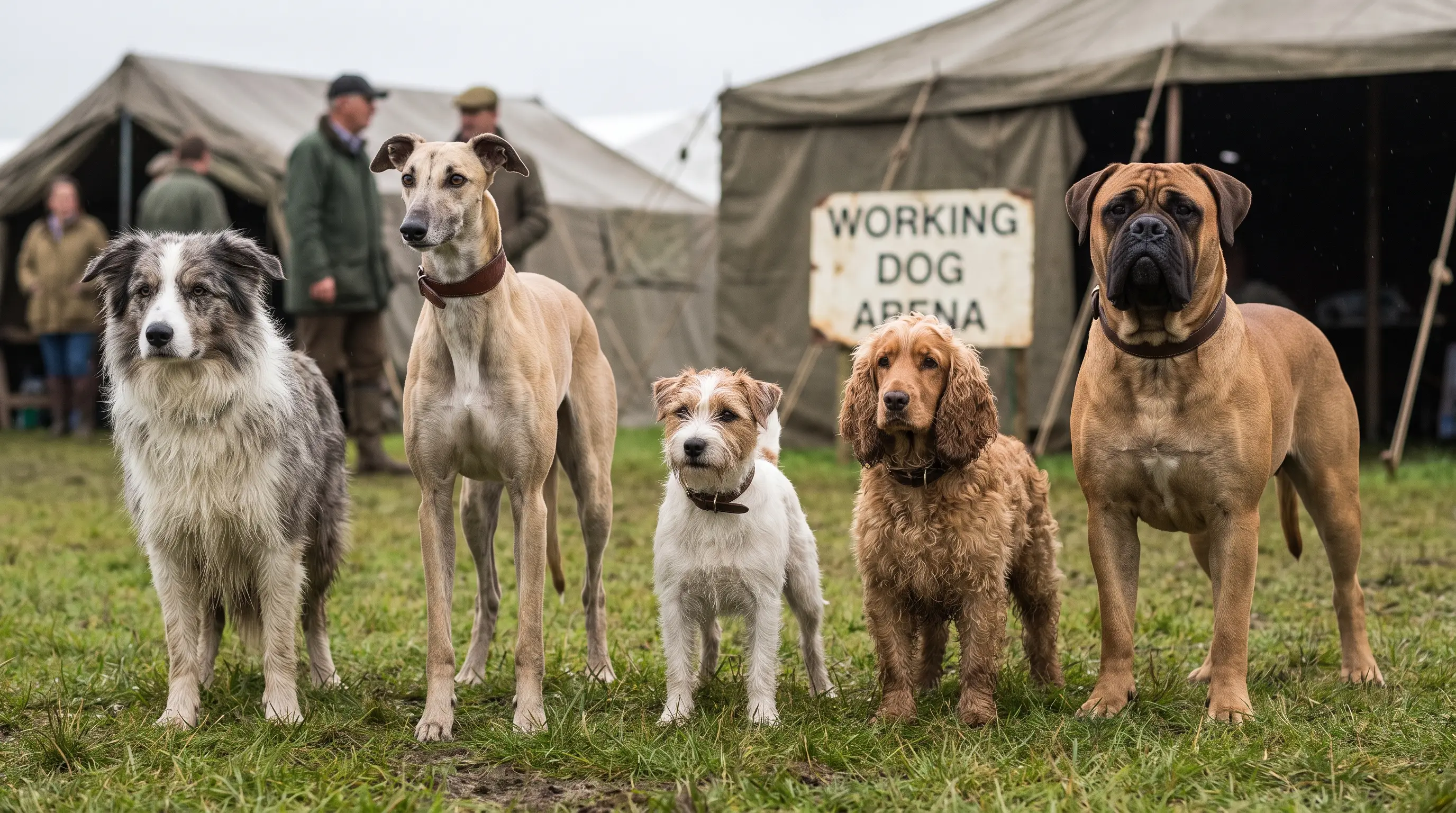
Dogs are grouped so a judge can compare like with like, and so the rest of us get a rough map of several hundred breeds sorted by the work each was first bred to do. A show ring cannot fairly line up a Siberian Husky against a Bedlington Terrier on identical terms, because the two were built for opposite jobs and opposite shapes. So the kennel clubs sort every recognised breed into a handful of groups, judge within each group, then send the group winners forward to a Best in Show round.
The habit comes straight out of the Victorian dog fancy, the same conformation-showing culture that gave us the invention of the modern breed and the closed stud book. All of it begins long after the split from the wolf. Grouping was administrative before it was anything else, a way to run a large show without chaos and a way to explain to the public why a spaniel and a sheepdog are judged by different yardsticks. The American Kennel Club still frames its groups exactly that way, as a tool for judging and public education rather than a statement about biology.
That origin matters, because it tells you what the groups are and are not. They are a filing system built around function. They are not a family tree. A group is a claim about what a dog was for, not about which dogs are related to which.
How the categories were drawn
The categories were drawn around original function, then quietly patched wherever function ran out. Start with the clear cases. Retrievers fetch shot game, terriers go to ground after vermin, sighthounds run down prey by eye whether that is the desert-bred Saluki or the West African Azawakh, and livestock guardians such as the Great Pyrenees sleep out with the flock. Those jobs are distinct enough that almost every scheme keeps them apart in some form.
The trouble starts with the leftovers. Not every breed has a tidy job, and some jobs blur into each other. So each registry ends up with at least one catch-all where the misfits live, and the contents of that bin are where the schemes stop agreeing. The AKC calls its bin Non-Sporting. The UK Kennel Club calls its version Utility and adds a separate Pastoral group for livestock breeds. The FCI keeps a Companion and Toy group plus a large Spitz and primitive types group that has no clean equivalent anywhere else.
This is why grouping feels scientific from a distance and arbitrary up close. The functional core is real. Around it sits a ring of judgement calls, historical accident and national habit. A breed's group tells you how one committee decided to file it, at one point in time, under one set of pressures. Move to the next country and the filing changes.
Seven, ten, or seven: the count won't agree
There is no single right number of dog groups, which is the first thing to know before anyone quotes you one. The AKC uses seven conformation groups: Sporting, Hound, Working, Terrier, Toy, Non-Sporting and Herding. The UK Kennel Club also uses seven, but names them differently: Gundog, Hound, Pastoral, Terrier, Toy, Utility and Working. The FCI, the international federation most of Europe judges under, uses ten. Each is a separate registry with its own rulebook, and we lay the schemes side by side on the breed groups hub.
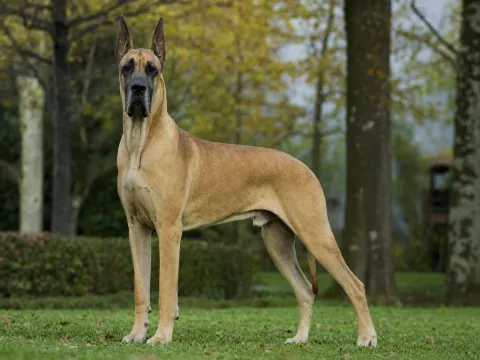
The seven you will most often see quoted, the AKC's, have not always numbered seven. The newest of them is Herding, which split off from the Working group in 1983. Before that, herding breeds such as the Australian Shepherd were judged alongside sled dogs and mastiffs like the Great Dane. That 1983 split is the last structural change to the AKC scheme, and it is the datable fact worth holding onto when an older article claims a different tally. If you read that the AKC has eight groups, it does not; that number usually comes from miscounting the holding categories, which we will get to.
Breed counts drift too, so treat any figure as a snapshot. At the time of writing in 2026, the AKC recognises roughly two hundred breeds, the Kennel Club a little over two hundred, and the FCI more than three hundred and sixty on its current list, but each registry updates its own roll and the numbers move. If you need an exact count, read it off the registry.
One Standard Schnauzer, three different groups
The clearest proof that groups are conventions, not facts, is a single breed that lands in three different groups depending on who is judging. Take the Standard Schnauzer. The AKC files it in the Working group. The United Kennel Club, the other large American registry, files the very same breed under Terrier. The FCI puts it in Group 2, alongside the pinschers and the molossoid breeds. Same dog, same written standard, three answers.
None of the three is wrong. The Schnauzer really did work as a farm ratter, which is the terrier's argument, and it really did general-purpose guarding and cart work, which is the working case, and the FCI simply files it by type next to its close relatives. Each registry weighted a different slice of the same history.
The same thing happens across the board with the Nordic and primitive breeds. The FCI gathers them into that Spitz and primitive types group, so the Samoyed, the Akita, the Chow Chow and the Basenji sit together as a recognised family. The AKC has no such group, so those breeds scatter: some into Working, some into Non-Sporting, some into Hound. The dogs did not change. The filing cabinet did. A group name can also collide with national pride, since many of these breeds double as national symbols at home.
Miscellaneous and the Foundation Stock Service are waiting rooms
The Miscellaneous Class and the Foundation Stock Service are not groups, and calling either one a group is the most common way people arrive at a wrong count. Both are holding categories, the waiting rooms a breed passes through on its way to full recognition.
The Foundation Stock Service is the earliest stage, essentially a record-keeping register for breeds still building up their numbers and pedigrees in the country. A breed can then move up to the Miscellaneous Class, where it may compete at shows but is not yet assigned to one of the seven groups. Only after that does it graduate into a group proper.
This is how rare breeds and recent arrivals enter the system, and it is worth knowing when you read breathless news about a new group. The 2024 additions that made the rounds were newly recognised breeds moving out of these waiting rooms, not a new eighth group. The count of groups has not moved since 1983. What moves is the list of breeds inside them, and the breeds that never graduate can slip away entirely, as the breeds that vanished show.
What a group can and can't tell you
A group tells you what a dog was bred to do. It does not tell you what your dog is related to, and it does not always tell you how your dog will behave. Those are three different questions, and the group answers only the first, and only roughly.
If you want relatedness, you want DNA, not the show ring. Genetic work keeps finding that the groups cut across the actual family tree: some breeds we call old really are, and some are recent reconstructions wearing an old name, a gap the ancient dog breeds story pulls apart. The groups also say nothing about the free-breeding village dogs that make up most of the world's dog population, since those were never bred for a show category at all. And a group name can mislead about where a breed comes from, which is its own tangle of breeds named after the wrong country.
Used for what it is, the system earns its keep. It is a fast way to narrow several hundred breeds down to a shortlist that suits your life. The best entry point is our own breed groups hub, which lays out each group with the breeds inside it. From there you can open any breed profile, compare the registries, or read how the closed stud book turned working types into show breeds in the first place. Start from what the dog was for, then check everything else against it.
Common questions
What are the 7 dog breed groups?
In the AKC scheme they are Sporting, Hound, Working, Terrier, Toy, Non-Sporting and Herding. The UK Kennel Club also uses seven, but names them Gundog, Hound, Pastoral, Terrier, Toy, Utility and Working.
How many dog breed groups are there?
It depends on the registry. The AKC and the UK Kennel Club each use seven, while the FCI, which most of Europe judges under, uses ten. There is no single universal number.
Why are dogs grouped?
Kennel clubs group breeds so judges can compare similar dogs against each other and so shows can be run in an orderly way. The categories are built around the job each breed was originally bred to do, which is why they double as a rough map for the public.
What is the difference between AKC and FCI groups?
The AKC uses seven groups organised largely around function, while the FCI uses ten and adds categories the AKC has no equivalent for, most notably a Spitz and primitive types group. Because the two weight history differently, the same breed can land in different groups in each system.
Can a dog be in more than one group?
Yes, across different registries. The Standard Schnauzer, for example, is in the Working group at the AKC, the Terrier group at the UKC, and FCI Group 2 with the pinschers, all at the same time.
What is the Non-Sporting group?
It is the AKC's catch-all group for breeds that don't fit the other functional categories, from the Chow Chow to the French Bulldog. The UK Kennel Club's closest equivalent is its Utility group.
See also
More in Dogs
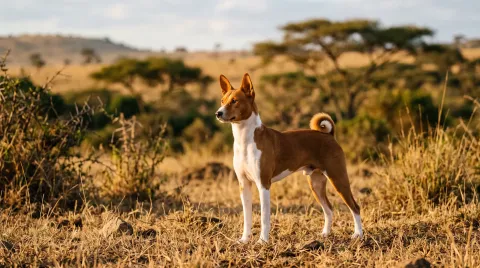
Which dog breeds are actually ancient?
Genetics keeps naming the same handful of breeds as “ancient” — but that word means isolated from the Victorian breed factory, not unchanged since antiquity.

National dog breeds: how a dog becomes a country's symbol
A nation doesn't just adopt a breed. Somewhere there's paperwork, a patron country, and an official standard. Here's the machinery, and the cases that actually hold up.
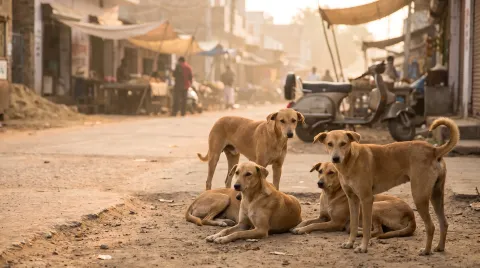
The village dog: the real default, and why your breed is the odd one out
Most dogs on Earth are free-ranging scavengers, not purebred pets. The breed is the recent human invention sitting on top of a much older, stabler kind of dog.
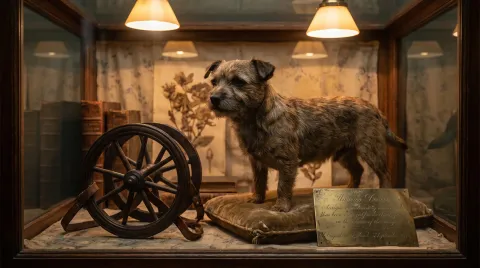
The dog breeds that vanished — and the one a 2023 genome brought back into focus
A woolly dog from the Pacific Northwest, a spit-turning kitchen worker, and the working landrace behind every retriever: what killed them, and what modern DNA can and cannot recover.
Dog breeds named after the wrong country
The Great Dane is German. The Australian Shepherd is American. Breed names are charming, and they are terrible geography.
Who invented dog breeds, and when
Most 'ancient' breeds are younger than the bicycle. The breed as we know it was invented by Victorians with a stud book, in about 1873.