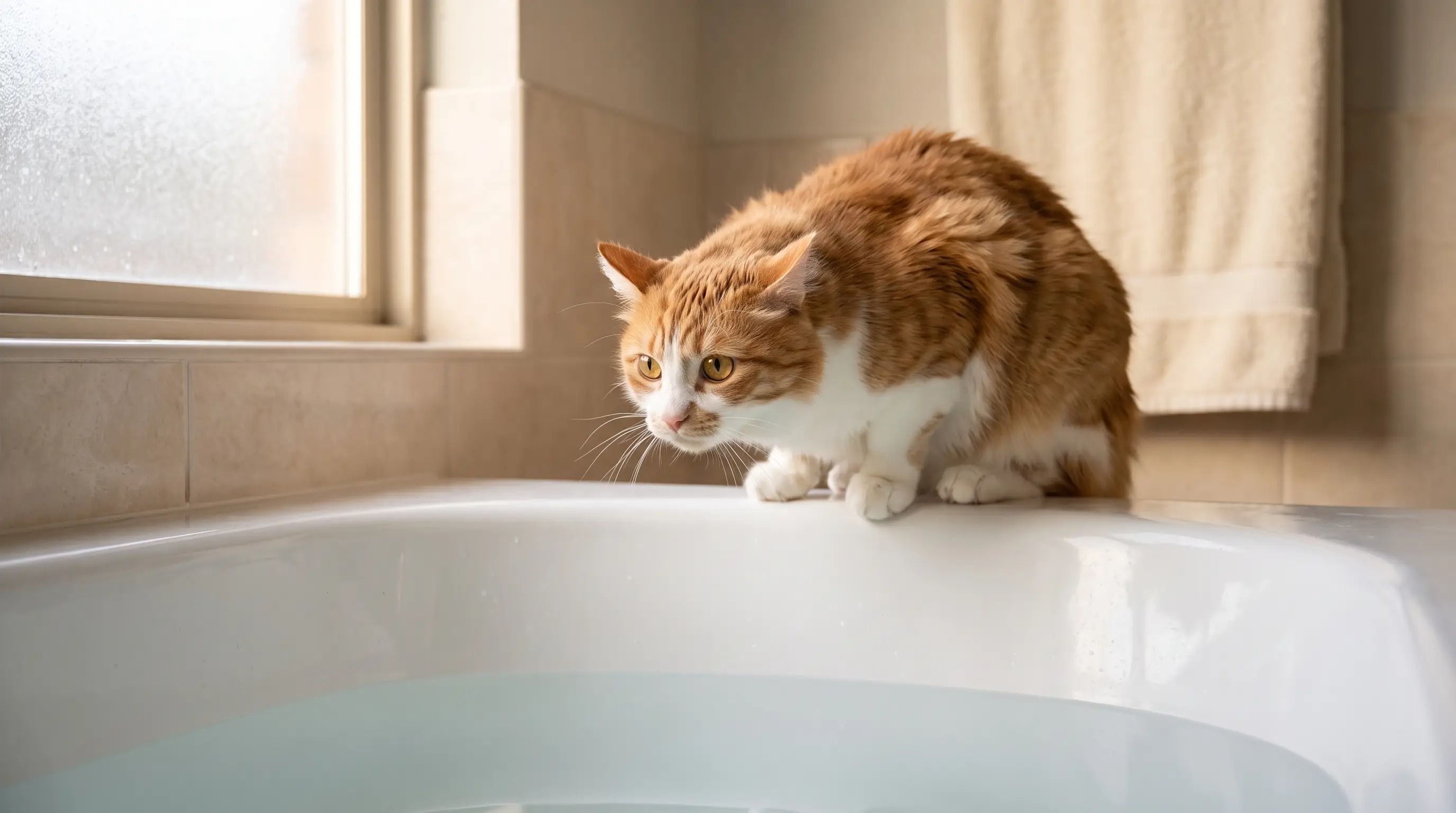
Why do cats hate water? Most do — here's why
Most cats dislike being in water, but the reasons have little to do with cleanliness and a lot to do with where cats came from and how their coat works. The domestic cat descends from a desert animal that rarely met deep water, its fur soaks and chills instead of shedding the wet, and being dunked strips away the control a cat likes to keep over its own situation. Not every cat agrees — a few breeds genuinely enjoy a swim — and nearly all of them still love drinking from a running tap, which is a different thing entirely.
A desert animal by descent
The house cat's ancestor is Felis lybica, the African and Near-Eastern wildcat, an animal of dry, warm country where standing water was scarce and swimming was never part of the job. Unlike a retriever, bred over centuries to plunge into cold ponds after birds, the cat's line never developed any reason to get into water, and so never developed the pull towards it.
That is the foundation of the whole thing: there is no instinct drawing a typical cat to water because its evolutionary history gave it none. A dog that loves swimming is doing something its ancestors were shaped for; a cat avoiding a bath is doing the same. Neither is being difficult — each is just being the animal it descended from.
The coat is the real problem
A cat's fur is not built to repel water. It soaks it up, and a waterlogged coat is heavy, cold and slow to dry, which leaves the cat chilled and, in its own estimation, vulnerable. For an animal that spends a large slice of its waking life grooming — partly to stay clean, partly to keep its coat working as insulation — being soaked undoes hours of maintenance in seconds and takes ages to put right.
Compare a duck or an otter, whose coats are waterproofed for a life in and out of water, and the cat's aversion starts to look less like fussiness and more like good sense. Getting wet is genuinely unpleasant and inefficient for an animal wearing the wrong coat for it.
Cats like to stay in control
There is a psychological layer on top of the physical one. Cats manage their surroundings carefully and dislike being made to do things, and a bath is close to a worst case: unfamiliar, unpredictable, often involving being picked up and held in place while something strange happens to them. A lot of the resistance is about losing control of the situation, not the water itself.
This is also why early experience matters so much. Kittens introduced to shallow water gently and positively, without being forced, tend to grow into far less fearful adults, while a cat whose only encounters with water were stressful baths will fight every one. The aversion is partly inherited and partly learned, and the learned part is the bit you can influence.
The cats that break the rule
Water-hating is a strong tendency, not a law, and a handful of breeds cheerfully ignore it. The Turkish Van is nicknamed the swimming cat for its habit of taking to water in its native region. The Maine Coon has a heavier, more water-resistant coat and a well-earned reputation for playing in water. The Bengal, with recent wild ancestry, often loves it outright, and the curious Abyssinian will frequently investigate a running tap or a filling bath rather than flee it.
Individual cats vary as much as breeds do, so a plain moggy that adores the shower is not a contradiction — just a cat that never got the memo. The point is that the dislike is common and well-explained, not universal.
Why the bath is hated but the tap is loved
The cat that flees the bath and then bats happily at a dripping tap is not being inconsistent, because drinking and immersion are two different things. Many cats prefer moving water to drink: a running tap or a fountain is easier to see and locate than a still bowl, and there may be an old instinct to favour fresh, moving water over stagnant water that could be unsafe. Some cats also dislike their whiskers brushing the sides of a deep bowl, which makes a wide, moving water source more appealing.
So a cat playing with the faucet is engaging with water entirely on its own terms — upright, in control, and not submerged. You can put that preference to good use: a pet water fountain often gets a reluctant drinker to take in more, which matters for a species prone to kidney trouble. And most cats never need a bath at all, since grooming keeps them clean; save it for the rare mess, a medical reason, or a cat that genuinely can't cope on its own.
Common questions
Why do cats hate water?
Mostly because of evolution and their coat. The domestic cat descends from a desert wildcat that had no reason to swim, so there is no instinct pulling it towards water. On top of that, a cat's fur soaks up water and becomes heavy, cold and slow to dry, and being bathed also takes away the control cats like to keep over a situation. The dislike is common sense for the animal, not fussiness.
Do all cats hate water?
No. Disliking water is a strong tendency, not a rule. Several breeds — the Turkish Van, Maine Coon and Bengal among them — often tolerate or actively enjoy it, and individual cats of any background can love a shower or a filling bath. Early, gentle, positive exposure as a kitten also makes a cat far less fearful of water than one whose only experience was stressful baths.
Which cat breeds like water?
The Turkish Van is the famous one, nicknamed the swimming cat. The Maine Coon has a more water-resistant coat and often plays in water, and the Bengal, with recent wild ancestry, frequently loves it. The Abyssinian tends to be curious about running taps rather than afraid of them. Even within these breeds individuals vary, so a love of water is a tendency rather than a guarantee.
Can cats swim?
Yes. Almost all cats can swim instinctively if they end up in water — they simply prefer not to. The dislike is about a coat that waterlogs and a lack of any evolutionary pull towards water, not an inability to stay afloat. Because most cats find it stressful, though, you should never throw a cat into water to prove the point; a frightened, soaked cat can hurt itself or you trying to get out.
Why does my cat like running water but hate baths?
Because drinking from moving water and being immersed in it are completely different experiences for a cat. A running tap or fountain is easy to see and locate, and cats may instinctively favour fresh, moving water over stagnant water. Playing with a tap lets the cat engage with water upright and in control. A bath does the opposite — it soaks the coat and removes control — which is why the same cat can love one and hate the other.
Do I need to bathe my cat?
Usually not. Cats groom themselves thoroughly, and a healthy cat keeps its own coat clean without ever needing a bath. Save bathing for the exceptions — a cat that has got into something toxic or sticky, a medical reason your vet recommends, or an elderly, overweight or unwell cat that can no longer groom its own back end. For most cats, a bath is a rare event, not routine care.
More in Cats
Why do cats purr? It's not always happiness
Purring is a self-soother, a request and sometimes a sign something's wrong — not just contentment. How cats make the sound, and what a purr at the vet really means.
Why do cats knead? The biscuit-making instinct
Making biscuits is a leftover from kittenhood, a way of laying down scent and a sign your cat feels safe. What the pushing paws mean, why some cats drool, and what to do about claws.
Why do cats sleep 16 hours a day?
Cats sleep 12–16 hours because hunting is expensive and they're built to conserve energy between bursts. What a 'cat nap' really is, why they wake at dawn, and when sleep is a red flag.
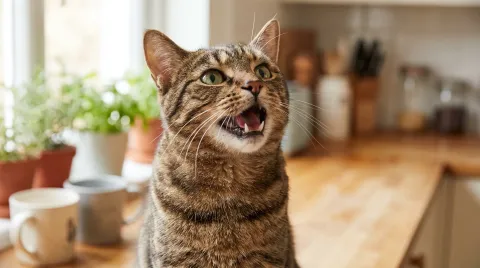
What your cat's meow actually means
Adult cats barely meow at each other. The meow is a language they built for one audience: you. Here's how to read it.
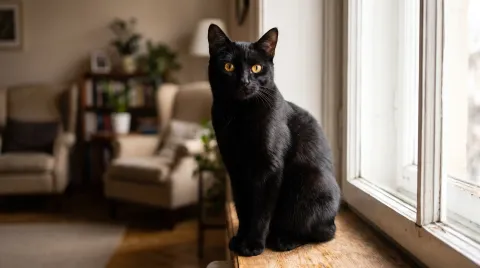
Black cats: the luckiest and unluckiest cat alive
The same black cat is a curse in one country and a blessing in the next. Here's the split, the real genetics, and why shelters can't rehome them.
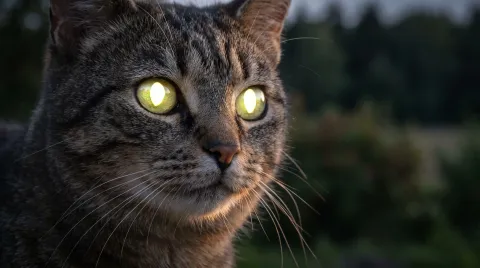
Why cats' eyes glow in the dark, and what they see
A mirror behind the retina gives cats a second shot at every photon. Here's the science of the glow, and the blurry, blue-gold world they actually see.