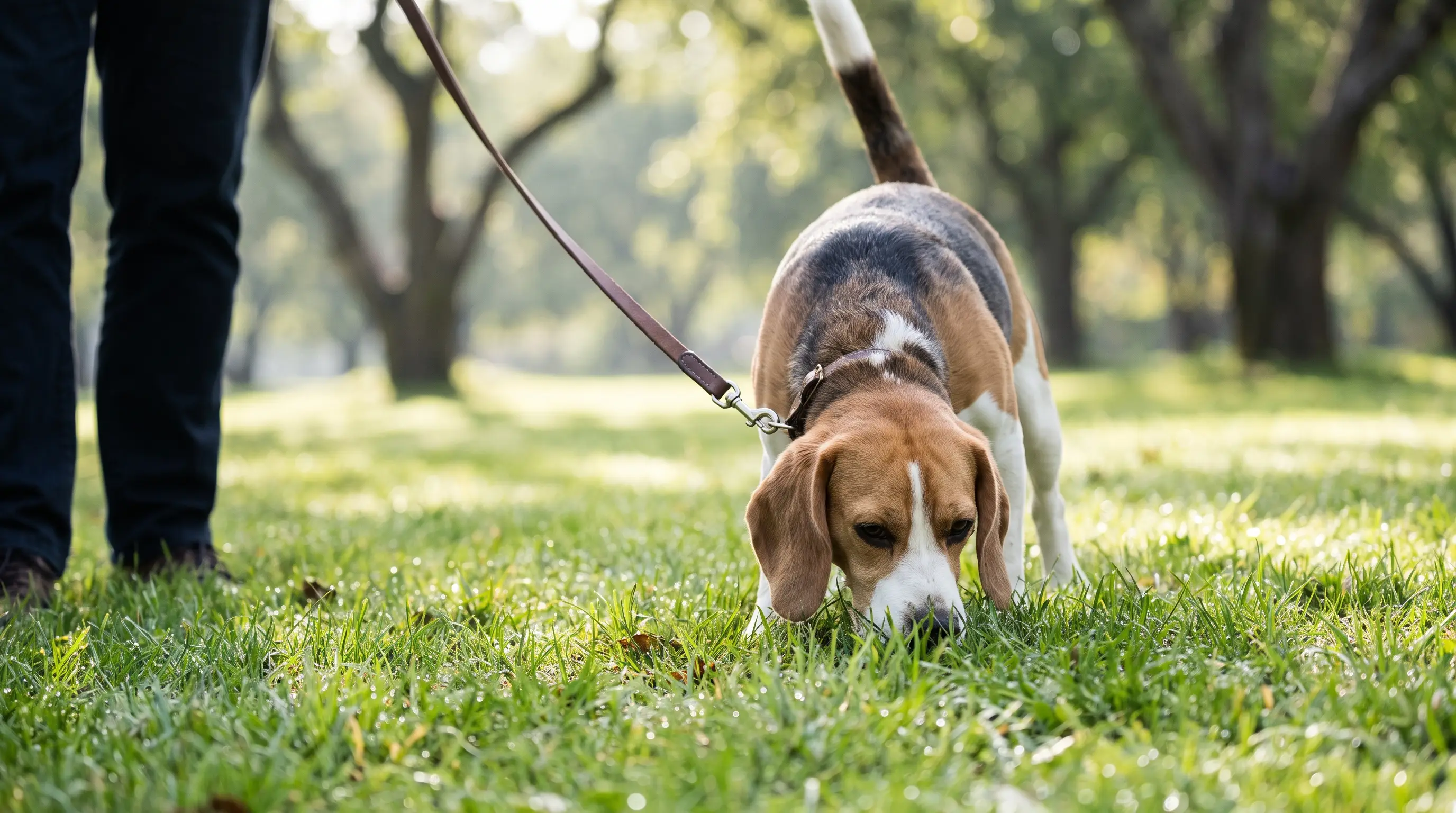
Why does my dog eat poop? The science and the fix
Few dog habits produce more owner despair per incident than poop eating, and few are more misunderstood. Coprophagia is common, it's rarely a sign of illness or a missing nutrient, and the best study we have suggests it isn't even abnormal — it looks like a leftover instinct doing its old job in the wrong century. Here's what the research actually says, the cases where it is a medical flag, and the plan that works better than shouting across the park ever has.
How common it is (more than anyone admits)
The best data comes from Benjamin Hart's group at UC Davis, which surveyed thousands of dog owners for a 2018 study: about one dog in six was a frequent stool eater, and nearly one in four had been caught at least once. The habit ran heavier in dogs described as greedy eaters and in multi-dog households, and — the detail that matters later — the dogs overwhelmingly preferred fresh stool, no more than a couple of days old. What the study didn't find is just as useful: no meaningful link to diet, age of weaning, or how easily the dog was house-trained, which quietly retires the internet's favourite explanation that a poop-eating dog must be missing something in its bowl. Most of them are missing nothing. They're just dogs.
When it is a medical flag
The exceptions deserve respect. A dog that starts eating stool out of nowhere — especially alongside a ravenous appetite, weight loss, or chronically soft, greasy droppings — belongs at the vet, because that cluster points at malabsorption: conditions like exocrine pancreatic insufficiency, where food passes through half-digested and the stool still smells like a meal. Parasites, diabetes and thyroid disease can drive appetite the same way, and a genuinely underfed dog will scavenge anything. Stool quality is a clue in both directions, so it's worth knowing what normal looks like — our guide to dog diarrhoea covers that end — and if portions might be the issue, check them against how much to feed a dog. The rule of thumb: long-standing habit in a healthy dog, relax and manage it; new habit plus any body change, book the vet.
Why healthy dogs do it
Hart's team proposed an explanation elegant enough to reframe the whole habit: den hygiene. Wolves defecate away from the den, but accidents near it get eaten — promptly, while the stool is fresh, because intestinal parasite eggs take about two days to become infectious larvae. Eating it early is sanitation; leaving it is the health risk. That fits the fresh-stool preference in the data almost perfectly, and it makes the modern habit a misfiring cleaning instinct rather than a perversion. Layer the ordinary reasons on top: mother dogs clean up after litters as standard practice, puppies investigate the world mouth-first, dogs descended from generations of village scavengers rate almost everything as potentially food — and then add the attention economy, because a dog that has learned that grabbing a dropping turns its owner into a shrieking, chasing entertainment system has found the best game in the park. Which is why the fix below starts with you becoming boring.
What actually stops it
Management beats willpower. Pick up your own garden the moment it's used, keep the dog on a lead in dropping-rich areas, and for the committed connoisseur, walk after meals when motivation is lowest. Then train the two behaviours that solve it at a distance: a rock-solid "leave it", paid generously, and a recall strong enough to interrupt a find — the method in recall training transfers directly, because a dog that comes away from a dropping for roast chicken has made a fair trade. Don't punish: after-the-fact scolding reads as random noise, and mid-act drama either becomes the game described above or teaches the dog to swallow faster and further away. As for the additive industry — the powders, the pineapple, the courgette folklore — Hart's survey asked about exactly these, and reported success rates ranged from zero to about two percent. Nothing you sprinkle on food reliably fixes this; the lead, the pick-up bag and the trained mouth do.
Cat trays, horse fields and other menus
Different droppings, different notes. Cat poop is the commonest sideline, for an unflattering reason: cat food is richer in protein and fat than dog food, and the litter tray is a snack drawer at nose height. Block access — a baby gate the cat can slip through, a tray placement the dog can't reach — rather than trying to train past permanent temptation, and note that swallowed clumping litter can cause obstruction, which upgrades tray-raiding from gross to worth preventing. Herbivore droppings — rabbit, sheep, horse — are usually harmless protein recycling, with one sharp exception: livestock recently treated with worming drugs like ivermectin pass residues in their dung, and those residues are genuinely dangerous to some dogs, particularly collie-type breeds carrying the MDR1 mutation. If you walk through grazing land, "leave it" earns its keep there too. And puppies eating everything including poop are mostly doing normal mouth-first research they grow out of, with the habits and timelines covered in the puppy's first year — manage it calmly and don't build the attention game.
Common questions
Why does my dog eat poop?
Usually because it's a dog: the best research, from UC Davis, found about one dog in six eats stool frequently, with no link to diet or nutrition, and proposed it's a leftover den-cleaning instinct — wolves eat fresh droppings near the den before parasite eggs become infectious. Add scavenger heritage, puppy curiosity, and the attention jackpot of an owner's reaction, and no deficiency is required.
How do I stop my dog from eating poop?
Manage first: pick up the garden immediately, use a lead where droppings are common, and walk after meals. Then train a well-paid "leave it" and a recall strong enough to interrupt a find. Don't punish — it either becomes a chase game or teaches faster swallowing — and skip the food additives, which scored near zero in the research.
Is it harmful for my dog to eat poop?
Its own species' stool is usually low-risk beyond parasites, which routine worming covers. The genuine hazards are elsewhere: swallowed clumping cat litter can obstruct, and droppings from recently wormed livestock can carry drugs like ivermectin, dangerous especially to collie-type breeds. A new habit plus ravenous appetite or weight loss is a vet matter.
Does pineapple stop dogs eating poop?
No evidence it does. The UC Davis survey asked owners about taste deterrents and additives — the pineapple-and-courgette family included — and reported success rates between zero and about two percent. Management, a trained "leave it" and a good recall are what actually move the needle.
Why does my dog eat cat poop?
Because cat food is richer in protein and fat than dog food, so what comes out of the cat still rates as food to a dog, and the tray sits at perfect nose height. The fix is access, not training: gate the tray so only the cat reaches it — and prevent it seriously, since swallowed clumping litter can cause a blockage.
What is my dog lacking when he eats poop?
Most likely nothing. The largest study on coprophagia found no connection to diet or nutritional shortfalls in typical cases — the habit tracks with instinct and opportunity, not deficiency. The exception worth acting on: sudden stool-eating with a huge appetite, weight loss or greasy droppings suggests a malabsorption problem, and that combination belongs at the vet.
More in Dogs
Dog separation anxiety: signs, causes and the fix that works
The chewed door frame isn't revenge — it's panic. How to tell true separation anxiety from boredom, what actually rewires it, and the popular fixes that make it worse.
Why is my dog aggressive? Causes and what actually helps
Aggression is communication with the volume turned up — and almost never dominance. The real causes, the warning ladder your dog is climbing, and the fixes that don't remove the warnings.
Leash reactivity: why your dog lunges on the lead, and the fix
Friendly off-lead, a roaring spectacle on it — leash reactivity is the lead itself changing the maths. What drives the display, why punishing it backfires, and the training that works.
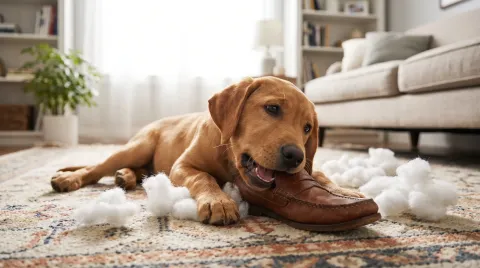
Why does my dog chew everything? Causes and the fix
Chewing is a need with nowhere legal to go — not a vice to stamp out. Why the sofa keeps losing, what the destruction is telling you, and the redirect that saves your shoes.
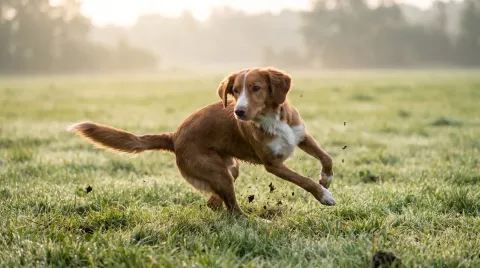
Dog body language: what your dog is really telling you
A wag is not always happy, and hackles are not always aggression. How to read the whole dog — tail, ears, eyes, mouth and posture — and spot stress before it becomes a bite.
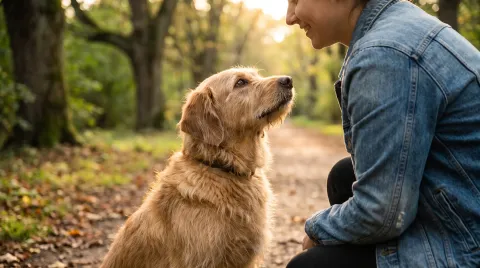
Do dogs love their owners? What the science measured
Yes — and unusually for a question about feelings, we have the receipts: oxytocin loops, attachment tests and brain scans. What dog love is made of, and what it looks like from the sofa.