Why does my dog chew everything? Causes and the fix
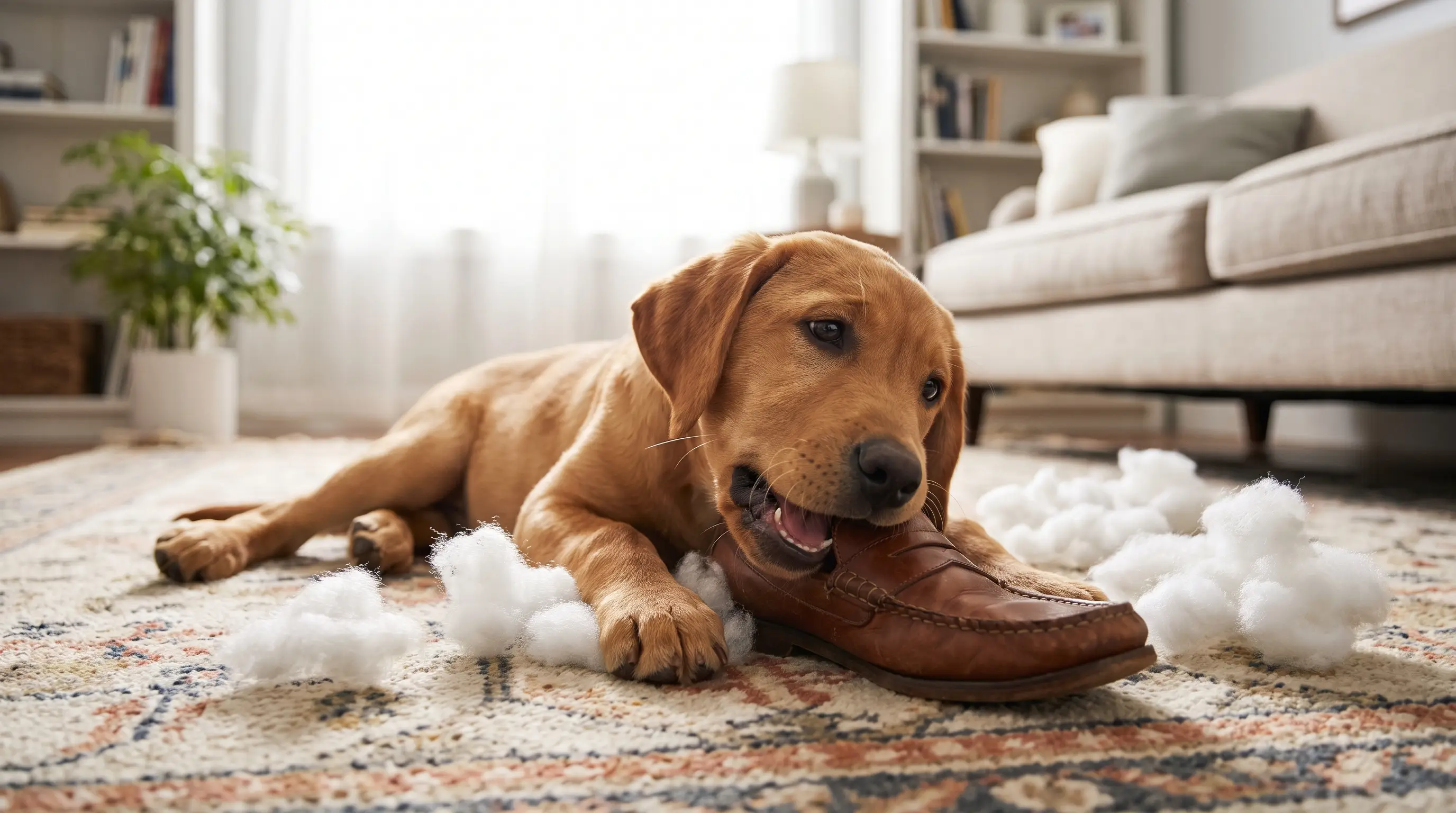
Every dog chews — the only question is what. Chewing explores the world, relieves stress, exercises jaws and passes empty hours, which means it can't be trained away any more than sleeping can. What can be trained is the target. The destruction in your living room is a need that found its own outlet, and once you read which need — teething, boredom, energy, panic or pain — pointing it at something legal is surprisingly straightforward.
Chewing is a need, not a vice
Dogs don't have hands, so mouths do the exploring; they don't have hobbies, so jaws fill the afternoon. Chewing releases tension, scratches itches you can't see, keeps jaw muscles worked, and — for a dog with nothing on the calendar — is simply the best available entertainment. That reframe matters because it kills the wrong goal: you are not going to produce a dog that doesn't chew, and every plan built on suppression fails into your skirting boards. The realistic goal has two parts — a legal chewing menu good enough to compete with your furniture, and management tight enough that the furniture stops being an option while the habit moves. Everything below is one of those two levers.
Puppies and teenagers: the two chewing storms
Puppies chew for the same reason human babies mouth everything, and then teething turns it urgent: until around six months, erupting adult teeth make gums ache, and chewing is the analgesic — cold helps, so a frozen wet washcloth or chilled puppy chew earns its keep. Most owners brace for that phase; fewer expect the second storm, when the adolescent dog chews harder than it ever did as a puppy — adult teeth are setting into the jaw, energy is spiking, and impulse control is at its lifetime low, a package the adolescence guide covers with sympathy. Both phases are survivable with the same two moves: ruthless management (nothing precious at floor level, per dog-proofing your home) and a rotation of legal chews so the need lands where you aimed it. The wider arc is in the puppy's first year.
Adult destruction: boredom, energy, or panic?
When a grown dog dismantles the house, read the pattern before writing the plan. The bored dog naps first and freelances later: it targets whatever's interesting — remote controls, books, yesterday's post — anywhere in the house, and greets you cheerfully from the wreckage. It doesn't need discipline; it needs a job, and the fix is upstream of the chewing: real exercise for its actual energy level, sniff-heavy walks, food puzzles instead of bowls, and a chew rotation that changes often enough to stay interesting. The panicking dog is a different animal: destruction concentrated at doors and windows, started within minutes of your exit, alongside howling, drool or soiling — that's separation anxiety, it has its own protocol, and no quantity of chew toys touches it, because the dog isn't entertaining itself. It's trying to reach you. Film the first half hour of an absence and the two are impossible to confuse.
When chewing is a symptom
Some chewing carries a message worth taking to the vet. Pica — actually swallowing non-food, whether stones, fabric, or soil — is beyond normal chewing: it can signal gastrointestinal trouble and it buys obstruction risk with every episode, so a dog that eats rather than shreds its victims needs a work-up, not a training plan. A sudden chewing habit in a settled adult deserves the same curiosity: dental pain can drive a dog to chew oddly or favour one side, and stress from a household change — a move, a baby, a new pet, a schedule cliff — leaks out through jaws as reliably as anywhere else. And mind the chews themselves: veterinary dentists pull fractured teeth off antlers, hooves and bones weekly, because a chew harder than the tooth wins the argument. The thumbnail test — if you can't dent it with a fingernail, it can crack a tooth — retires most of the pet-shop macho shelf.
The plan: manage, redirect, pay
The working plan has three verbs. Manage: until the habit moves, the house is the training aid — precious things up, doors closed, the dog supervised or in a safe, chew-stocked space when it can't be. Redirect: keep a menu of genuinely different legal chews (rubber to stuff, fabric to shred, edible to demolish), rotate so novelty stays high, and when you catch the wrong target mid-chew, trade calmly for something better rather than chasing — a chase turns your shoe into the best toy in the house. Pay: chewing the right thing should be the most profitable activity available, so stuffed food toys and frozen lick mats do more than any telling-off ever will. On which subject: punishment after the fact is worse than useless, because the dog cannot connect your anger to the cushion it opened an hour ago — the famous guilty look is appeasement to your thunderous entrance, not a confession — and all it buys you is a dog that chews in private. If honest management, outlets and exercise haven't moved the problem in a month, or the destruction comes with panic, that's the cue for professional help via your vet rather than a bigger bin of toys.
Common questions
Why does my dog chew everything?
Because chewing is a need, not a habit: it explores, relieves stress, works the jaw and fills empty time. Puppies add teething, adolescents add a second surge as adult teeth set, and adults chew most from boredom or unspent energy. The fix is never to stop the chewing — it's to manage the house and make legal chews the best option available.
How do I stop my dog from chewing everything?
Three verbs: manage (precious things out of reach, supervision or a safe space when you can't watch), redirect (a rotating menu of genuinely different chews, and calm trades instead of chases when you catch the wrong target), and pay (stuffed food toys and frozen lick mats make legal chewing the most profitable game in the house). Add real exercise — most adult chewing is an energy problem wearing a dental disguise.
Why does my dog destroy things when I leave?
Read where and how. Destruction anywhere in the house, from a dog that greets you cheerfully, is boredom — it needs exercise and enrichment. Destruction at doors and windows, starting within minutes of your exit, with howling, drooling or soiling, is separation anxiety — panic, not entertainment — and needs the desensitization protocol, not more toys. A camera on the first half hour settles it.
At what age do dogs stop chewing everything?
The indiscriminate phase has two peaks: teething until around six months, and a heavier adolescent surge that generally settles as the dog matures around eighteen months to two years. Chewing itself never stops, and shouldn't — an adult dog needs legal chewing outlets for life; what changes with age and training is the target selection.
Why has my adult dog suddenly started chewing?
A settled adult that starts chewing has a new reason: commonly boredom after a routine change, stress from a household upheaval, or dental pain — especially if the chewing looks odd, favours one side, or targets strange textures. A dog that swallows non-food (stones, fabric) has pica, which is a vet visit, not a training issue. Sudden always means something changed; find the change.
What can I give my dog to chew safely?
Variety beats any single hero item: rubber toys that take stuffing, edible chews sized so they can't be swallowed whole, and shreddables you're willing to sacrifice. Apply the thumbnail test — if you can't dent it with a fingernail, it can crack a tooth, which retires antlers, hooves, and cooked bones. Rotate the menu to keep novelty high, and supervise anything your dog can break pieces off.
More in Dogs
Dog separation anxiety: signs, causes and the fix that works
The chewed door frame isn't revenge — it's panic. How to tell true separation anxiety from boredom, what actually rewires it, and the popular fixes that make it worse.

Why is my dog aggressive? Causes and what actually helps
Aggression is communication with the volume turned up — and almost never dominance. The real causes, the warning ladder your dog is climbing, and the fixes that don't remove the warnings.
Why does my dog eat poop? The science and the fix
Coprophagia is common, mostly harmless, and almost never a nutrient cry for help. What the research actually found, when it is a medical flag, and what stops it — spoiler: not pineapple.
Leash reactivity: why your dog lunges on the lead, and the fix
Friendly off-lead, a roaring spectacle on it — leash reactivity is the lead itself changing the maths. What drives the display, why punishing it backfires, and the training that works.
Dog body language: what your dog is really telling you
A wag is not always happy, and hackles are not always aggression. How to read the whole dog — tail, ears, eyes, mouth and posture — and spot stress before it becomes a bite.

Do dogs love their owners? What the science measured
Yes — and unusually for a question about feelings, we have the receipts: oxytocin loops, attachment tests and brain scans. What dog love is made of, and what it looks like from the sofa.