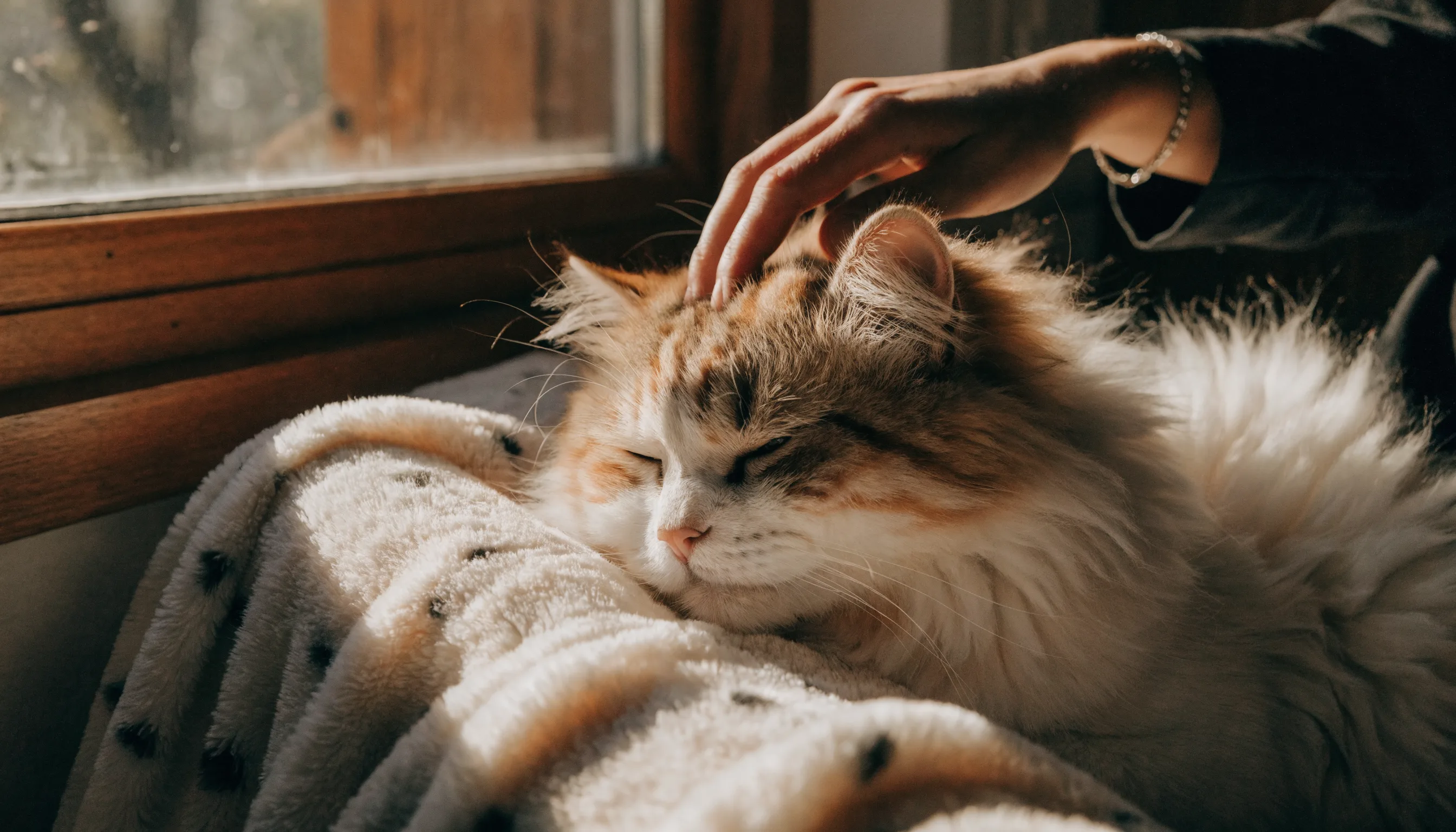
Why is my cat sneezing? Causes and when to see a vet
The odd sneeze is as normal in cats as it is in us. Frequent sneezing, especially with a runny nose or weepy eyes, most often means a viral infection — cat flu — or something irritating the nose. Most cases in a bright, eating cat settle with supportive care, but a cat that stops eating, breathes with effort, or has thick or bloody discharge needs a vet.
The likely causes
The commonest cause of a sneezing cat is cat flu, an upper respiratory infection usually caused by feline herpesvirus or calicivirus. It is very common, spreads between cats, and often flares at times of stress, so a cat can seem to "catch it" again after a stay in a cattery. It typically comes with a runny nose, weepy or sore eyes, and sometimes a reduced appetite because a blocked nose dulls the sense of smell. Other causes are irritants — dust, smoke, aerosol sprays, perfume or dusty litter — and, when the sneezing is sudden and violent and all on one side, sometimes a blade of grass or foreign body up the nose. In older cats, persistent one-sided discharge can point to a dental root problem or, less often, a growth, which is why lasting one-sided signs are worth a vet's look.
What you can safely do at home
For a bright cat with mild sneezing and a clear runny nose, supportive care is the mainstay. Sitting with your cat in a steamy bathroom for a few minutes helps loosen congestion, and gently wiping away discharge from the nose and eyes with a damp cloth keeps it comfortable. Keep the air clean — no smoke or strong sprays — and consider a low-dust litter. Because a stuffed-up cat eats less, tempt it with warmed, strong-smelling food so it keeps eating. If you have other cats, some separation helps limit spread. Do not give human cold or decongestant medicines, which can be toxic to cats.
See a vet if you notice any of these
Book a vet if your cat: has stopped eating, or is eating much less, because a blocked nose plus a fatty-liver risk makes that important; has thick yellow or green discharge, or any blood from the nose; is breathing with effort, fast, or with an open mouth — cats very rarely mouth-breathe, so that is an emergency; has sore, ulcerated or tightly shut eyes; is flat, feverish or dribbling; or has sneezing that lasts more than a week or keeps coming back, particularly if it is all on one side. Kittens with cat flu can go downhill fast and should be seen promptly.
Common questions
Is it normal for cats to sneeze?
An occasional sneeze is completely normal, often just a tickle from dust or a whisker. What isn't routine is frequent sneezing, or sneezing with a runny nose, weepy eyes or a drop in appetite, which usually means a viral infection or an irritant and is worth watching, and worth a vet visit if the cat is unwell or it doesn't settle.
What is cat flu and how do I know if my cat has it?
Cat flu is a common, contagious upper respiratory infection, usually viral. Typical signs are sneezing, a runny nose, weepy or sore eyes, and sometimes a reduced appetite, mild fever or dribbling. It often flares with stress. A bright cat can be supported at home, but see a vet if it stops eating, has eye ulcers, breathes hard, or is a kitten.
How can I treat my sneezing cat at home?
For mild sneezing in a bright, eating cat: use steam from a hot shower to ease congestion, wipe away discharge with a damp cloth, keep the air free of smoke and sprays, switch to a low-dust litter, and tempt it with warm, smelly food so it keeps eating. Never give human cold or decongestant medicines, which can poison cats. See a vet if the cat is unwell or doesn't improve.
When is cat sneezing serious?
It's serious if your cat stops eating, breathes with effort or through an open mouth, has thick coloured or bloody nasal discharge, ulcerated or shut eyes, or is flat and feverish. Open-mouth or laboured breathing in a cat is an emergency. Sneezing that lasts more than a week, or is always on one side, also warrants a vet visit.
Why does my cat keep sneezing on and off for weeks?
Long-running or recurring sneezing can be a lingering or flaring viral infection (cat flu often reactivates with stress), chronic rhinitis, or — especially if it's always on one side — a dental root problem, a foreign body, or in older cats a growth. Persistent sneezing is worth a vet investigation to find the cause rather than assuming it's just a cold.
More in Cats
Why is my cat pooping outside the litter box? Causes and fixes
Poop on the floor has a different list of suspects than pee on the wall — urgency, pain, an unreachable tray, or (rarely) an actual message. Here's the order to check them in.
A litter box routine that actually works
Daily, weekly and monthly, plus the placement and the n+1 rule. How to keep a box a cat will keep using, and get rid of the smell without scented litter.

Autumn dangers for dogs: acorns, conkers and mushrooms
Autumn puts three scavenging hazards on the ground — acorns, conkers and wild mushrooms — plus rat bait and fermenting fruit. What's toxic, what the warning signs are, and when to call the vet.

Winter pet dangers: antifreeze, road salt and chocolate season
Antifreeze is the winter emergency — sweet, deadly and quick. Plus gritted-salt paws, the festive-food gauntlet and cats sheltering in warm car engines. What to watch and when it's urgent.
The pet danger calendar: what to watch, month by month
Most pet hazards are seasonal and many are regional. Here's the year mapped out — when heatstroke, grass seeds, processionary caterpillars, antifreeze and the rest actually peak, and which ones your area even has.

Snake bites in dogs: first aid, symptoms and prevention
A calm, fast response is what actually saves a bitten dog. What to do in the first minutes, the myths that cost time, and which snakes matter across Europe.