Why does my dog follow you everywhere?
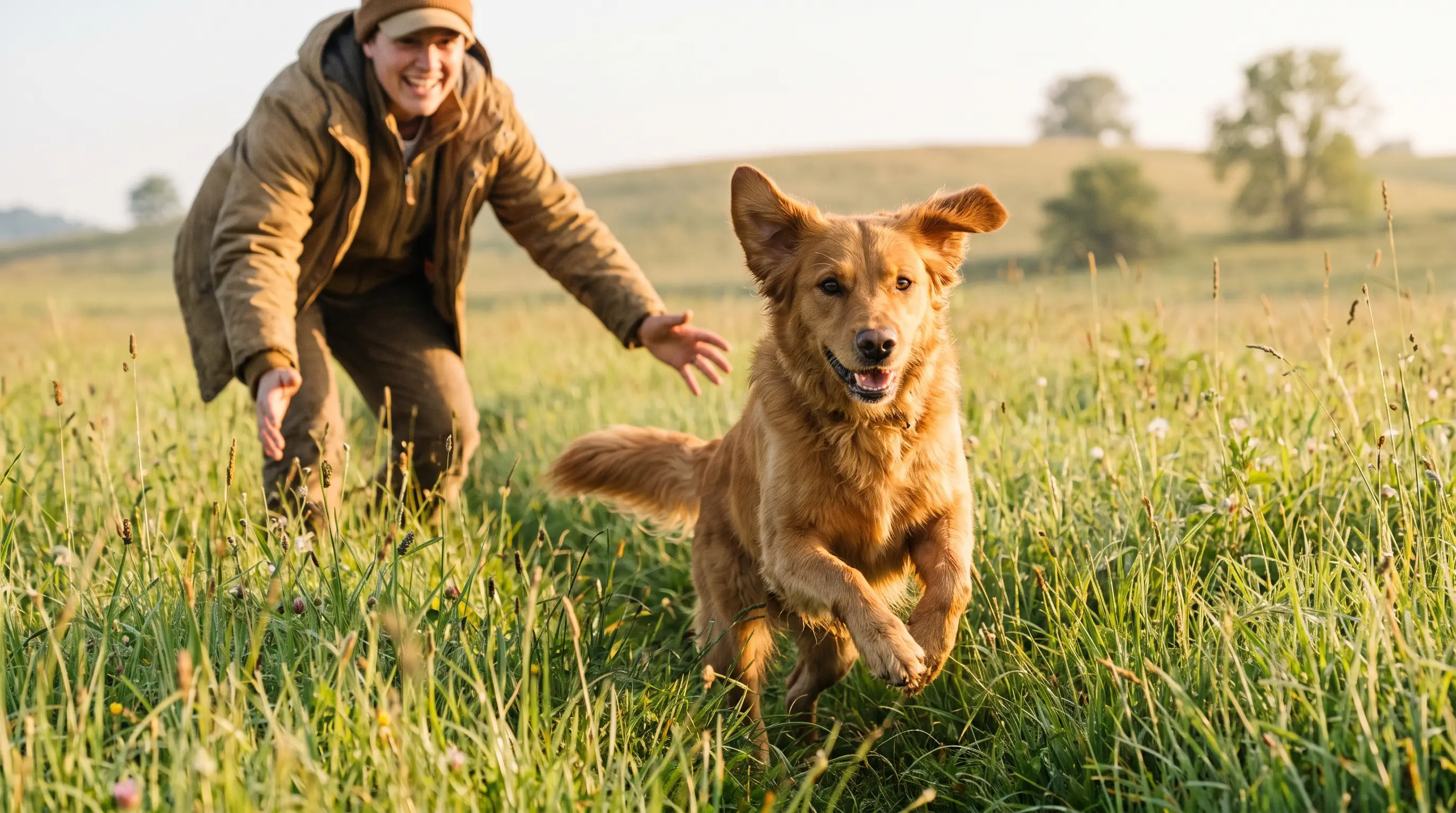
If your dog escorts you to the kitchen, the front door and even the bathroom, you have a so-called velcro dog — and mostly it is a compliment. Dogs are social animals bred for thousands of years to work and live alongside us, so following the person who provides food, walks and company is deeply normal. There are a handful of reasons behind it, most of them harmless, and one, separation anxiety, that is worth telling apart from ordinary shadowing. Here is what the following really means.
Dogs are built to stick with their people
The deepest reason is simply what dogs are. They evolved from social animals and were then domesticated and bred, over thousands of years, to cooperate closely with humans — herding, guarding, retrieving and keeping company. A dog that stays near its people is doing exactly what generations of dogs were selected to do. Following you around is the everyday expression of a bond, not a problem to be solved, and for most dogs it is as natural as breathing.
It helps to drop the old "pack leader" framing here. A dog does not shadow you to monitor a rival or assert rank; that dominance story has been thoroughly overturned, as we cover in the truth about wolf packs. Your dog follows you because you are the source of the good things in its day and the centre of its social world, which is a much warmer and more accurate way to read it.
Reinforcement: you are where the good stuff happens
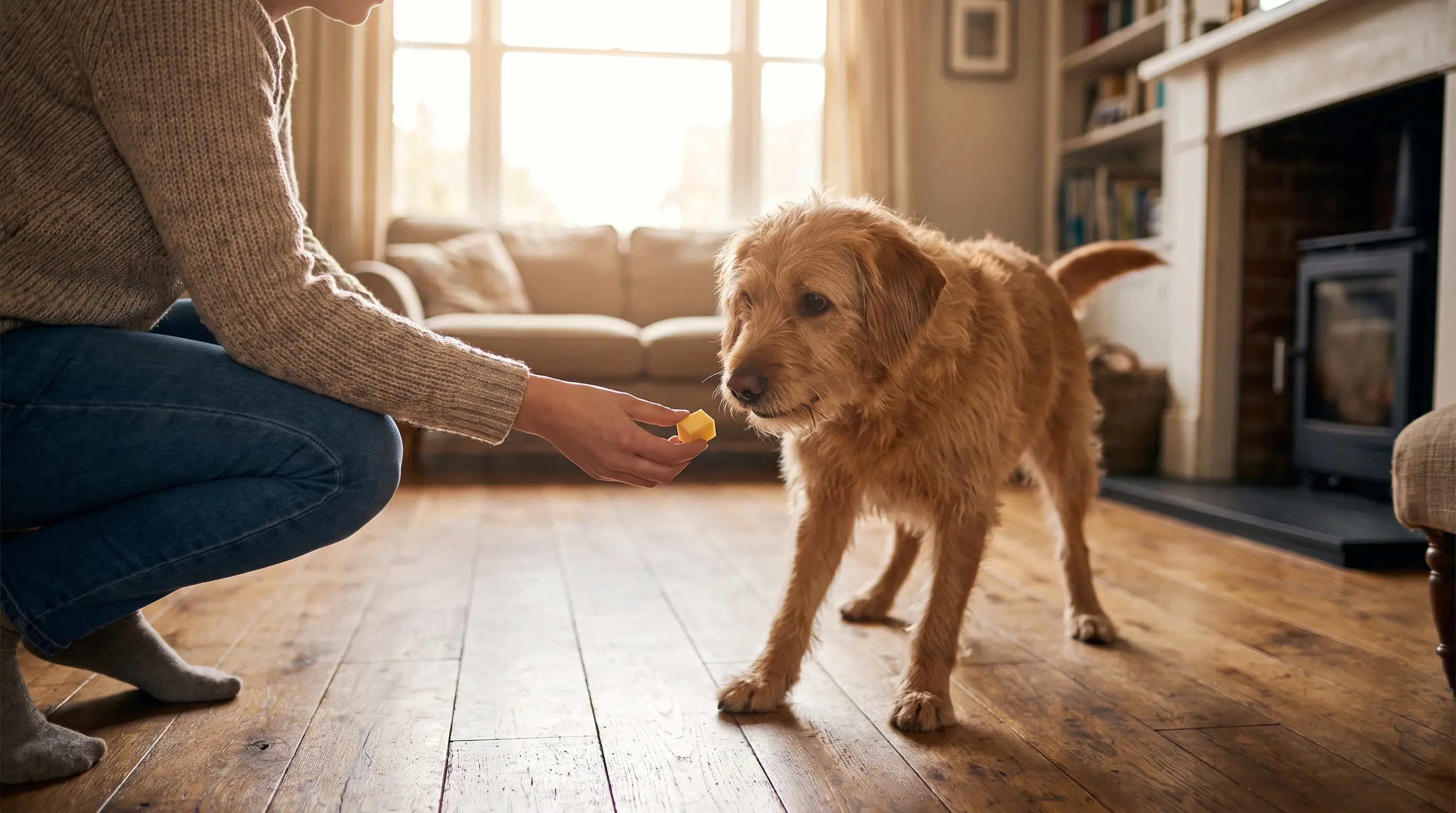
On top of instinct sits plain learning. Over a dog's life, following you has paid off again and again: you are the one who fills the bowl, picks up the lead, opens the door to the garden, drops food in the kitchen and hands out fuss on the sofa. From the dog's point of view, staying close to you is the single most reliable way to be present when good things happen. This is ordinary reinforcement, the same principle behind all reward-based training, quietly at work.
Breed and background tip the dial. Breeds developed to work in close partnership with a handler — many herding and companion types — tend to be especially attached, while some independent working and guarding breeds are naturally more aloof. Puppies and newly adopted rescue dogs often shadow more intensely at first, because you are their security in an unfamiliar world; this usually eases as they settle and learn the house is safe and you always come back.
When following is completely fine
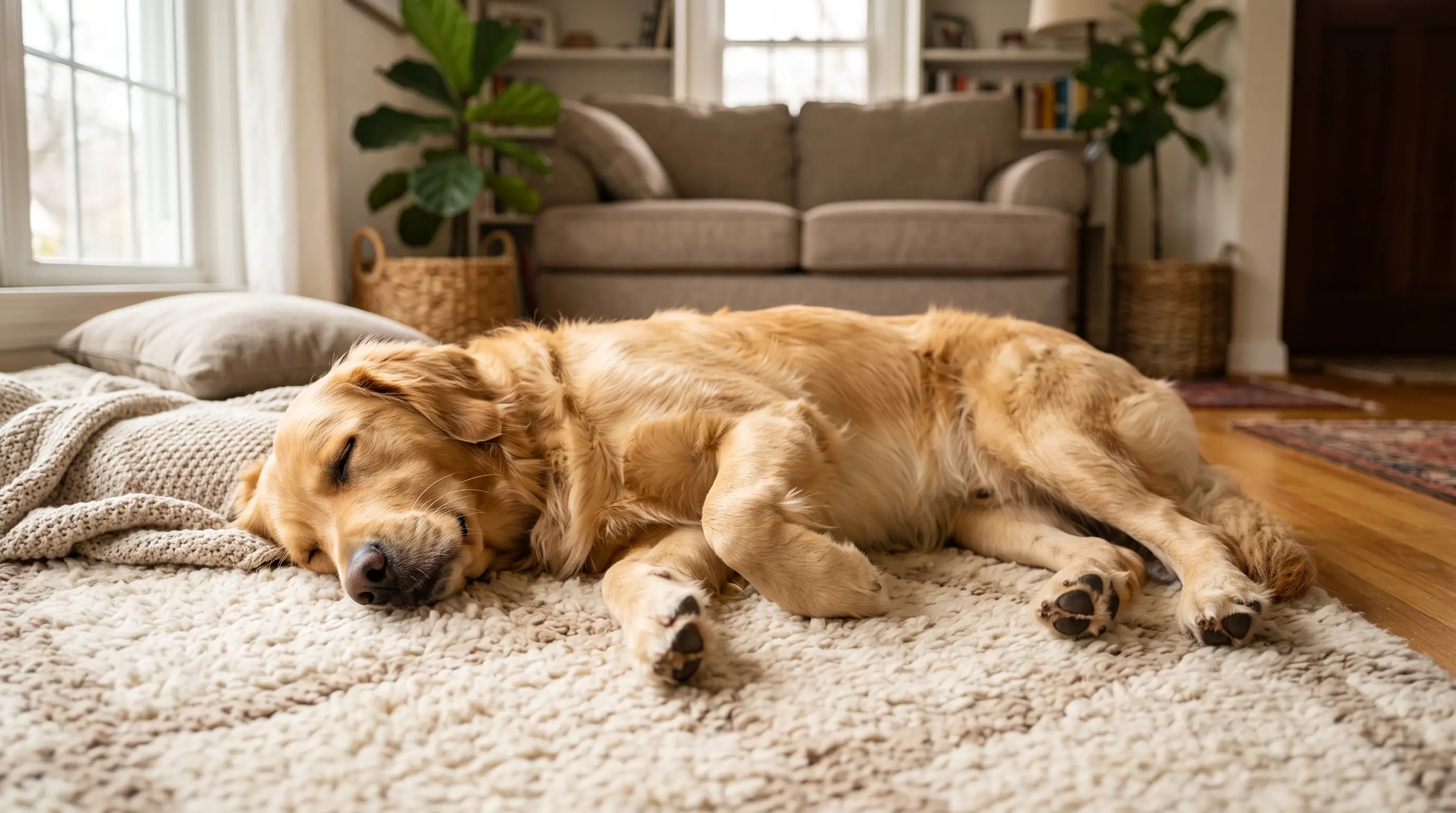
Most velcro behaviour needs no fixing at all. A dog that trots after you from room to room, settles wherever you land, and is otherwise relaxed — happy to nap, eat, and potter when you are busy — is just an affectionate, sociable dog. It can watch you leave the room without panic, and it greets your return with pleasure rather than desperation. That is a securely attached dog enjoying your company, and there is nothing to correct.
If the constant company starts to grate, you can gently build a little independence without any drama: reward the dog for settling on its own bed, scatter a few sniffing games or a stuffed chew to occupy it while you move around, and make your own comings and goings around the house low-key rather than emotional events. A comfortable spot of its own, such as a well-loved crate or den, gives a dog somewhere it actively chooses to be, which naturally loosens the shadowing.
When it is separation anxiety, not just shadowing
There is an important line between a dog that likes to follow you and a dog that cannot cope without you. Following is about company; separation anxiety is about panic. The tell is what happens when you actually leave: a dog with separation anxiety becomes genuinely distressed when left alone — persistent barking or howling, pacing, drooling, destruction focused on doors and windows, or toileting despite being house-trained, starting soon after you go and often winding up as you prepare to leave. Ordinary shadowing does not come with that distress.
If that sounds like your dog, it is a welfare issue worth taking seriously rather than a habit to tough out. Do not punish it — the behaviour is panic, not defiance, and punishment makes fear worse. The path that works is gradual, positive desensitisation to being alone, ideally with help from a vet or a qualified behaviourist, because a dog in real distress needs a proper plan. Telling the difference matters: a velcro dog is a compliment, but a dog that panics alone is asking for help.
The short answer
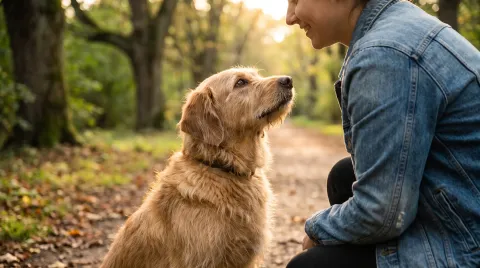
Your dog follows you everywhere because it is a social animal, bred to be your partner, and because staying near you is where the food, the walks and the affection reliably are. For the great majority of dogs, that shadowing is a sign of a healthy bond and needs nothing more than the occasional nudge toward independence if it becomes inconvenient. It is one of the nicer things about living with a dog: you have a companion who genuinely wants to be wherever you are.
Keep just one distinction in mind. If your dog is calm and content and simply likes your company, enjoy it. If your dog falls apart the moment it is alone, that is separation anxiety and deserves a gentle, structured plan rather than worry or telling-off. Read the dog when you leave, not only when you are home, and you will know which one you have.
Common questions
Why does my dog follow me everywhere?
Because dogs are social animals bred to live and work alongside people, and because staying near you is where food, walks and affection reliably happen. For most dogs, following you around is a sign of a healthy bond and a normal, affectionate habit rather than a problem.
Is it a problem if my dog follows me constantly?
Usually not. A dog that shadows you but can still relax, nap and cope calmly when you leave the room is just affectionate and securely attached. It only becomes a concern if the dog panics when actually left alone, which points to separation anxiety rather than ordinary following.
What's the difference between a velcro dog and separation anxiety?
A velcro dog likes your company and follows you, but stays calm when you leave. Separation anxiety is panic: persistent barking or howling, pacing, drooling, destruction around exits or toileting indoors when left alone. Following is about company; separation anxiety is genuine distress.
Do certain breeds follow their owners more?
Yes. Breeds developed to work closely with a handler, including many herding and companion breeds, tend to be especially attached, while some independent guarding and working breeds are more aloof. Puppies and newly adopted rescue dogs also tend to shadow more until they settle in.
How do I get my dog to be more independent?
Reward your dog for settling on its own bed, provide sniffing games or a stuffed chew to occupy it while you move around, keep your comings and goings low-key, and give it a comfortable den of its own. Build alone-time gradually and positively rather than shutting the dog away abruptly.
More in Dogs
Do dogs love their owners? What the science measured
Yes — and unusually for a question about feelings, we have the receipts: oxytocin loops, attachment tests and brain scans. What dog love is made of, and what it looks like from the sofa.
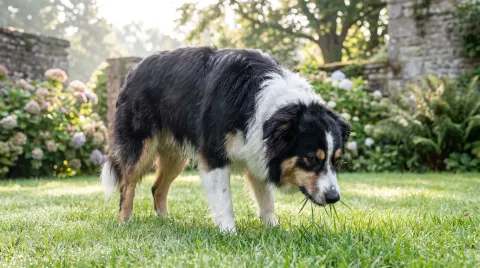
Why do dogs eat grass? The myth, the data, the real risks
It's rarely self-medication and almost never a missing nutrient — the biggest survey ever run on grass-eating dogs retired both stories. What's actually going on, and when to pay attention.
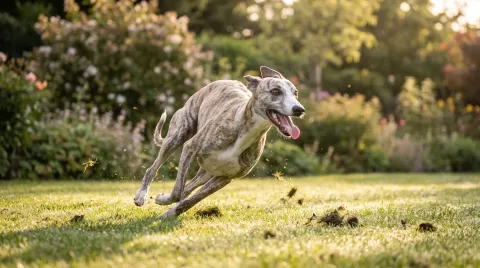
Dog zoomies: why dogs suddenly sprint like maniacs
The tucked tail, the mad loops, the gleeful eyes — zoomies have a scientific name, a set of reliable triggers, and exactly one thing you shouldn't do about them.
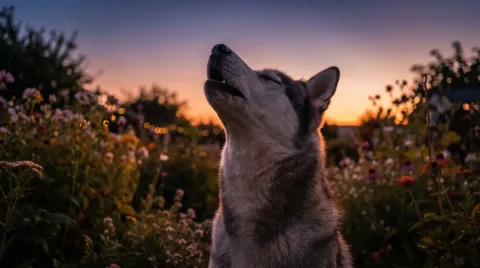
Why do dogs howl? Sirens, solitude and the wolf inside
The howl is long-distance radio inherited from wolves — and no, the siren isn't hurting your dog's ears. What each howl broadcasts, and the one kind that's a message for you.
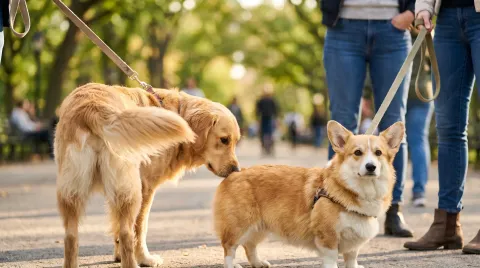
Why do dogs sniff each other's butts? The chemical handshake
It's not rude — it's the most information-dense greeting in the animal kingdom. What's actually in the message, the equipment that reads it, and the etiquette your dog is following.
Why does my dog stare at me? Every stare, decoded
Affection, forecasting, negotiation, security detail — a dog's stare is never empty. What each one means, including the famous bathroom vigil, and the one stare to take seriously.