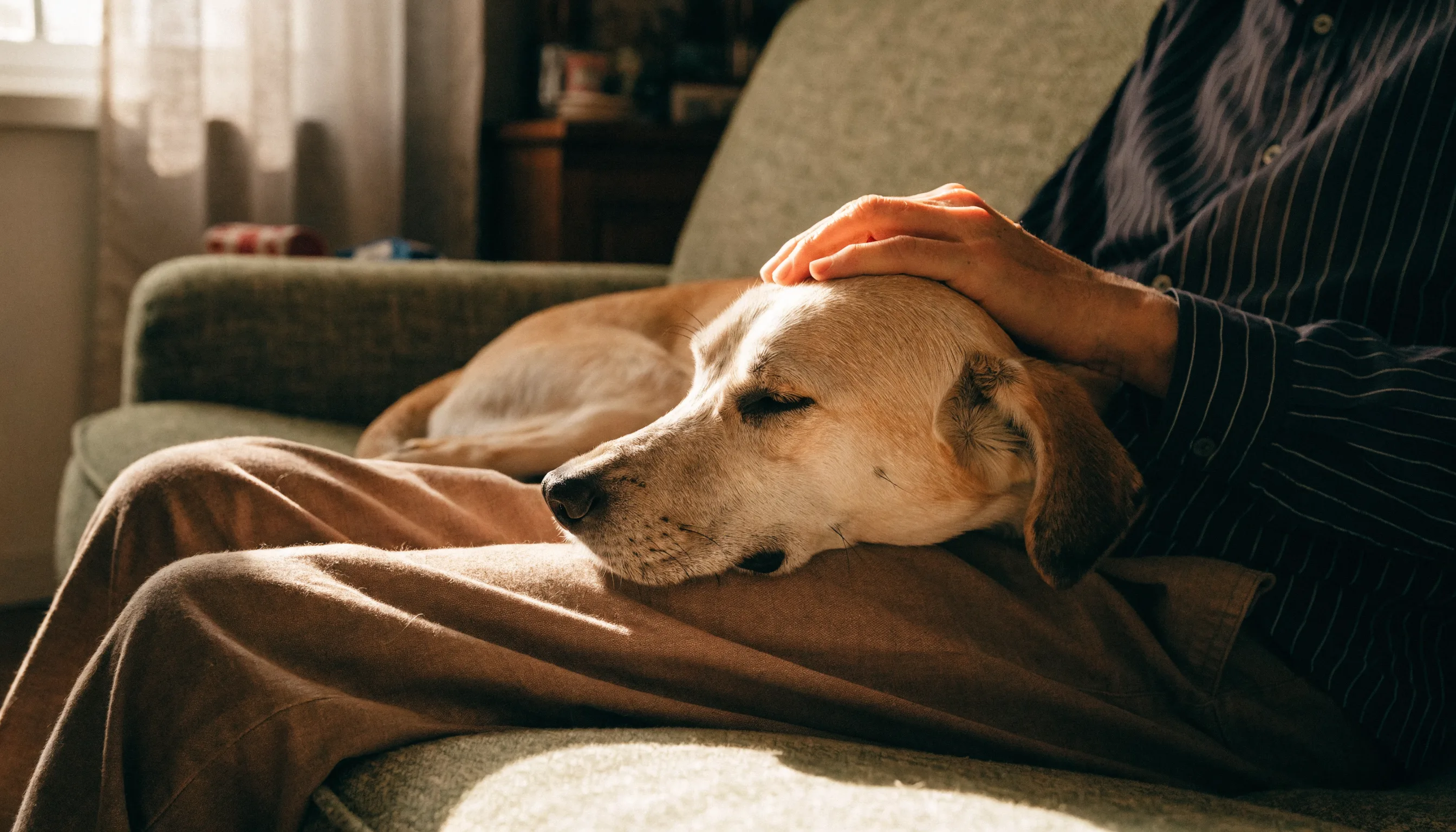
Why is my dog coughing? Causes and when to see a vet
A cough is the airway trying to clear itself, and the pattern often hints at the cause: a dry, honking cough after mixing with other dogs suggests kennel cough, while a soft cough with tiring on walks in an older dog can point to the heart. Any cough that comes with laboured breathing, blue-tinged gums or a flat, off-colour dog is urgent.
The likely causes
The classic cause in a dog that has been around others — kennels, daycare, the park — is kennel cough, a contagious infection of the airways that produces a harsh, hacking, honking cough, sometimes ending in a gag. It is often mild in an otherwise well dog but spreads easily. In older and small-breed dogs, a soft cough that is worse at night or with exercise can be a sign of heart disease, such as the leaky mitral valve common in the Cavalier King Charles Spaniel. Small breeds can also have a collapsing windpipe, which gives a honking cough. Other causes include inhaled grass or an irritant, allergies, pneumonia and lungworm. A single, occasional cough is rarely a worry; a persistent one is worth a vet.
Reverse sneezing is not a cough
It is easy to mistake a reverse sneeze for a cough or a breathing crisis, and it frightens owners the first time. The dog suddenly stands still, extends its neck and makes repeated loud snorting inward gasps for a few seconds, then acts completely normal. It is a harmless spasm of the soft palate, common in small and flat-faced breeds, and it passes on its own — gently stroking the throat or briefly covering a nostril to prompt a swallow can help. If your dog is truly struggling to breathe between episodes, or the gums look grey or blue, that is not a reverse sneeze and needs a vet at once.
What you can safely do at home
Rest a coughing dog and keep it away from other dogs until you have spoken to your vet, since kennel cough is contagious. Swap a collar for a harness so nothing presses on the windpipe, keep the air free of smoke and strong sprays, and let it breathe humid air, for example in a steamy bathroom. Make sure it keeps eating and drinking. Do not give human cough medicines, some of which contain ingredients that are toxic to dogs. A mild kennel cough in a bright, eating dog can often be managed with rest and a phone call to the vet, but let them make that call.
See a vet now if you notice any of these
Treat it as urgent if your dog: is struggling to breathe, breathing fast at rest, or has gums that look grey, blue or very pale — call an emergency vet immediately; is coughing up blood or froth; is coughing and also flat, off its food, or feverish; faints or collapses with coughing or exercise; or has a cough that keeps it up at night or is getting worse over days. A persistent cough in an older or small-breed dog should always be checked, because the earlier heart or airway disease is found, the better it is managed.
Common questions
How do I know if my dog has kennel cough?
Kennel cough typically causes a sudden, harsh, honking cough, often with a gag at the end, in a dog that has recently mixed with others at kennels, daycare or the park. The dog is usually otherwise bright and eating. It's very contagious, so keep your dog away from others and phone your vet, who can advise whether it needs to be seen.
When is a dog cough an emergency?
Any cough with laboured or fast breathing, or grey, blue or very pale gums, is an emergency — call a vet at once. So is coughing up blood, fainting or collapse, or a cough in a dog that is flat, feverish and off its food. Difficulty breathing always takes priority over the cough itself.
Can I give my dog human cough medicine?
No. Many human cough and cold remedies contain ingredients that are toxic to dogs, such as certain decongestants and artificial sweeteners. Never give them. Support a coughing dog with rest, a harness instead of a collar and humid air, and let your vet decide whether any medication is needed.
Why is my old dog coughing at night?
A soft cough that is worse at night or with exercise in an older or small-breed dog can be a sign of heart disease, and it's worth a vet check and often a simple listen to the chest. It could also be an airway problem such as a collapsing windpipe. Catching heart or airway disease early means it's managed far better, so don't wait it out.
Is my dog coughing or reverse sneezing?
A reverse sneeze is a burst of loud snorting inward gasps that lasts a few seconds, after which the dog is instantly normal — it's harmless and common in small and flat-faced breeds. A cough is a repeated, often honking or wet sound that keeps recurring. If your dog seems to struggle for breath between episodes or the gums look off-colour, treat it as a breathing problem and see a vet.
More in Dogs
Why is my dog peeing in the house? Causes and how to stop it
An adult dog that starts having accidents isn't being defiant — it's giving you a symptom. The medical checklist, the marking-vs-emptying distinction, and the retraining plan that works.
Autumn dangers for dogs: acorns, conkers and mushrooms
Autumn puts three scavenging hazards on the ground — acorns, conkers and wild mushrooms — plus rat bait and fermenting fruit. What's toxic, what the warning signs are, and when to call the vet.
Winter pet dangers: antifreeze, road salt and chocolate season
Antifreeze is the winter emergency — sweet, deadly and quick. Plus gritted-salt paws, the festive-food gauntlet and cats sheltering in warm car engines. What to watch and when it's urgent.
The pet danger calendar: what to watch, month by month
Most pet hazards are seasonal and many are regional. Here's the year mapped out — when heatstroke, grass seeds, processionary caterpillars, antifreeze and the rest actually peak, and which ones your area even has.

Snake bites in dogs: first aid, symptoms and prevention
A calm, fast response is what actually saves a bitten dog. What to do in the first minutes, the myths that cost time, and which snakes matter across Europe.
Why is my dog vomiting? Causes and when to see a vet
The common reasons dogs are sick, what you can safely do at home for a one-off, and the warning signs that mean call the vet now rather than wait.