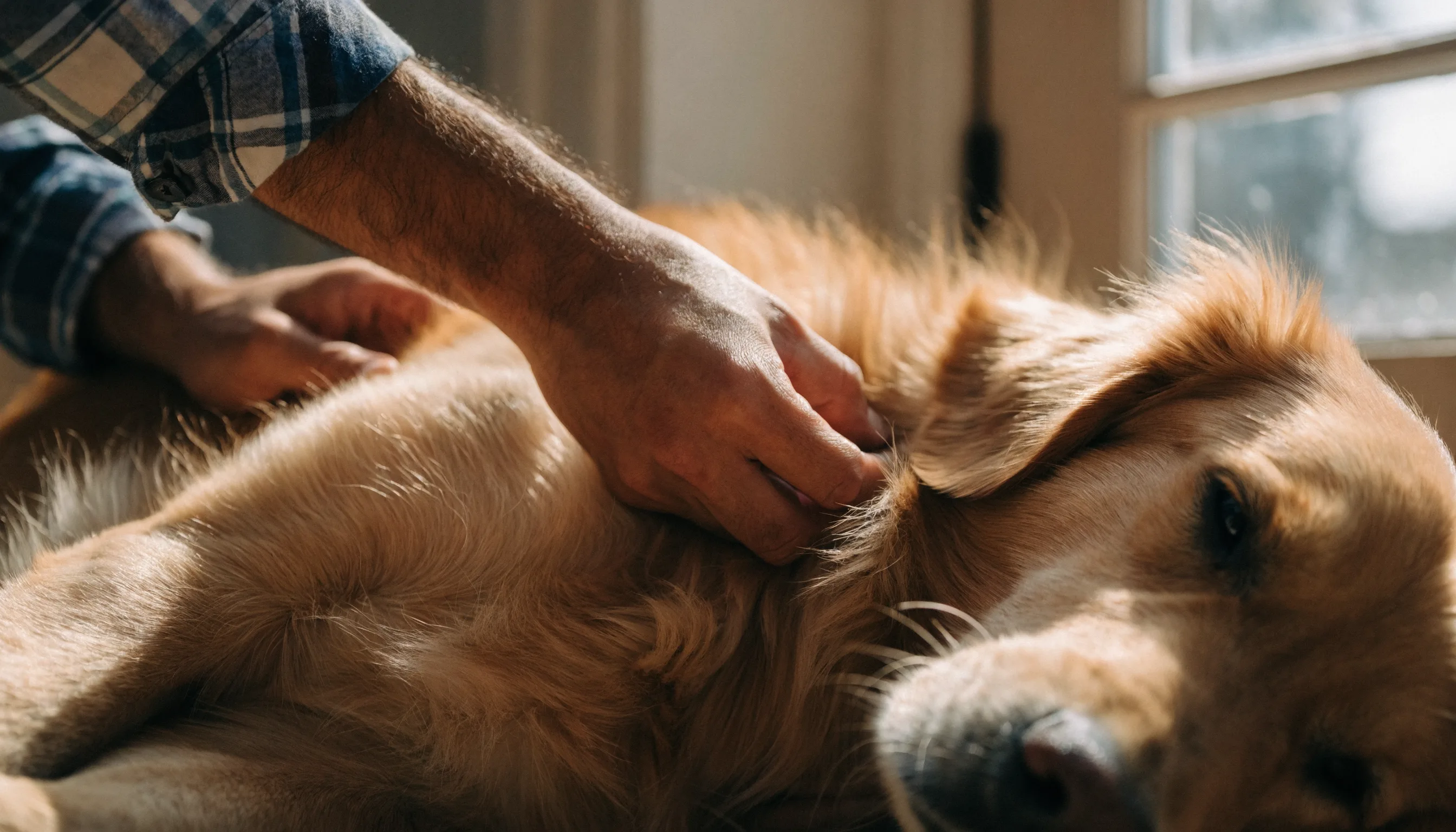
Why is my dog scratching so much? Causes and when to see a vet
Every dog scratches sometimes. It becomes a problem when it is constant, disturbs sleep, or breaks the skin. Itch has a handful of common causes, and the single most useful thing you can do before anything else is rule out fleas — they are the commonest cause and easy to miss. Persistent itching that is making a dog raw needs a vet, because scratched skin gets infected.
Rule out fleas first
Fleas are the number one cause of itching, and you often do not see the fleas themselves. Part the coat at the base of the tail and look for "flea dirt" — tiny black specks that turn rusty red on a damp piece of kitchen roll, because it is digested blood. Many dogs are actually allergic to flea bites, so even one or two fleas can set off a lot of scratching. Make sure every pet in the house is on effective, up-to-date parasite prevention and treat the home too, since most of the flea population lives in the carpet, not on the dog. Our guide to fleas, ticks and worms goes into the detail.
The other likely causes
If fleas are covered, the usual suspects are allergies — to things in the environment such as pollen or dust mites (atopy), or less often to food. Flat-faced and skin-folded breeds like the French Bulldog are more prone to allergic skin disease. Other causes are mites (mange), a skin or yeast infection, dry skin in winter, contact irritants, and sore ears, which make a dog scratch at its head and shake. Anxiety can also drive repetitive licking, often at the paws or flank. Where on the body a dog itches, and whether it is seasonal, are clues your vet will use.
What you can safely do at home
Keep parasite prevention watertight, and don't bathe the dog over and over, which strips the coat and can make dry skin worse — use only a gentle, dog-suitable shampoo and no more often than needed. Keep the coat groomed and check the skin as you go. Try to stop the dog chewing or scratching an area raw; a soft protective collar for a day or two can break the cycle while you get advice. Note when the itch is worst and where. Do not put human anti-itch creams or steroids on a dog, and do not give human antihistamines without asking your vet, as dose and choice matter.
See a vet if you notice any of these
Book a vet if your dog: is scratching, licking or chewing enough to lose sleep or lose hair, leaving bald or thinning patches; has broken, weeping, crusty or smelly skin, or a red, hot, rapidly spreading sore patch (a "hot spot"), which means the skin is infected; is shaking its head and scratching at a smelly ear; or has itching that just won't settle with good flea control. Treat sudden facial or muzzle swelling, hives, or any breathing difficulty as an emergency — that is an allergic reaction and needs a vet straight away.
Common questions
What is the most common cause of itching in dogs?
Fleas — and often you won't see them. Many dogs are allergic to flea bites, so even a couple of fleas cause a lot of scratching. Before anything else, check for flea dirt at the base of the tail and make sure every pet in the home is on effective, up-to-date flea prevention, treating the house as well as the dog.
How can I relieve my dog itching at home?
Keep flea prevention up to date, avoid over-bathing, use a gentle dog shampoo only when needed, groom regularly and check the skin. Stop the dog chewing an area raw, using a soft collar for a day or two if needed. Don't apply human creams or give human antihistamines without your vet's advice, as the wrong product or dose can harm a dog.
When should I take my itchy dog to the vet?
See a vet if the scratching is constant, disturbs sleep, causes hair loss, or the skin is broken, weeping, crusty, smelly or has a hot, spreading sore patch — that skin is infected. Also go if good flea control hasn't helped, or the itch keeps coming back. Facial swelling, hives or any breathing trouble is an emergency.
Could my dog be scratching because of a food allergy?
It's possible but less common than fleas or environmental allergies. True food allergy tends to cause year-round itching and sometimes ear or tummy trouble, and it's diagnosed by a vet-run elimination diet, not a home guess or an online test. Rule out fleas first, then talk to your vet about whether a proper food trial is worth doing.
Is it normal for dogs to scratch a lot?
Occasional scratching is normal. Constant scratching, licking or chewing — especially if it breaks the skin, causes bald patches or keeps the dog up at night — is not, and usually means fleas, allergies, mites, infection or sore ears. Persistent itching is worth a vet visit, because scratched skin readily becomes infected.
More in Dogs
Why is my dog peeing in the house? Causes and how to stop it
An adult dog that starts having accidents isn't being defiant — it's giving you a symptom. The medical checklist, the marking-vs-emptying distinction, and the retraining plan that works.
Autumn dangers for dogs: acorns, conkers and mushrooms
Autumn puts three scavenging hazards on the ground — acorns, conkers and wild mushrooms — plus rat bait and fermenting fruit. What's toxic, what the warning signs are, and when to call the vet.

Winter pet dangers: antifreeze, road salt and chocolate season
Antifreeze is the winter emergency — sweet, deadly and quick. Plus gritted-salt paws, the festive-food gauntlet and cats sheltering in warm car engines. What to watch and when it's urgent.
The pet danger calendar: what to watch, month by month
Most pet hazards are seasonal and many are regional. Here's the year mapped out — when heatstroke, grass seeds, processionary caterpillars, antifreeze and the rest actually peak, and which ones your area even has.

Snake bites in dogs: first aid, symptoms and prevention
A calm, fast response is what actually saves a bitten dog. What to do in the first minutes, the myths that cost time, and which snakes matter across Europe.
Why is my dog vomiting? Causes and when to see a vet
The common reasons dogs are sick, what you can safely do at home for a one-off, and the warning signs that mean call the vet now rather than wait.