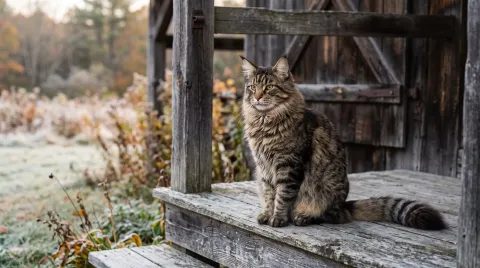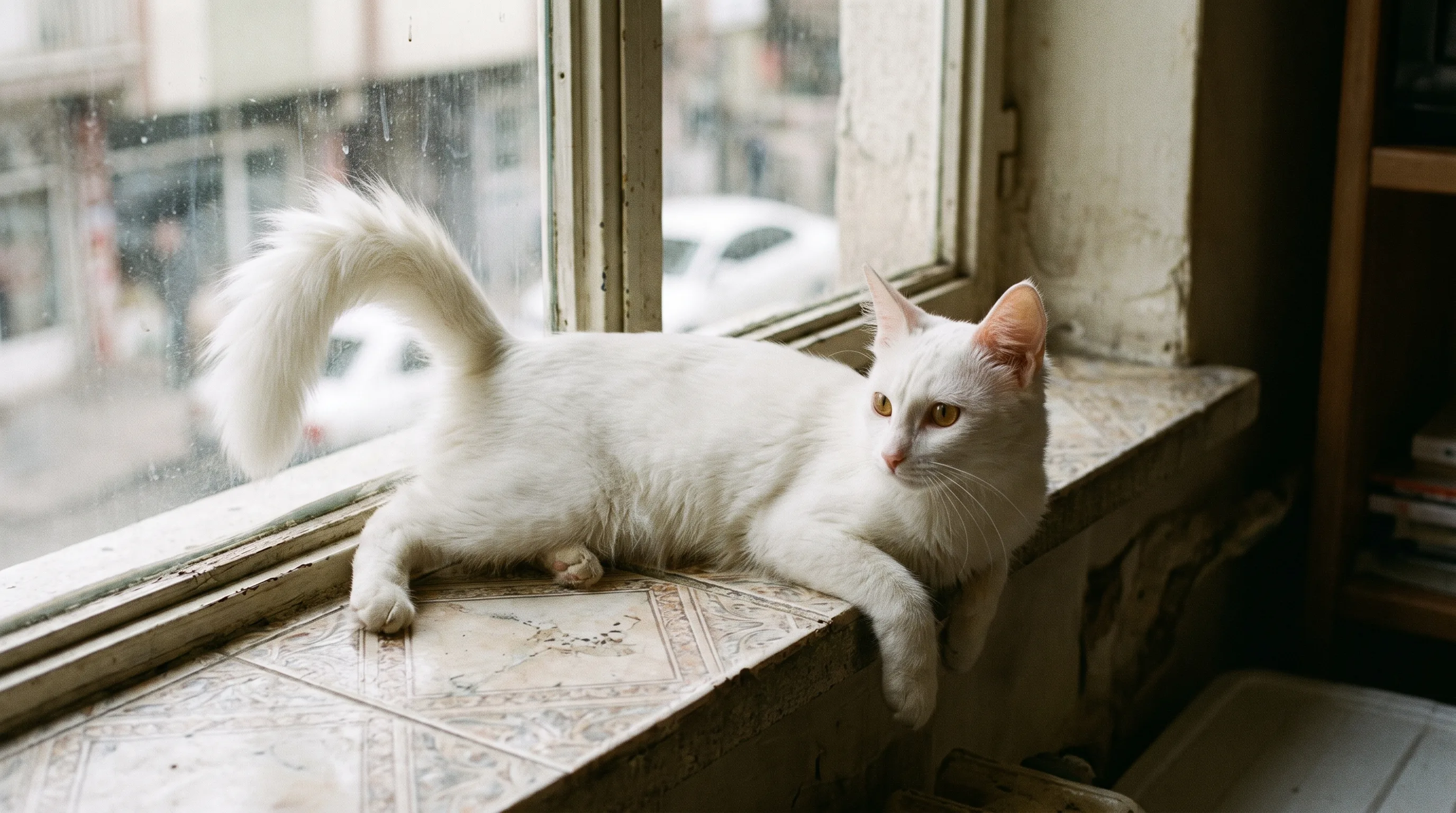
Turkish Angora
Fine-boned, silk-coated, and completely certain it runs the house.
Vital stats
| Size | Small to medium · long-legged, fine-boned |
| Weight | 2.5–5 kg · males heavier |
| Life expectancy | 12–18 years |
| Energy | High — climbs, sprints, supervises |
| Shedding | Low to moderate, no heavy undercoat |
| Coat | Semi-long, single, silky; over 20 colours |
| Group | Longhair |
| Origin | Türkiye |
Breed traits
Friendliness
Care
Mind
The Turkish Angora by the numbers
The Turkish Angora facts owners search for most — price, lifespan, weight, shedding and colours, in one place.
Less common, so expect a waitlist and some travel to a reputable breeder — which pushes the price up. Ongoing costs stay modest — it eats little and routine vet care sits at the lower end.
We don't quote a single figure: the real price swings with breeder, region, bloodline and health testing — and a rescue costs a fraction of a breeder's litter. Adopting is almost always the cheapest route.
Temperament
Turkish Angoras attach themselves to one household and then run it. They choose a favourite person, follow that person everywhere, and take a firm view on which chair is theirs and when you should be in bed. They're extremely physical — top of the door, top of the fridge, on your shoulder while you cook — and they stay that way well into old age. With guests they're forward rather than shy. With other cats they tend to want the top rank and usually get it, which is worth knowing if you already have a confident resident cat. They talk, but in a soft chirrup rather than a Siamese complaint, and they don't cope well with being left out of things.
Habits & quirks
Takes the high ground
Doors, bookcases, the top of the fridge. An Angora treats vertical space as the main route through a room and will find a way up that you hadn't considered.
Plays with water
Dripping taps, full glasses, the shower after you get out. Not every Angora does it, but enough do that it's part of the breed's reputation.
Picks a person
Affection tends to concentrate on one member of the household. Everyone else gets a polite version of the same cat.
Talks softly
A chirp, a trill, a short questioning note. Constant company, rarely loud, and directed at whoever it has chosen.
Care
| Grooming | Genuinely easy. A single coat with no thick undercoat means very little matting — a comb once or twice a week keeps the ruff and tail plume in order, and there's no seasonal blowout on the scale of a Siberian. |
| Hearing | Blue-eyed white Angoras carry a high risk of congenital deafness from the dominant white gene, and odd-eyed cats are often deaf on the blue-eyed side. A breeder should have BAER-tested; a deaf cat lives a full life, but it needs to stay indoors and you need to know. |
| Health screening | Two inherited conditions matter: hypertrophic cardiomyopathy, screened by scan, and a hereditary ataxia that kills affected kittens in the first weeks. Ask whether the line has produced ataxic kittens and whether the parents have had a cardiologist's echo. |
| Stimulation | Tall, secure climbing routes and a window seat are close to a requirement. This is a cat that gets destructive when under-occupied, and it is agile enough to reach the shelf you thought was safe. |
Life expectancy
This breed has a typical life expectancy of 12–18 years.
Similar breeds
Breeds with a similar build and background — worth a look if this one isn't quite the fit.
Common questions
Are all Turkish Angoras white?
No — white is the classic image and was, for a while, the only colour CFA recognised, but the breed comes in more than twenty colours and patterns including black, blue, red, tortie and tabby. In Turkey itself, the non-white cats have always been part of the population.
Are they related to the Turkish Van?
They're two separate Turkish breeds with separate standards. The Van is bigger, semi-longhaired with a distinctive coloured head-and-tail pattern, and from the Lake Van region; the Angora is finer, lighter and from Ankara. Both have the water habit, which is where most of the confusion comes from.
Is the deafness a serious problem?
It's a real risk in blue-eyed whites, not a myth, and it's why BAER testing matters when you buy. A deaf cat compensates well and most owners say it changes little day to day — but it must be an indoor cat, it won't hear you approach, and startling one from sleep is unfair. Coloured and amber-eyed Angoras are not affected.
Does the Turkish Angora shed a lot?
Yes — the Turkish Angora is a heavy shedder, dropping hair year-round or in big seasonal moults. Brush it several times a week and expect regular vacuuming; it isn't the coat for you if loose fur is a dealbreaker.
Are Turkish Angora cats hypoallergenic?
No cat breed is truly hypoallergenic, and the Turkish Angora isn't one of the easier ones. The trigger is Fel d 1, a protein in a cat's saliva and skin that ends up on the coat during grooming and then spreads on loose hair and dander — and this breed sheds enough to move plenty of it around. If someone at home is allergic to cats, this is a hard breed to live with; spend real time around one first.
Are Turkish Angora cats good with children?
Usually yes. The Turkish Angora is a sociable cat that tends to tolerate the noise and handling of family life better than most, which is why it comes up so often for homes with kids. It still needs somewhere high and quiet to retreat to, and children need teaching that a cat walking away is allowed to.
How much grooming does a Turkish Angora need?
A weekly comb is usually enough for the Turkish Angora, with a second pass during a seasonal moult. That keeps loose hair off your furniture and cuts down on hairballs, since everything the cat doesn't shed onto the sofa it swallows while washing.