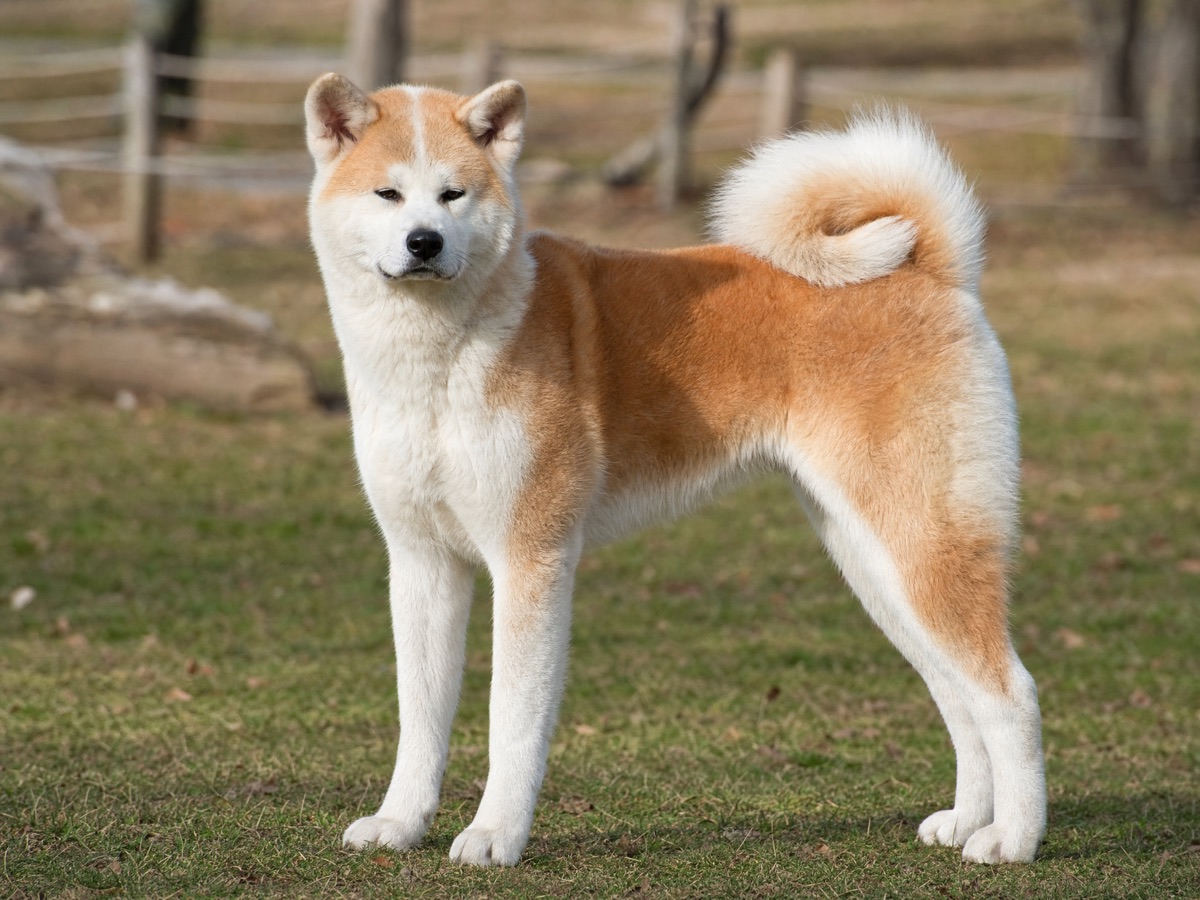
Akita Inu
Japan's dignified guardian — loyal to the point of legend.
Vital stats
| Size | Large · 61–71 cm |
| Weight | 32–45 kg |
| Life expectancy | 10–13 years |
| Energy | Moderate — 45–60 min/day |
| Shedding | Heavy · twice-yearly blowouts |
| Coat | Plush double coat · red, brindle, white |
| Group | Working · FCI №255 / AKC |
| Origin | Akita Prefecture, Japan |
| FCI group | 5 — Spitz and primitive types · FCI 255 |
Breed traits
Friendliness
Care
Mind
The Akita Inu by the numbers
The Akita Inu facts owners search for most — price, lifespan, weight, shedding and colours, in one place.
Less common, so expect a waitlist and some travel to a reputable breeder — which pushes the price up. Ongoing costs run high — more food, bigger doses at the vet, and pricier insurance.
We don't quote a single figure: the real price swings with breeder, region, bloodline and health testing — and a rescue costs a fraction of a breeder's litter. Adopting is almost always the cheapest route.
Temperament
Bred in Japan's snowy north to hunt boar and bear and to guard, the Akita carries itself like it remembers. It is quiet, composed and watchful — silly and warm with its own family, formally distant with everyone else — and it makes its own judgements about people, dogs and situations, then acts on them.
Habits & quirks
The Akita mumble
Talks to family in low woos and grumbles — barking is saved for genuine business.
Cat-like grooming
Washes its own face and paws; famously clean and easy to house-train.
The doorway post
Settles where it can see both you and the entrance, and keeps quiet watch.
One-family heart
Affection is total but exclusive — guests receive polite, unmistakable indifference.
Health
The Akita is a big, powerful dog, and its health comes down to a handful of things you can actually stay ahead of: keep it lean, watch the hips, and know the breed's weak spots. Akitas can develop hip dysplasia, an underactive thyroid and eye problems, and — like most deep-chested dogs — they carry a risk of bloat, so don't let yours run hard right after a meal. Buy from a breeder who screens hips, thyroid and eyes, keep your Akita at a lean, muscular weight, and learn the warning signs of bloat before you ever need them.
Nutrition
| Socialisation | Start early and never stop — aloofness with strangers and intolerance of dogs need lifelong management. |
| Grooming | Brush weekly, daily during the twice-yearly coat blow; never shave the double coat. |
| Training | Consistent, calm and respectful — it complies when it sees the point, not before. |
| Health | Keep it lean; watch hips, thyroid and eyes, and avoid hard exercise around meals (bloat risk). |
Feed an Akita to hold a lean, muscular weight rather than a heavy one — those big joints do best with nothing extra to carry. Weigh the meals instead of leaving food down, count treats in the daily total, and keep the ribs easy to feel under that thick coat. Because the breed is deep-chested and prone to bloat, split the day into two meals rather than one large bowl and keep things calm around feeding — no hard exercise straight before or after eating.
Puppy guide
An Akita puppy grows into a large, strong-willed dog, and the early months set the tone for the rest of its life. Start socialisation the day it comes home and never really stop — a naturally aloof, dog-wary breed has to meet people, dogs and everyday life early and often, or that wariness hardens. Grow it slowly on a large-breed food, keep exercise easy on the developing joints, and begin calm, consistent house rules straight away; good manners are far easier to build in a puppy than to fix in a powerful adult.
Training
The Akita is intelligent and deeply loyal, but it thinks for itself and complies when it sees the point, not simply because you asked. Train with calm, consistent, reward-based methods and start in puppyhood, because this is a large guardian that has to have manners for life. Socialisation is the non-negotiable part — an Akita's aloofness with strangers and low tolerance of other dogs need lifelong, patient management, never a heavy hand, which only hardens a dog like this.
Known health issues
No breed is problem-free. These are the conditions most worth knowing about for this breed — with what a good breeder screens for and what an owner watches. General guidance, not a substitute for your vet.
Hip dysplasia
A poorly fitting hip joint that wears early and can cause pain and arthritis, most common in larger breeds. Good breeders screen: Hip-scored parents (BVA/OFA/FCI). Watch for: Stiffness, a bunny-hop run, or reluctance on stairs.
Underactive thyroid
A slowed thyroid that saps energy and coat, common in mid-size and large breeds and easily treated. Good breeders screen: Ask about thyroid testing in the line. Watch for: Weight gain, low energy, and thinning coat — a simple blood test confirms it.
Bloat (GDV)
A sudden, life-threatening twisting of the stomach, mostly in deep-chested breeds — a true emergency. Good breeders screen: Ask about family history; discuss preventive gastropexy for high-risk lines. Watch for: A swollen belly, unproductive retching, restlessness — go to a vet at once.
Life expectancy
Akitas live 10–13 years. Like most large breeds, the Akita is shorter-lived than a small dog, but steady care tilts the odds your way: keep it lean to spare the hips, buy from lines that screen hips, thyroid and eyes, and know the signs of bloat so an emergency is one you catch in time. A lean weight and good breeding are the two levers most within your control.
Popular Akita mixes
Labrakita
A big, strong, loyal cross that pairs the Akita's guarding streak with Labrador friendliness — it needs early socialisation and real daily exercise.
Shepkita
A powerful, intelligent guardian cross of two strong-willed breeds: devoted to its family, and a lot of dog for an experienced, committed owner.
Similar breeds
Breeds with a similar build and background — worth a look if this one isn't quite the fit.
Compare this breed
Breeds that look like this
Common questions
Are Akitas good family dogs?
Devoted to their own family, but their size, guarding instinct and aloofness with strangers and other dogs make them best for experienced owners.
Do Akitas shed a lot?
Yes — a thick double coat that sheds year-round and blows out heavily twice a year. Regular brushing is essential; never shave it.
Are Akitas aggressive?
Not by default, but they are natural guardians with low tolerance for strange dogs. Early socialisation, secure management and an experienced hand keep that instinct in proportion.
Is the Akita Inu hypoallergenic?
Not really. No dog is truly hypoallergenic, and the Akita Inu's shedding coat releases plenty of the dander that sets off allergies. If someone at home is allergic, this isn't the easiest breed to live with — spend time around one first.
Is the Akita Inu easy to train?
Reasonably. The Akita Inu is trainable with consistency and rewards, though it isn't the quickest study. Keep sessions short and positive, and be patient with the basics like recall.
Stories featuring this breed
All stories →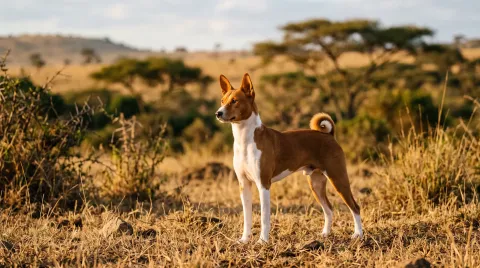
Which dog breeds are actually ancient?
Genetics keeps naming the same handful of breeds as “ancient” — but that word means isolated from the Victorian breed factory, not unchanged since antiquity.

National dog breeds: how a dog becomes a country's symbol
A nation doesn't just adopt a breed. Somewhere there's paperwork, a patron country, and an official standard. Here's the machinery, and the cases that actually hold up.
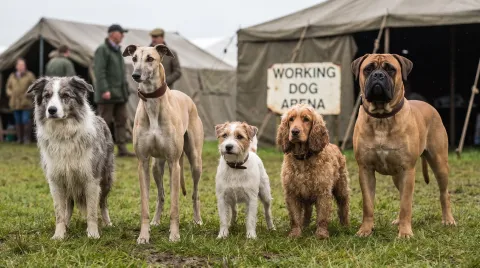
Seven groups, ten groups, three answers: how dog breeds get sorted
Kennel clubs sort several hundred breeds into a handful of groups. Here is how those lines were drawn, why the AKC's seven don't match the FCI's ten, and why the Standard Schnauzer belongs to three groups at once.