Why does my dog lick you so much?
Most dog licking is a good thing — a mix of affection, taste, learned attention-seeking and old instinct handed down from puppyhood. It is one of the main ways dogs bond with us and each other, so a dog that licks you is usually saying something friendly. There are a few practical questions worth answering, though: what the licking actually means, whether it is hygienic, and the point at which licking stops being sweet and starts being a sign the dog is stressed or unwell. Here is the honest version.
Affection and bonding — the main reason
The most common reason a dog licks you is social bonding, and it starts at birth. Mother dogs lick their puppies to clean and comfort them, and littermates lick each other, so licking is wired in early as a friendly, affiliative act. When your adult dog licks you, it is treating you as part of its social group and showing affection in the most doggy way it knows. There is a chemical reward in it too: gentle, friendly licking is associated with a release of feel-good hormones like endorphins and oxytocin, for the dog and often for the person, which is why it tends to be calm and repetitive.
Puppies add a specific inherited layer. In wild canids, pups lick around an adult's mouth to trigger the adult to bring up food, and that instinct survives in domestic dogs as face-licking. So when a dog reaches up to lick your face, part of what you are seeing is an ancient, affectionate greeting behaviour, not just a random slobber. It sits alongside the other sociable things dogs do, from following you around to the sleepy contentment we describe in do dogs dream.
Taste, attention and plain habit
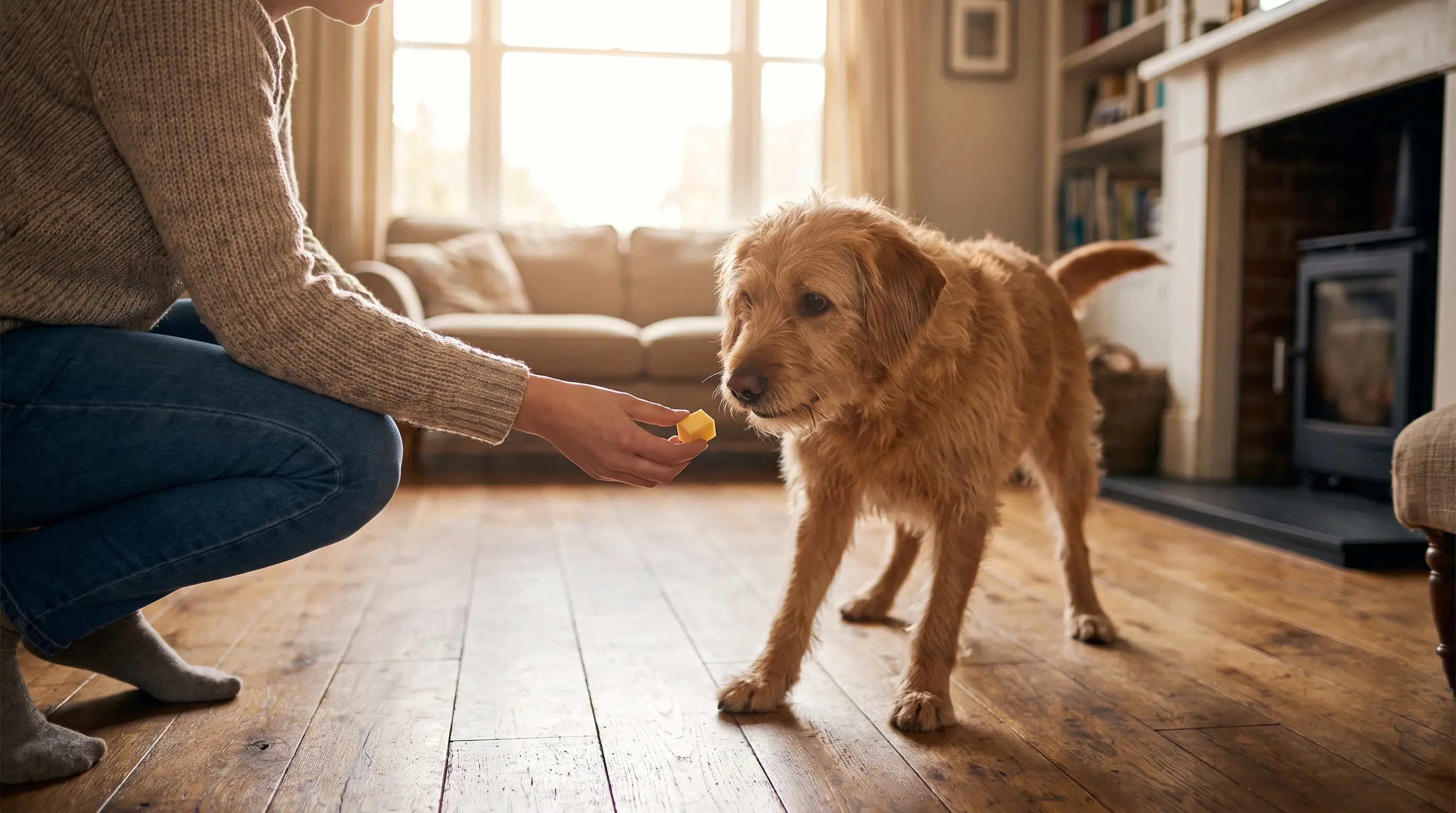
Not all of it is sentiment. You often simply taste interesting: human skin is faintly salty, especially after exercise, and may carry traces of food, lotion or the last thing you ate, all of which a dog is happy to investigate with its tongue. Dogs also explore the world by taste and smell far more than we do, so licking is partly information-gathering about where you have been and what you have touched.
The big one to be honest about is attention. If, every time your dog licks you, it gets a laugh, a stroke, eye contact or a "no, stop", it has learned that licking reliably makes you react — and any reaction, even a mild telling-off, can count as a reward. In that sense you may have accidentally trained the licking through ordinary reinforcement. That is not a criticism; it just means that if you want less of it, the fix is to calmly withdraw attention when it starts and reward the dog for something else, rather than to punish it.
Is it safe to let your dog lick you?
For most healthy people, the occasional lick from a healthy, parasite-treated dog is low-risk, and there is no need to panic if your dog licks your hands or arms. The sensible caveats are simple. A dog's mouth carries bacteria that are not the same as ours, so it is wise to avoid letting a dog lick your face, an open wound, or your mouth, eyes and nose, where germs get an easier route in. Wash your hands before eating after a good licking session, and be more careful if you are pregnant, very young, elderly, or your immune system is compromised.
Keeping your dog up to date on its worming and parasite prevention matters here too, since that is part of what keeps casual contact low-risk — the same routine we cover in fleas, ticks and worms. None of this means licking is dirty or must be stopped; it just means ordinary, sensible hygiene, especially around faces and food.
When licking is a red flag
Licking crosses from friendly to worth-a-look when it becomes excessive or compulsive, particularly when the target changes. A dog that obsessively licks itself — one paw, a flank, a joint — raw, or that constantly licks the floor, walls and surfaces, is usually not being affectionate. Persistent self-licking often points to itchy skin, allergies, pain in the area, or anxiety, and relentless licking of surfaces can be linked to nausea or other gut trouble. Repetitive, hard-to-interrupt licking that looks compulsive can also be a stress or anxiety behaviour.
The rule of thumb is a change in pattern. Friendly licking of you, in a relaxed dog, in the usual amounts, is nothing to worry about. A sudden increase, a new fixation on licking itself or the environment, or licking paired with other signs like hair loss, sore skin, restlessness or an upset stomach is worth a vet visit rather than a home guess. For everyday face-licking from a happy dog, though, the honest answer is the nice one: it mostly means your dog likes you.
Common questions
Why does my dog lick me so much?
Most licking is affection and bonding, learned from puppyhood, often with a feel-good hormone release for the dog. Dogs also lick because your skin tastes salty or interesting, and because licking has earned them your attention in the past. In a relaxed dog, frequent friendly licking usually just means it likes you.
Does my dog licking me mean love?
Largely, yes. Licking is a social, affiliative behaviour dogs learn as puppies from their mother and littermates, and face-licking descends from an affectionate greeting in wild canids. Combined with the calming hormones involved, licking is one of the main ways a dog shows affection and bonds with you.
Is it safe to let my dog lick me?
For most healthy people an occasional lick from a healthy, parasite-treated dog is low-risk. Avoid letting a dog lick your face, mouth, eyes or open wounds, wash your hands before eating, and take more care if you are pregnant, very young, elderly or immunocompromised. Keep the dog's worming up to date.
How do I get my dog to stop licking me?
Because licking is often reinforced by your reaction, calmly withdraw attention the moment it starts — no laugh, stroke or telling-off — and reward the dog for a calmer behaviour instead. Give it something else to do, like a chew, and avoid punishment, which can add anxiety without addressing the habit.
When should I worry about my dog licking?
Worry when licking becomes excessive or compulsive, especially if the dog fixates on licking itself raw or constantly licks floors, walls and surfaces. That can signal itchy skin, allergies, pain, nausea or anxiety, and warrants a vet visit — particularly if paired with hair loss, sore skin or an upset stomach.
More in Dogs
Do dogs love their owners? What the science measured
Yes — and unusually for a question about feelings, we have the receipts: oxytocin loops, attachment tests and brain scans. What dog love is made of, and what it looks like from the sofa.
Why do dogs eat grass? The myth, the data, the real risks
It's rarely self-medication and almost never a missing nutrient — the biggest survey ever run on grass-eating dogs retired both stories. What's actually going on, and when to pay attention.
Dog zoomies: why dogs suddenly sprint like maniacs
The tucked tail, the mad loops, the gleeful eyes — zoomies have a scientific name, a set of reliable triggers, and exactly one thing you shouldn't do about them.

Why do dogs howl? Sirens, solitude and the wolf inside
The howl is long-distance radio inherited from wolves — and no, the siren isn't hurting your dog's ears. What each howl broadcasts, and the one kind that's a message for you.

Why do dogs sniff each other's butts? The chemical handshake
It's not rude — it's the most information-dense greeting in the animal kingdom. What's actually in the message, the equipment that reads it, and the etiquette your dog is following.

Why does my dog stare at me? Every stare, decoded
Affection, forecasting, negotiation, security detail — a dog's stare is never empty. What each one means, including the famous bathroom vigil, and the one stare to take seriously.