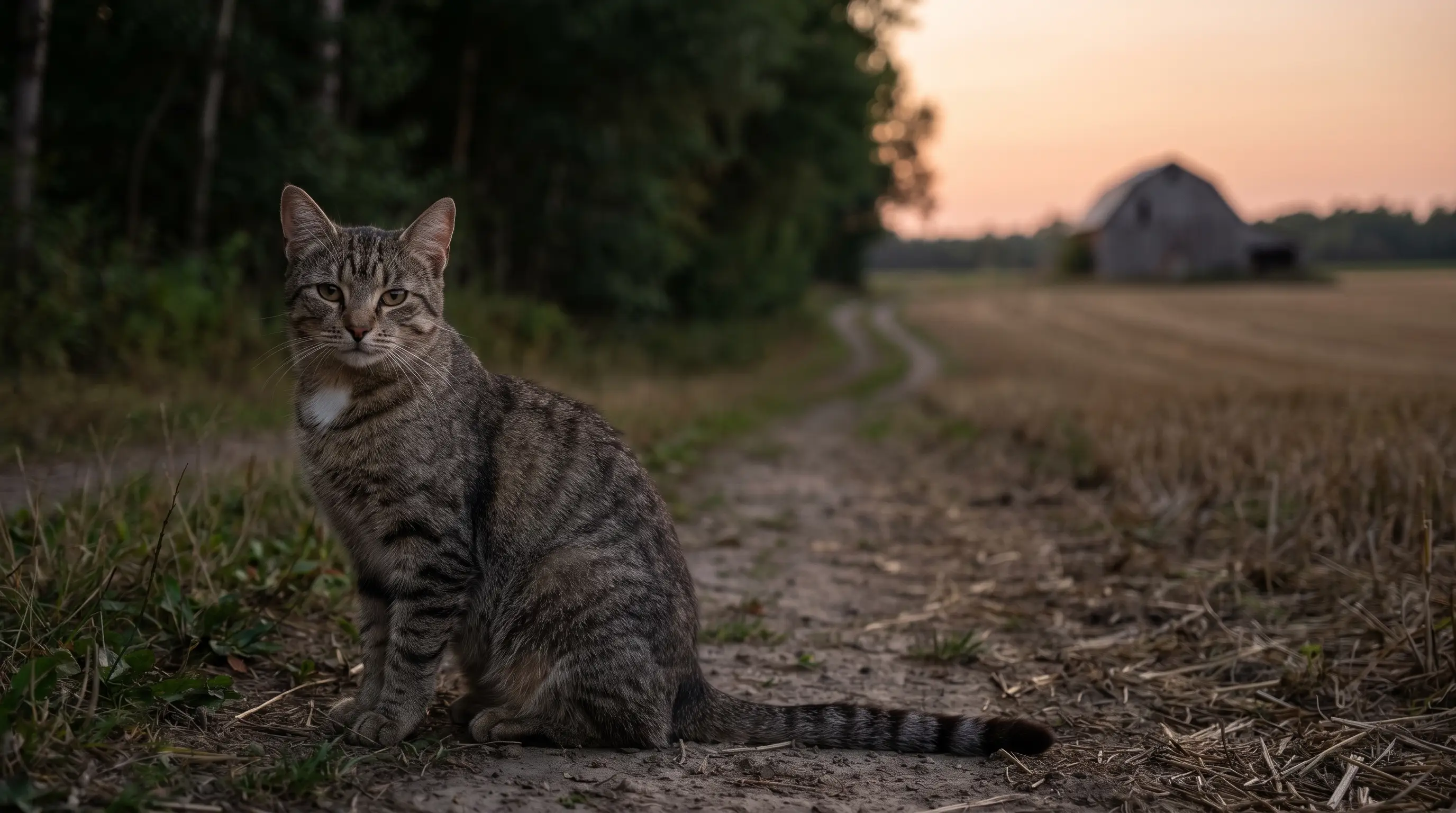
Wildcat hybridisation: how a species gets absorbed
The European wildcat, Felis silvestris, is mostly not being shot or starved out of existence. It is being absorbed, by interbreeding with the domestic cat, and the rate at which that happens is much less forgiving than it looks. The EUROWILDCAT consortium's 2023 consensus statement in Frontiers in Ecology and Evolution puts it in one sentence: "even seemingly low rates of hybridization are sufficient to assimilate wildcats to domestic cats over 50% in less than 100 years." So a forest survey that turns up a handful of hybrids is not a clean bill of health. It is a clock that has already started.
Two per cent is not a safe number
Hybridisation rates are wildly uneven across the species' European range. The EUROWILDCAT consortium puts them at nearly 100% in Scotland and under 2% in Central Germany, with the Mediterranean regions of the Iberian peninsula at 21%. Iberia looked better still in earlier work: Oliveira and colleagues, in Philosophical Transactions of the Royal Society B in 2008, found only 5 admixed animals among 75 wildcats, with wild and domestic cats clearly separated genetically. Some populations genuinely do still look fine on paper.
Looking fine on paper buys less time than you would think, because the first cross is never the last one. Mattucci and colleagues, sampling across Europe in 2019, found domestic ancestry averaging 17% of the genome in admixed wildcats and reaching 65.3% in the worst individuals, carried in blocks that traced back 6 to 22 generations. The signal is oldest in Italy, at a mean of 13 generations, and most recent in the Dinaric Alps, at just over three. None of that reads as a series of accidents. It is a process with a direction, and the direction is one-way.
Britain had 2,000 quiet years, then 70 loud ones
The collapse of the Scottish wildcat is far younger than the cats that caused it. Howard-McCombe and colleagues, using ancient DNA in Current Biology in 2023, dated the onset precisely: "although domestic cats have been present in Britain for over 2,000 years, the onset of hybridization was only within the last 70 years." Twenty centuries of sharing an island, then one human lifetime of genetic collapse.
A companion paper in the same issue, by Jamieson and colleagues, explains the quiet part. Working from 75 ancient mitochondrial genomes, 14 ancient nuclear genomes and 31 modern ones, they found that most modern domestic cats carry less than 10% European wildcat ancestry, and that ancient European wildcats carried little to none in the other direction. The barrier was behavioural and ecological rather than biological. Wildcats kept to the wood, cats kept to people, and the two rarely met on breeding terms. It helps to remember that the house cat's own ancestor is not Felis silvestris but Felis lybica, the African wildcat, domesticated in the Near East and brought to Britain by people. Domestication is usually told as a one-way story, the way it is told about the wolf becoming the dog. The wildcat is the case where the traffic runs back the other way.
The mechanism is an unneutered tom at the wood's edge
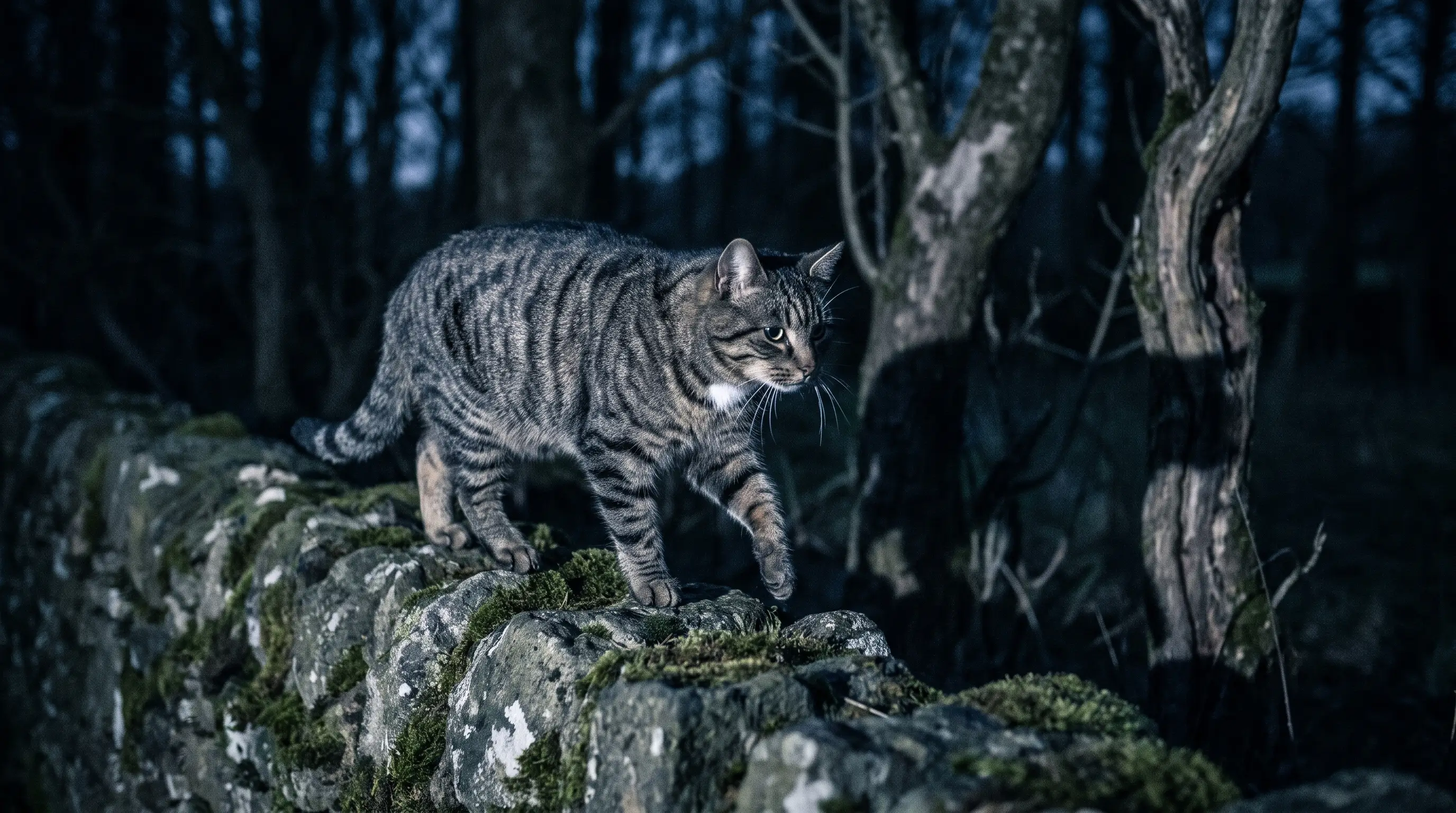
Introgression took hold because a shrunken wild population ended up sitting inside an enormous tame one. Wildcats were hunted and squeezed out of most of Britain through the 18th and 19th centuries, leaving a remnant in north-west Scotland at exactly the moment the domestic cat population was expanding into the same ground. Once that ratio tips, the arithmetic of who meets whom stops favouring wildcats. A 2017/18 survey of the Scottish Wildcat Priority Areas found un-neutered hybrids outnumbering wildcats by roughly six to one. A wildcat looking for a mate there will mostly find something that is already part house cat.
Nothing exotic is involved. The animal doing the damage is an unneutered domestic shorthair tom on a farm, or a feral cat living off a yard two fields from the treeline. That is why the unglamorous domestic decisions matter most in wildcat country: whether the local toms are neutered, and what you actually do with a stray you find. Neutering changes what a cat needs at the bowl as well as what he does at night, and both are worth getting right.
Eleven infections, one epidemiological unit
Domestic cats bring pathogens as well as genes, and in Scotland the two have become entangled. Alves and colleagues, in Transboundary and Emerging Diseases in 2023, trapped 120 free-living cats between 2015 and 2019 across six Scottish conservation priority areas and found 11 feline infectious agents circulating, including FIV at 6.72%, FeLV at 2.52% and feline calicivirus at 20%, alongside feline herpesvirus, Chlamydia felis and several Mycoplasma species. For eight of the eleven agents, a cat's hybrid score made no significant difference to its chance of being infected. Their reading: the hybrid swarm is working as a single epidemiological unit. To a virus, there is one cat population in those forests.
This is where the 2023 genome work turns uncomfortable. Domestic ancestry in modern Scottish wildcats is distributed unevenly, and it is markedly over-represented in some regions of the genome, including the major histocompatibility complex, which governs immune response. Howard-McCombe and colleagues hypothesise that domestic immune variants were useful against domestic-cat diseases and were therefore favoured by selection. The cost is linkage drag: selection pulling one useful gene into a population drags the neighbouring DNA in with it. Buying immunity to your neighbour's viruses means importing a large stretch of your neighbour's genome beside it.
No, F1 hybrids are not sterile
The most repeated error about wildcat hybrids is that the first generation cannot reproduce. It can. European wildcats and domestic cats produce fully fertile offspring, stated plainly by Howard-McCombe and colleagues in 2021 and by Mattucci and colleagues in 2019, and the field data settles it. Of 51 hybrids detected across 13 countries by Tiesmeyer and colleagues in 2020, only 4 were first-generation crosses; 47 were F2s or backcrosses, and F1 prevalence was under 1% overall. So few F1s turn up precisely because F1s keep breeding, and the population fills with their descendants rather than with the original crosses.
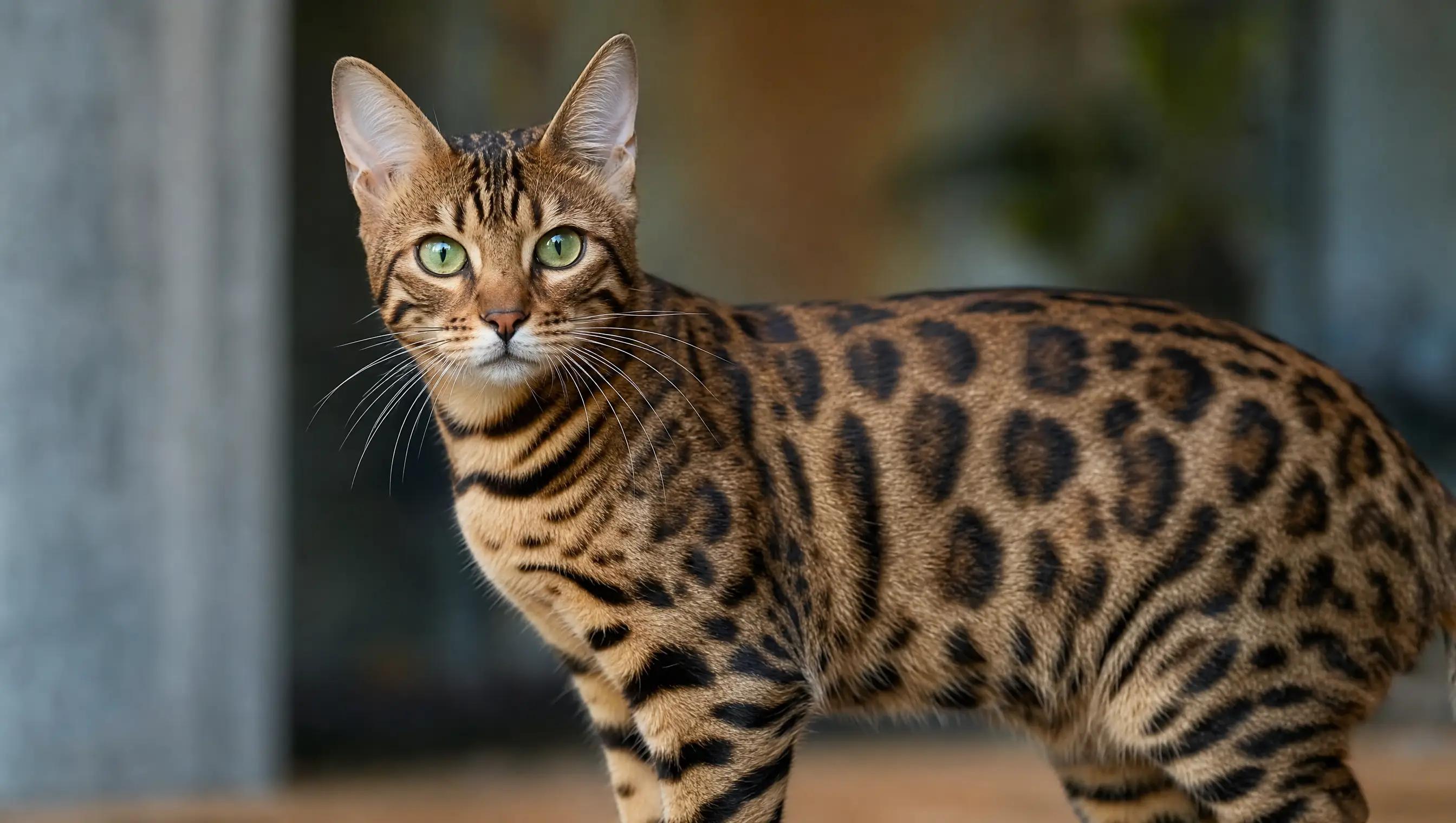
The sterility claim does have a real home, just not this one. It comes from exotic hybrid breeding, where a serval crossed with a domestic cat gives the Savannah and an Asian leopard cat crossed with a domestic cat gives the Bengal. Those parent species are distant relatives, which is why breeders of such cats count generations so carefully. Both are registered cat breeds with studbooks, descended from small wild cats on another branch of the family. Felis silvestris and Felis catus are extremely close relatives, so importing the exotic-hybrid rule into a Scottish wood imports a fact from the wrong family tree.
That fertility is what turns a hybridisation problem into a hybrid swarm. Senn and colleagues, in Evolutionary Applications in 2019, described Scotland's wild-living cats as a genetic continuum between Felis silvestris and Felis catus, without the two-humped distribution you would expect if crossing were only occasional. Howard-McCombe's working definition says the same thing more bluntly: a continuum of genetic backgrounds produced by repeated back-crossing and mating between hybrids. There is no clean line left to draw.
Removing the hybrids might remove the wildcat
If domestic immune genes are keeping wild-living cats alive, purging domestic ancestry could make the population worse off. Senn and colleagues put that warning in print in 2019: where hybridisation is advanced and eradication measures stringent, the potential exists to unintentionally remove a large proportion of the threatened species' own genome, taking adaptive variation with it. Howard-McCombe and colleagues sharpened the point in 2023. In countryside saturated with domestic cats and their pathogens, a hybrid carrying domestic MHC variants may be fitter than a pure wildcat.
The law does not help. WildCRU's framing is that wild-living cats now carry mixed domestic and wildcat genes and mixed morphologies, while only wildcats hold legal protection, so both protection and monitoring rest on a distinction the animals themselves have stopped observing. The captive safety net is not clean either: 9 of 72 cats in the conservation breeding population turned out to be genetic hybrids below the management threshold, roughly one in eight. Anyone who tells you the policy is obvious has not read the papers. Wildcat conservation is being written against real disagreement about what the goal should be.
Connected forest outranks every other fix
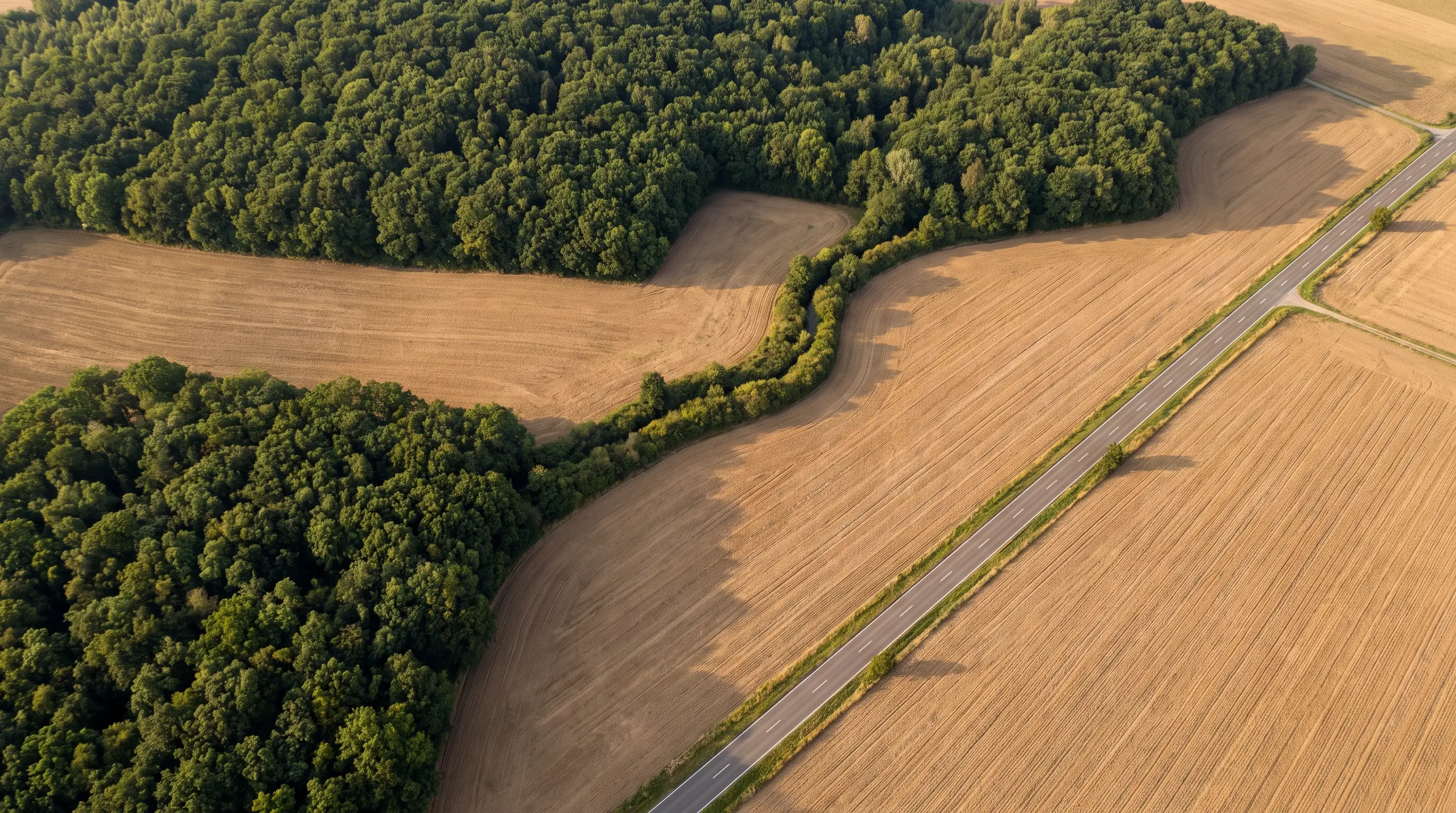
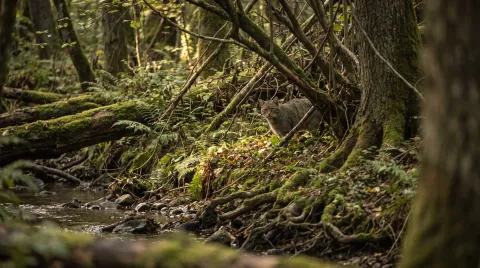
The measure EUROWILDCAT endorses most strongly concerns trees rather than cats. Large, connected native forests and woodlands with low human disturbance are what hold wildcat populations demographically and genetically stable, and the mechanism is almost embarrassingly simple: where wildcat density is high enough, a wildcat looking for a mate finds another wildcat. Genetic integrity survives best in continuous forest with little human presence, which is the pattern sitting behind Central Germany's under-2% rate. The forest a wildcat needs is doing more conservation work than any intervention aimed at cats.
The rest of the consensus list is damage control, and the authors are candid about it. Policymakers should encourage neutering of owned and semi-owned cats. TNR gets endorsed for being the most widely accepted and therefore the most realistic option, not the most effective one. Controlling feral populations by neutering or removal is recommended as far as possible, with the emotional barriers acknowledged rather than waved away. Owners are asked to accept that their pets can damage the environment around them. And legal texts may need rewriting: Switzerland already requires that hybrids in the wild be regulated and, where possible, removed.
In Scotland this has looked like Scottish Wildcat Action's Trap-Neuter-Vaccinate-Return work, and Saving Wildcats genetically testing kittens and neutering hybrids under NatureScot guidelines, in partnership with Cats Protection. Some of the cats that come out of such programmes are tame enough to home, which is a slow indoor project of its own. Of all the wild species we write about, the wildcat is the one whose survival depends least on stopping people from harming it and most on giving it enough unbroken forest to be choosy about who it breeds with.
Common questions
Can wildcats breed with domestic cats?
Yes, and the offspring are fully fertile. European wildcats (Felis silvestris) and domestic cats (Felis catus) are close enough relatives that crosses breed on for generations, which is how a local wildcat population turns into a continuum of mixed animals rather than a few obvious hybrids.
Can Scottish wildcats breed with domestic cats?
Yes, extensively. The EUROWILDCAT consortium's 2023 review puts the hybridisation rate in Scotland at nearly 100%, and Tiesmeyer and colleagues found in 2020 that every Scottish sample they tested was an F2 hybrid or a backcross rather than a pure wildcat.
Scottish wildcat vs hybrid
You usually cannot tell them apart reliably by eye, which is the core practical problem. Coat scoring catches obvious hybrids, but wild-living cats in Scotland now form a genetic continuum, so genetic testing is what separates a wildcat from a backcross, and legal protection still depends on that line.
Why are Scottish wildcats going extinct?
Hunting and habitat loss in the 18th and 19th centuries reduced them to a small remnant in north-west Scotland, and then interbreeding with an expanding domestic cat population diluted what was left. Howard-McCombe and colleagues showed in 2023 that this genetic swamping began only within the last 70 years, and that domestic-cat diseases accelerated it.
Do Scottish wildcats still exist?
There is no reliable national count, and the honest answer is that the wild-living population is now a hybrid swarm rather than a set of pure wildcats. Senn and colleagues found that 54 of 60 historical cats from 1895 to 1987 were wildcats, while all 19 cats sampled in a 2013-14 field survey were hybrids.
Which wild cats can breed with domestic cats?
The European wildcat (Felis silvestris) and the African wildcat (Felis lybica), the domestic cat's own ancestor, both interbreed with house cats readily and produce fertile young. Two more distant species have been crossed with domestic cats deliberately by breeders, the serval to make the Savannah and the Asian leopard cat to make the Bengal, and in those cases breeders track generations carefully because early-generation fertility is not a given.
See also
More in Wild
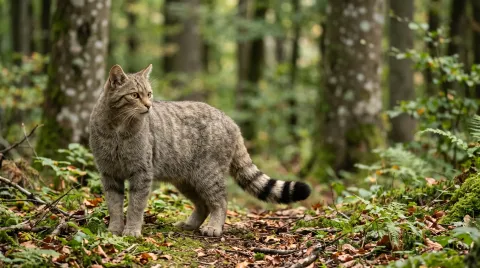
European wildcat: the cat Europe cannot count
Felis silvestris was only assessed as a species in its own right in 2022, and its official population trend is one word: unknown.
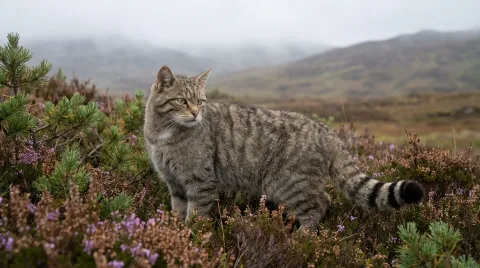
Scottish wildcat: not extinct, not a subspecies
The most-quoted fact about the Scottish wildcat misstates its own source. What the 2019 IUCN review really said, and where the cats stand in 2026.
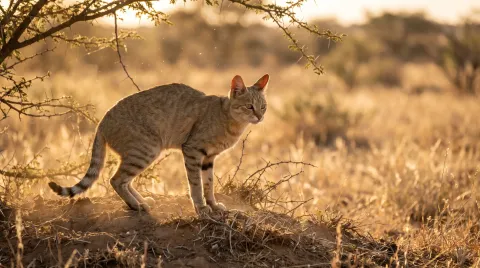
African wildcat: the real ancestor of your cat
Your cat descends from Felis lybica, a North African animal most people cannot name. In November 2025 the standard account of how it reached Europe broke.
European wildcat vs domestic cat: how to tell
You cannot do it by eye. On the same cats, coat scoring rated 0.854 and the genome 0.984, and the strict visual cut-off loses real wildcats.
The forest a European wildcat actually needs
Woodland to shelter and den in, open edge to hunt over, and corridors between the two. What the radio-tracking and genetics really show.
Wildcat conservation: law, cameras and cryptic extinction
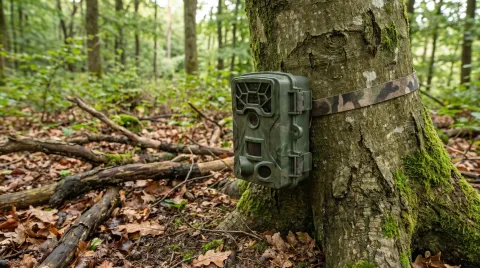
How you save a species you cannot count: the law, the genetics labs, and the honest gap between what works and what is only worth trying.